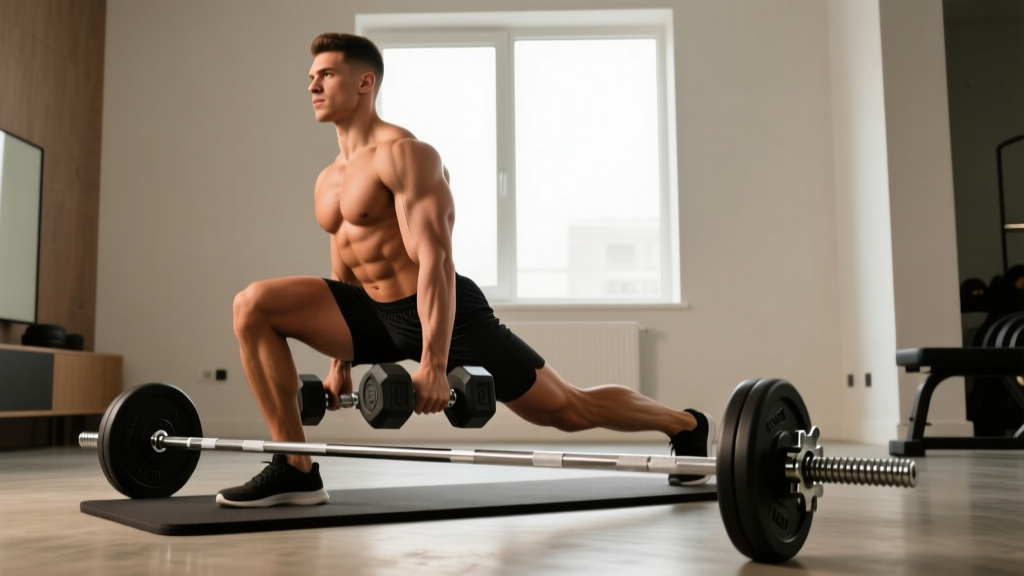
Bulgarian Split Squat with Dumbbells & Barbell Collar Types Compared
Master the Bulgarian split squat with dumbbells via our step-by-step guide, and explore our expert barbell collar and clamp types comparison.

Building Your Lower Body Arsenal: Unilateral Dumbbells and Barbell Safety
When outfitting a home gym or upgrading your commercial facility's free weight zone, mastering both exercise technique and equipment safety is paramount. For beginners and seasoned lifters alike, the Bulgarian split squat with dumbbells remains the undisputed king of unilateral leg development. However, a complete lower-body training regimen also requires heavy bilateral barbell work—squats, deadlifts, and hip thrusts—which introduces a critical, often overlooked piece of gear: the barbell collar.
In this comprehensive 2026 guide, we will walk you through a beginner-friendly, step-by-step tutorial for executing the perfect dumbbell Bulgarian split squat. Then, we will pivot to the hardware side of the rack, providing an in-depth barbell collar and clamp types comparison to ensure your heavy plates stay exactly where they belong.
Step-by-Step Guide: Bulgarian Split Squat with Dumbbells
The Bulgarian split squat (or rear-foot-elevated split squat) targets the quadriceps, glutes, and hamstrings while demanding significant core stabilization. According to biomechanical analyses indexed by ExRx.net, elevating the rear foot increases the range of motion and shifts a greater load onto the front leg's hip and knee extensors compared to standard lunges.
1. Equipment Setup and Positioning
- Bench Height: Use a standard flat bench (typically 16 to 18 inches high). If you are under 5'6", consider using a low plyo box (12 inches) to prevent excessive hip flexor stretching that can compromise your lumbar spine.
- Dumbbell Selection: Beginners should start with 15 to 25 lb hex or urethane dumbbells. Hexagonal heads prevent rolling when you set them down mid-set.
- Stance: Stand roughly two to three feet in front of the bench. Reach one foot back and rest the top of your foot (laces down) on the bench pad.
2. Execution and Form Cues
- The Descent: Inhale and slowly lower your hips straight down. Aim for a 3-second eccentric (lowering) phase. Your front thigh should become parallel to the floor.
- Shin Angle: Keep your front shin relatively vertical. If your knee travels excessively over your toes and your heel lifts, your stance is too short. Step further forward.
- Torso Lean: For a quad-dominant focus, keep your torso upright. For a glute-dominant focus, allow a slight 15-to-20-degree forward hinge at the hips.
- The Ascent: Exhale and drive forcefully through your front heel to return to the starting position. Do not lock out the knee aggressively at the top; maintain constant tension.
For optimal hypertrophy, the American Council on Exercise (ACE) recommends 3 sets of 8 to 12 repetitions per leg, resting 60 to 90 seconds between sets to allow for unilateral ATP replenishment.
Why Barbell Collars Matter for Your Free Weight Rack
While dumbbells are self-contained, barbell training introduces shifting loads. When performing heavy squats or dynamic Olympic lifts, weight plates can slide outward, altering the bar's center of gravity and potentially causing a catastrophic dump of iron. Understanding the different barbell collar and clamp types is essential for any lifter progressing from dumbbells to the squat rack.
Barbell Collar and Clamp Types Comparison
Not all collars are created equal. The market in 2026 offers solutions ranging from $10 budget clips to $150+ competition-grade locking mechanisms. Let us break down the metallurgy, grip force, and failure modes of the four primary collar types.
1. Spring Clips (The Budget Standard)
Made from heavy-gauge steel wire, spring clips rely on torsion to grip the barbell sleeve.
- Weight: ~0.2 lbs per pair.
- Price Range: $10 - $18.
- Pros: Incredibly cheap, fast to apply, zero learning curve.
- Cons & Failure Modes: Prone to metal fatigue. If the barbell is dropped repeatedly, the vibration can cause spring clips to inch outward. They also fail to grip adequately if the barbell sleeves are dusty or chalky.
2. Lock-Jaw / Clamp Collars (The CrossFit & Home Gym Standard)
These utilize a glass-filled nylon or ABS plastic body with a heavy-duty cam lever to clamp down on the sleeve. The Rogue Monster Lock-Jaw is a prime example of this category.
- Weight: ~0.55 lbs per pair.
- Price Range: $35 - $50.
- Pros: Excellent grip force, highly durable, available in multiple colors, and they double as fractional plates (adding roughly 0.25kg per side).
- Cons & Failure Modes: The plastic locking tab can snap if the barbell is dropped directly onto the collar from overhead. They also struggle to grip heavily worn, deeply scratched chrome sleeves.
3. Spinlock Collars (The Traditionalist Choice)
Designed specifically for threaded barbell sleeves, these metal or cast-iron stars screw onto the bar to lock plates in place.
- Weight: 2.5 lbs to 5.0 lbs per pair.
- Price Range: $25 - $60.
- Pros: Virtually indestructible. Once tightened, plates will not move, even during extreme vibrations.
- Cons & Failure Modes: Extremely slow to change weights. If cross-threaded by an impatient lifter, they can permanently strip the barbell's sleeve threads, ruining an expensive bar.
4. Lever-Action & Competition Collars (The Elite Choice)
Machined from aircraft-grade aluminum with internal steel roller bearings or precision cams. Models like the Proloc 1500 or Eleiko Olympic Competition collars represent the pinnacle of barbell security.
- Weight: Calibrated to exactly 2.5 kg (5.5 lbs) per collar for competition math.
- Price Range: $85 - $160+.
- Pros: Unmatched grip force, rapid application via lever throw, protects barbell sleeves from scratching, and counts toward official competition weight totals.
- Cons & Failure Modes: High cost. The internal cam mechanisms require occasional cleaning and lubrication; if chalk builds up inside the bearing track, the lever can seize.
Collar Comparison Matrix
| Collar Type | Grip Security | Change Speed | Avg. Cost (Pair) | Best Application |
|---|---|---|---|---|
| Spring Clips | Low | Very Fast | $12 | Light accessories, lunges |
| Clamp (Lock-Jaw) | High | Fast | $40 | CrossFit, home gyms, drops |
| Spinlock | Maximum | Very Slow | $35 | Threaded bars, static lifts |
| Lever / Competition | Maximum | Fast | $110+ | Powerlifting, Olympic lifting |
Note: According to the International Weightlifting Federation (IWF) Technical Rules, competition collars must weigh exactly 2.5 kg each and must be used on all competition lifts to secure the plates and ensure accurate weight calculation.
Frequently Asked Questions
Can I do Bulgarian split squats with a barbell instead of dumbbells?
Yes, the barbell Bulgarian split squat is a valid variation. It places a higher demand on your core and spinal erectors due to the axial loading (weight on your back). However, beginners should master the dumbbell variation first, as it allows for a quicker, safer bailout if you lose your balance. If you use a barbell, always secure the plates with high-quality clamp or lever collars to prevent asymmetric shifting.
How do I clean my barbell collars to maintain grip?
Chalk and skin oils create a lubricated layer on barbell sleeves, causing clamp collars to slip. Wipe down your barbell sleeves and the inner rubber gaskets of your collars with a microfiber cloth and a mild degreaser or rubbing alcohol once a month. Never use WD-40, as it will permanently degrade the rubber gripping elements.
What bench is best for the split squat?
A standard 17-inch commercial flat bench works for most lifters over 5'8". If you are shorter, or if you experience hip pinch at the bottom of the movement, stack a 2-inch or 4-inch bumper plate on the bench to elevate your rear foot slightly, or use a specialized low-profile split squat stand.
Final Thoughts on Free Weight Progression
Whether you are isolating your quads with a flawless Bulgarian split squat with dumbbells or loading up the bar for a heavy back squat, respecting the mechanics of both your body and your equipment is what separates novices from lifelong lifters. Invest in a reliable pair of clamp or lever-action collars to protect your barbell sleeves and your training partners, and prioritize strict, controlled eccentrics on your unilateral leg work to bulletproof your knees for years to come.
More gear to consider
All reviews
Rubber Hex vs Urethane Dumbbells: Market Trends and Anticholinergic Grip Factors

Curl Bar vs Dumbbells: Bicep Gains & Olympic Knurling Guide

Adjustable Dumbbell Review: Dumbbell Shaped Crystals in Urine Guide
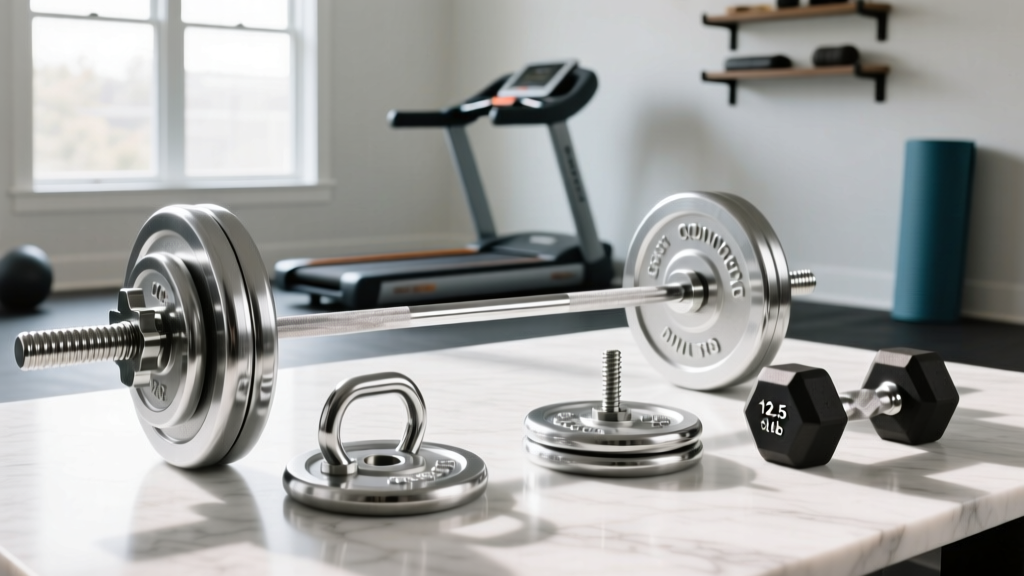
Barbell Collar Types Compared: Slippage & 12.5 lb Dumbbell Hacks

200 lb Dumbbells Setup: Adjustable Comparison & Installation
