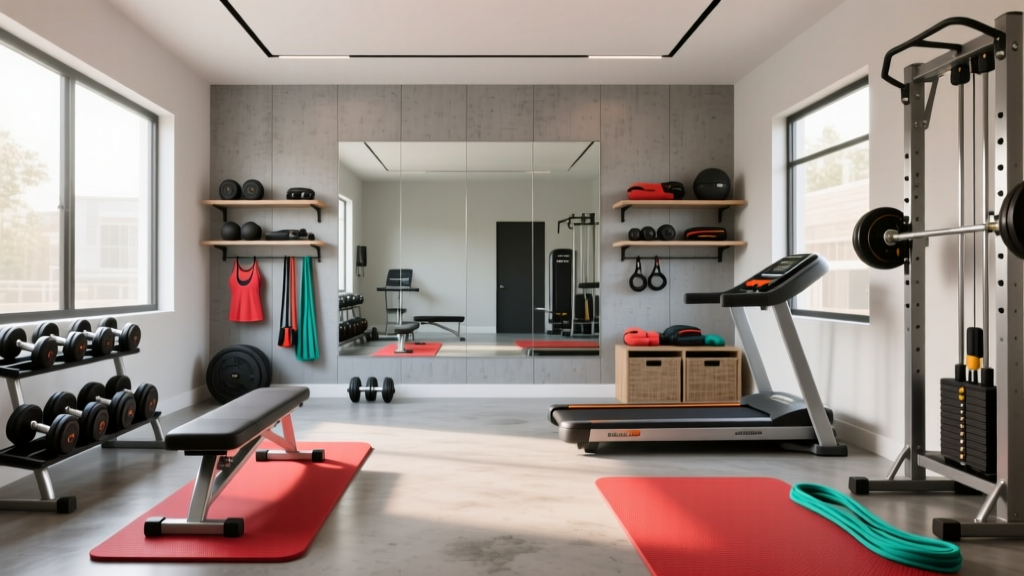
Top Home Gym Tips and Hacks for Budget Renovations
Discover expert home gym tips and hacks for budget remodeling. Learn cost breakdowns, structural upgrades, and value-driven renovation strategies.

The True Cost of Home Gym Remodeling in 2026
Transforming a spare room, basement, or garage into a dedicated fitness space is one of the highest-ROI home improvement projects you can undertake. However, dropping a power rack onto bare concrete or uneven floorboards is a recipe for equipment damage and noise complaints. According to Architectural Digest, a well-designed home gym not only improves daily health outcomes but can also appeal to future homebuyers, provided the renovation is executed with structural integrity in mind.
As of 2026, material costs for lumber and rubber have largely stabilized, but contractor labor rates remain steep, averaging $85 to $130 per hour for specialized carpentry and electrical work. To keep your budget in check, you need a strategic approach. Below, we break down the most effective home gym tips and hacks for remodeling on a budget, focusing on where to invest your dollars and where you can safely cut corners.
Average Renovation Budget Ranges (2026)
- Garage Conversion (Basic): $2,500 - $5,000 (Flooring, basic electrical, insulation)
- Basement Build-Out (Mid-Tier): $6,000 - $12,000 (Subfloor, drywall, HVAC extension, mirrors)
- Dedicated Room Remodel (Premium): $10,000 - $20,000+ (Soundproofing, dedicated circuits, custom rigging)
Budget Breakdown: Where to Spend and Where to Save
When analyzing value, not all renovation elements yield the same return on investment. The following matrix compares budget-friendly hacks against premium upgrades to help you allocate your remodeling funds effectively.
| Component | Budget Hack (Cost) | Premium Upgrade (Cost) | Value Verdict & ROI |
|---|---|---|---|
| Flooring | 3/4' Vulcanized Horse Stall Mats ($55 per 4x6 sheet) | Interlocking Premium Rubber Tiles ($3.50/sq ft) | Save: Horse stall mats offer identical shock absorption for 60% less cost. Use carpet tape for seams. |
| Wall Backing | 3/4' CDX Plywood behind drywall ($45/sheet) | Exposed Steel Studs with Wood Infill ($150+ per wall) | Spend: Plywood backing is non-negotiable for mounting heavy cable machines and mirror walls safely. |
| Mirrors | Acrylic Mirror Sheets ($3/sq ft) | 1/4' Tempered Glass Panels ($10/sq ft) | Spend: Acrylic distorts under heavy loads and scratches easily. Tempered glass is safer and optically clear. |
| HVAC | High-Velocity Floor Fans & Dehumidifier ($250) | Ductless Mini-Split System ($1,200+ installed) | Spend: A mini-split (like the MrCool DIY 12k BTU) prevents equipment rust and makes the space usable year-round. |
5 Structural Home Gym Tips and Hacks for Renovators
Beyond aesthetics, your gym must handle extreme dynamic loads. A loaded barbell dropped from shoulder height generates thousands of pounds of impact force. Here are five structural remodeling hacks that separate amateur setups from professional-grade facilities.
1. The 'Plywood Sandwich' Wall Hack
If you plan to mount a squat rack, pull-up rig, or heavy mirror wall to drywall, standard studs and drywall anchors will eventually fail under dynamic lateral loads. The ultimate home gym hack is the 'plywood sandwich.' Before hanging drywall, screw 3/4-inch CDX plywood directly into your wall studs (16 inches on-center). Then, mount your drywall over the plywood. This distributes the shear force of heavy equipment across multiple studs, allowing you to mount heavy gear anywhere on the wall without hunting for studs later.
2. Subfloor Decoupling for Basements
Never place heavy rubber mats directly on a basement concrete slab. Concrete sweats, trapping moisture and breeding mold under your flooring. Install a dimpled subfloor membrane like DMX 1-Step or Delta-FL (approximately $2.00 per square foot). This creates an air gap that allows moisture to evaporate, provides thermal insulation, and adds a layer of impact absorption that protects both your equipment and your foundation.
3. Acoustic Decoupling with Rockwool
If your gym is on a second floor or shares a wall with living spaces, impact noise is your biggest enemy. Standard fiberglass insulation does little to stop low-frequency bass from dropped weights. According to guidelines referenced by The National Strength and Conditioning Association (NSCA), managing facility acoustics is critical for multi-use buildings. Pack your wall cavities with Rockwool Safe'n'Sound mineral wool, and use resilient channels to decouple the drywall from the studs. This reduces impact noise transfer by up to 40%.
4. Overhead Lighting Optimization
Poor lighting causes eye strain and makes heavy lifting feel oppressive. Skip the standard 3000K warm-white residential bulbs. Install 5000K (Daylight) LED shop lights aiming for 50 lumens per square foot. For a 200-square-foot garage gym, you need roughly 10,000 lumens total. Position the lights parallel to your lifting path, not directly overhead, to avoid blinding glare when bench pressing or looking up during overhead presses.
5. Doorway and Access Point Sizing
A common remodeling failure is finishing the room only to realize your commercial power rack or treadmill won't fit through the door. Standard interior doors are 30 to 32 inches wide. If you are framing new walls, widen your gym's entryway to a minimum of 36 inches (ADA compliant). Furthermore, ensure the hallway leading to the gym has a clear turning radius of at least 42 inches for moving 86-inch tall squat racks.
Electrical and HVAC: The Hidden Renovation Costs
Electrical upgrades are where budget renovations frequently fail. Standard residential bedrooms are wired with 15-amp circuits shared across multiple rooms and lighting fixtures. A commercial-grade treadmill, such as the NordicTrack Commercial X32i, can draw up to 15 amps at peak incline. Plug that into a shared 15-amp circuit with a space heater or window AC unit, and you will trip the breaker mid-workout.
Expert Warning: Always run dedicated 20-amp circuits using 12/2 Romex wire for any motorized cardio equipment. Budget $150 to $300 per circuit if hiring a licensed electrician. This is a non-negotiable safety requirement to prevent electrical fires.
For HVAC, extending your home's central ductwork into a garage or basement addition can cost upwards of $2,000 and often results in poor airflow. The most cost-effective remodeling hack is installing a ductless mini-split heat pump. Units like the MrCool DIY series allow for relatively straightforward installation and provide both heating and cooling, keeping your gym at an optimal 65°F to 68°F, which is crucial for preventing sweat-induced rust on unprotected steel gym equipment.
Value Analysis: DIY vs. Contractor Labor
To maximize your budget, you must ruthlessly evaluate which tasks to DIY and which require licensed professionals. The Family Handyman consistently advises homeowners to handle cosmetic and non-load-bearing tasks themselves while outsourcing critical infrastructure.
- DIY (High Value): Painting, laying rubber flooring, assembling equipment, installing acoustic foam panels, and mounting mirrors to pre-backed plywood walls. Doing this yourself saves roughly $1,500 to $3,000 in labor.
- Contractor (Mandatory): Pulling new electrical circuits, installing mini-split HVAC lines, structural wall removal, and pouring or leveling concrete subfloors. Mistakes here can void your home insurance or cause catastrophic structural failure.
Frequently Asked Questions
Do I need a permit to remodel a room into a home gym?
If you are only changing flooring, painting, and adding freestanding equipment, no permit is required. However, if your renovation involves pulling new electrical circuits, altering HVAC ductwork, or removing load-bearing walls to open up a space, you will need to pull local municipal permits and pass inspections.
What is the best budget-friendly alternative to horse stall mats?
If you cannot source 4x6 foot vulcanized rubber horse stall mats locally, look for 'flat-top' interlocking rubber pavers (often sold at big-box hardware stores for patios). They are typically 16x16 inches, 3/4-inch thick, and cost around $2.50 per square foot. They offer excellent durability, though the seams require more maintenance to keep clean compared to large mats.
How much weight can a standard residential floor hold for a gym?
Modern residential floors built to code are designed to support a live load of 40 pounds per square foot (psf) in living areas and 50 psf in bedrooms. A standard power rack with 500 lbs of plates and a 200 lb lifter concentrates weight onto four small footpads. Always place thick rubber mats under the rack to distribute the point-load across a wider surface area, preventing structural joist deflection.
More gear to consider
All reviews
Budget-Friendly Home Gym Ideas: Renovation & Remodeling Costs

Weatherproof Outdoor Gym Setup & Home Gym Workout Plan PDF

Pmax 5600 Home Gym Smith Machine Integrated Weight System Care
Home Gym Costco Trends 2026: Garage Flooring & Ventilation Guide

Home Gym Black Walls Setup: Floor Plans & Expert Top Picks
