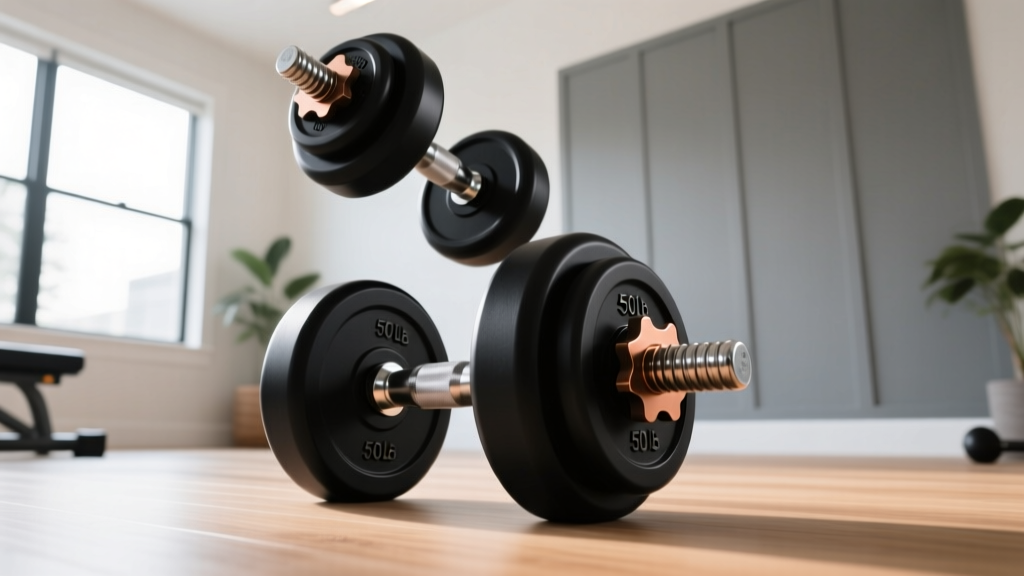
Is a 50 lb Dumbbell Shoulder Press Good? Olympic Barbell Guide
Is a 50 lb dumbbell shoulder press good? We analyze this milestone and provide a 2026 Olympic barbell buying guide focusing on weight and knurling.

The 50 lb Dumbbell Press: A Legitimate Milestone?
If you are asking, 'is a 50 lb dumbbell shoulder press good?' the short answer is an emphatic yes. Pressing 50-pound dumbbells for working sets (typically 6-10 reps) places a male lifter squarely in the intermediate-to-advanced category, and a female lifter in the elite tier. According to strength standards tracked by ExRx.net, a 180-pound male pressing 50s for reps is outperforming roughly 75% of the general gym-going population.
However, as you approach the 60 lb to 75 lb dumbbell range, you hit a mechanical wall. Getting heavy dumbbells into the starting position requires excessive energy, and the micro-loading jumps (usually 5 lbs per hand, meaning a 10 lb total jump) become brutal. This is the exact inflection point where transitioning to an Olympic barbell for your Overhead Press (OHP) becomes mandatory for continued progressive overload.
💡 The Translation Formula
A 100 lb total dumbbell press (50 lbs per hand) roughly equates to a 115 lb to 125 lb barbell OHP. The barbell removes the lateral stabilization requirement, allowing you to push closer to your absolute central nervous system (CNS) limit.
Dumbbell vs. Olympic Barbell: The Pressing Matrix
Before investing in a barbell, understand how the stimulus changes. Below is a direct comparison of the biomechanical and loading differences.
| Feature | 50 lb Dumbbells | Olympic Barbell (20kg) |
|---|---|---|
| Micro-loading | Poor (10 lb total jumps) | Excellent (1 lb to 2.5 lb jumps) |
| Setup Energy Cost | High (knee kick required) | Low (clean or unrack from J-cups) |
| Core Stabilization | Maximum (anti-rotation) | Moderate (anti-extension) |
| Wrist Torque | High (requires active neutral grip) | Low (fixed pronated grip) |
Olympic Barbell Weights: Choosing Your Shaft
When shopping for a barbell specifically for pressing, the weight and diameter of the shaft dictate your wrist health and pressing mechanics.
Standard 20kg (44 lbs) vs. 15kg (33 lbs) Bars
Most men and advanced women will use a standard 20kg Olympic barbell. These feature a 28mm to 29mm shaft diameter. For overhead pressing, a 28mm shaft is vastly superior to a 29mm powerlifting shaft. The 28mm diameter allows for a secure hook grip or closed grip without overstretching the flexor digitorum muscles in the forearm, delaying grip fatigue during high-volume OHP sets.
Conversely, 15kg women's Olympic bars feature a 25mm shaft. While excellent for smaller hands, the lighter overall mass and thinner shaft can cause the bar to 'whip' or oscillate aggressively when locked out overhead, making the lockout phase feel unstable if you are pressing 135+ lbs.
Tensile Strength and the 'Whip' Factor
For a dedicated pressing bar, look for a tensile strength between 190,000 PSI and 200,000 PSI. Bars rated at 215,000+ PSI (often marketed as elite power bars) are too stiff; they transfer the shock of heavy cleans directly into your wrists and clavicles. A 190k PSI bar offers enough rigidity for a stable OHP lockout, but retains just enough 'whip' to absorb the shock if you transition to push-presses or power cleans.
The Knurling Matrix: Protecting Your Collarbones
Knurling is the cross-hatched pattern machined into the steel. According to the engineering breakdowns by the team at BarBend, knurl depth and geometry completely alter the bar's feel. For overhead pressing, your primary concern is the center knurl.
Knurl Geometries Explained
- Mountain Knurl: Sharp, aggressive peaks. Found on cheap, older commercial gym bars. Verdict for OHP: Avoid. It will tear your calluses and scrape your neck.
- Hill Knurl: Shallow valleys, flattened peaks. Very smooth. Verdict for OHP: Good for high-rep conditioning, but may slip if you sweat heavily.
- Volcano Knurl: Deep valleys with a rimmed, textured peak. Offers massive surface area without sharp edges. Verdict for OHP: The gold standard for 2026 home gyms.
The Center Knurl Dilemma
When you unrack a barbell for a shoulder press, the center of the bar rests directly against your sternum or collarbone. If you buy an IPF-spec powerlifting bar, it will feature an aggressive center knurl designed to grip a cotton t-shirt during heavy back squats. When you clean that same bar to your shoulders for an OHP, that aggressive center knurl will act like a cheese grater against your clavicle.
⚠️ Buyer's Warning: Always opt for a barbell with a passive center knurl or a completely smooth center ring if your primary goal is overhead pressing and front-rack positioning. Multi-purpose bars utilize a passive center knurl that provides tactile feedback without shredding your skin.
2026 Top Olympic Barbell Picks for Pressing
Based on current market pricing, steel quality, and knurl profiles, here are the top three Olympic barbells for lifters graduating from the 50 lb dumbbell press.
1. The Gold Standard: Rogue Ohio Bar (Stainless Steel)
- Price: ~$345.00
- Weight: 20kg (44 lbs)
- Shaft: 28.5mm, 190,000 PSI
- Knurl: Rogue's signature Volcano knurl with a passive center.
- Why it wins: The stainless steel shaft requires zero maintenance and provides a bare-steel feel that chalk grips perfectly. The passive center knurl is forgiving on the collarbones during heavy OHP setups.
2. The Budget Workhorse: Bells of Steel Residential Bar 2.0
- Price: ~$249.99
- Weight: 20kg (44 lbs)
- Shaft: 28mm, 190,000 PSI
- Knurl: Moderate mountain/hill hybrid.
- Why it wins: For lifters just breaking past the 50 lb dumbbell plateau, this bar offers incredible value. The 28mm shaft is highly comfortable for pressing, though the black zinc coating requires occasional wiping to prevent oxidation.
3. The Elite Upgrade: Eleiko Olympic WL Training Bar
- Price: ~$1,150.00
- Weight: 20kg (44 lbs)
- Shaft: 28mm, Swedish Steel
- Knurl: Proprietary Eleiko 'Hill' knurl.
- Why it wins: If budget is not an issue, Eleiko's Swedish steel offers a tactile feedback loop that no other manufacturer replicates. It is exceptionally smooth on the hands during high-volume push-press cycles, though it lacks the aggressive 'bite' some lifters prefer for heavy 1-rep max strict presses.
Troubleshooting the Transition: Wrist & Elbow Pain
When moving from 50 lb dumbbells to a 44 lb Olympic barbell plus plates, lifters frequently report wrist and elbow pain. This is rarely a strength issue; it is a mobility and mechanics issue.
- The Grip Width Trap: Dumbbells allow a natural, slightly angled grip. A barbell forces strict pronation. Use the 'false grip' (thumbless) only if you have elite wrist mobility; otherwise, wrap the thumb and ensure the bar rests directly over the heel of the palm, not the fingers, to prevent wrist extension torque.
- Elbow Flare: Flaring the elbows to 90 degrees during a barbell OHP grinds the humerus into the acromion process. Tuck your elbows slightly forward (into the scapular plane) at the bottom of the press. This mirrors the natural path of a dumbbell press and saves your rotator cuff.
Final Verdict
Hitting a 50 lb dumbbell shoulder press is a fantastic achievement that proves your baseline pressing strength and shoulder stability. However, to continue building raw overhead power, the Olympic barbell is the ultimate tool. By prioritizing a 28mm-28.5mm shaft, a 190k PSI tensile strength, and a passive volcano center knurl, you will protect your joints while shattering your current plateaus.
For more detailed breakdowns on barbell metallurgy and rack setups, consult the comprehensive buying guides at Garage Gym Reviews.
More gear to consider
All reviews
Rack Guide for Incline Dumbbell Form: Power vs Squat vs Stand

Cast Iron vs Competition Kettlebell Care & Chest Workout at Home with Dumbbells
Why Loadable Dumbbells Dominate Dumbbell Preacher Curls in 2026

Crunch Fitness Dumbbells to Olympic Barbells: Knurling Guide

Bumper Plate vs Iron Plate Maintenance & Dumbbell Connector Care
