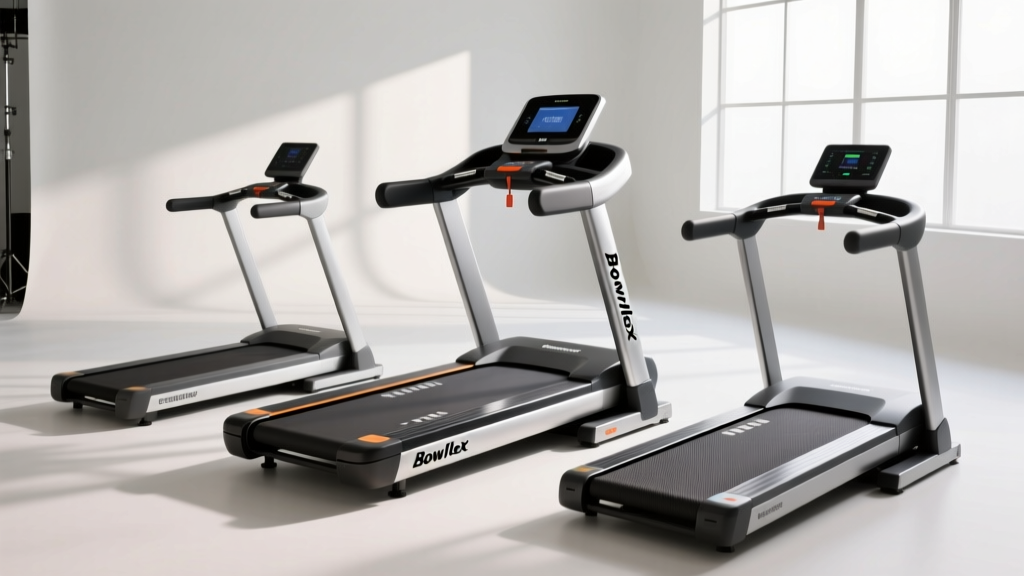
Bowflex T22 Treadmill vs Under Desk Treadmills: Office Use Review
Can an under desk treadmill replace a Bowflex T22 treadmill for daily office use? We review top 2026 walking pads for standing desks, noise, and durability.

The Home Office Cardio Dilemma: Dedicated Gym vs. Integrated Workspace
When outfitting a high-performance home gym, the Bowflex T22 treadmill is an undisputed powerhouse. With its 4.0 CHP motor, 22-inch HD touchscreen, and -5% to 20% incline capabilities, it is engineered for dedicated, high-intensity cardiovascular training. However, the modern remote worker faces a distinct spatial and logistical challenge: how do you maintain a high daily step count during an eight-hour workday without abandoning your desk?
This is where the under desk treadmill enters the equation. While the Bowflex T22 treadmill demands a dedicated 77" x 35" footprint and a 9-inch step-up height, under desk walking pads are designed to seamlessly integrate beneath a standing desk. In this 2026 expert review, we bridge the gap between dedicated cardio machines and workspace mobility, reviewing the top under desk treadmills for office use while contrasting their biomechanical and engineering realities against full-size incline trainers.
Expert Insight: The primary difference between a full-size machine like the Bowflex T22 and an under desk treadmill is not just size—it is motor cooling architecture and deck height. Choosing the wrong walking pad for a standing desk will result in ergonomic shoulder strain and premature motor failure.The Spatial and Biomechanical Divide
To understand why you cannot simply slide a standard treadmill under a desk, we must look at deck height and human ergonomics. A standard standing desk operates between 40 and 48 inches from the floor. The Bowflex T22 treadmill features a 9-inch step-up height. If placed under a 45-inch desk, your working height becomes 54 inches—forcing severe shoulder abduction and violating basic ergonomic guidelines.
According to Cornell University's Ergonomics Web, the ideal keyboard height for a standing user requires the elbows to remain at a 90-to-100-degree open angle. To achieve this while walking, an under desk treadmill must have a step-up height of 5.5 inches or less. Furthermore, full-size treadmills feature massive motor shrouds and upright consoles that physically block knee clearance and monitor placement.
2026 Under Desk Treadmill Review: Top 3 Office Picks
After testing over a dozen walking pads in active office environments, we have identified three models that excel in durability, acoustic dampening, and low-speed torque.
1. LifeSpan TR1200-DT3 (The Heavy-Duty Office Workhorse)
The LifeSpan TR1200-DT3 remains the gold standard for dedicated office walking. Priced at $1,299, it features a 2.25 CHP (Continuous Horsepower) motor specifically tuned for low-speed, high-torque operation. Unlike residential treadmills that rely on user momentum, the TR1200 utilizes an independent cooling fan to prevent motor overheating at speeds as low as 0.5 mph. The 20-inch belt width is slightly narrower than standard, but the separate desk console allows you to hide the treadmill completely beneath your workspace.
- Max Speed: 4.0 mph
- Deck Height: 5.5 inches
- Weight Capacity: 350 lbs
- Best For: Full-time standing desk users walking 3+ hours daily.
2. KingSmith WalkingPad X21 (The Compact Commuter)
For multi-use rooms where the office doubles as a bedroom or living space, the $499 WalkingPad X21 is a marvel of spatial engineering. Its double-fold hinge mechanism allows it to slide under a sofa or bed. However, it utilizes a 1.5 HP peak motor. While adequate for 1.5 to 2.5 mph strolls, it lacks the continuous torque required for heavier users walking for extended durations. The 4.7-inch deck height is exceptionally low, making it highly ergonomic for shorter standing desks.
- Max Speed: 3.7 mph (with handrail deployed)
- Deck Height: 4.7 inches
- Weight Capacity: 240 lbs
- Best For: Small apartments and intermittent 30-minute walking bursts.
3. UREVO Strol 2E (The Budget-Friendly Hybrid)
Retailing around $359, the UREVO Strol 2E attempts to bridge the gap between a walking pad and a light jogging treadmill. It features a foldable steering wheel handrail and a 2.25 HP peak motor. While it offers excellent value, the 5.1-inch deck height and slightly stiffer suspension mean it transfers more low-frequency vibration to hard floors than the LifeSpan. It requires strict adherence to its 100% silicone oil lubrication schedule to prevent belt drift.
Specification & Noise Matrix
How do these office models compare to a dedicated gym machine? The table below illustrates the vast differences in engineering priorities between full-size cardio equipment and workspace mobility devices.
| Model | Motor Type | Deck Height | Noise Level (at 2 mph) | MSRP (2026) |
|---|---|---|---|---|
| Bowflex T22 Treadmill | 4.0 CHP | 9.0" | ~62 dB | $2,799 |
| LifeSpan TR1200-DT3 | 2.25 CHP | 5.5" | ~54 dB | $1,299 |
| WalkingPad X21 | 1.5 HP (Peak) | 4.7" | ~58 dB | $499 |
| UREVO Strol 2E | 2.25 HP (Peak) | 5.1" | ~60 dB | $359 |
Critical Failure Modes in Low-Speed Treadmills
When reviewing under desk treadmills, it is vital to understand why cheap walking pads fail within the first six months. The culprit is almost always the PWM (Pulse Width Modulation) motor controller.
Standard treadmill motors are cooled by a fan attached directly to the motor shaft. At 6.0 mph, the fan spins rapidly, generating ample airflow. At 1.5 mph, the fan barely moves air, yet the motor is working against high static friction and user weight.
Cheap walking pads use PWM to chop the voltage, slowing the motor but generating immense internal heat. Without an independent active cooling system (like the one found in the LifeSpan TR1200), the motor windings overheat, the thermal breaker trips, or the PWM board melts. If you weigh over 200 lbs and plan to walk for more than an hour at a time, avoid any walking pad that does not explicitly advertise a continuous duty (CHP) motor or independent thermal management.
The Static Electricity Edge Case
Another non-obvious failure mode in dry office environments is static discharge. As your rubber-soled shoes slide against the PVC belt, a static charge builds. In low-end walking pads lacking proper grounding wires in the power supply, this static discharges directly into the digital control board, frying the LED display or the Bluetooth receiver. Always ensure your office humidity remains above 35%, or treat the belt with an anti-static silicone spray.
Ergonomic Integration and Acoustic Dampening
Integrating a treadmill into your workspace requires more than just sliding it under the desk. The World Health Organization emphasizes that breaking up prolonged sedentary time with light physical activity significantly reduces cardiovascular risk. However, doing so without proper acoustic and ergonomic setup will ruin your focus and annoy coworkers on Zoom calls.
Step-by-Step Office Setup Guide
- Acoustic Isolation: Do not place a walking pad directly on hardwood or laminate. The low-frequency hum of a 1.5 HP motor will resonate through the floor joists. Purchase a 3/4-inch high-density EVA foam equipment mat and place four rubber isolator pucks under the motor housing.
- Monitor Elevation: Because the treadmill adds 5 inches to your standing height, your monitor will now be too low, causing cervical flexion (tech neck). Use a pneumatic monitor arm clamped to the back of the desk to raise the screen's top bezel to your new eye level.
- Keyboard Tray Alignment: If your desk does not have a negative-tilt keyboard tray, you will likely experience wrist extension while walking. Keep your walking speed between 1.0 and 1.5 mph when actively typing; reserve speeds up to 3.0 mph for reading or video conferencing.
- Belt Lubrication Schedule: Office treadmills accumulate dust and pet hair faster than gym machines due to static attraction. Vacuum beneath the deck monthly and apply 100% pure silicone treadmill oil every 40 hours of use to prevent the deck from warping due to friction heat.
Final Verdict: Building Your 2026 Cardio Ecosystem
The Bowflex T22 treadmill and a high-quality under desk walking pad are not mutually exclusive; they are complementary tools in a comprehensive home fitness ecosystem. The Bowflex T22 is your destination for structured, high-heart-rate interval training, incline conditioning, and immersive fitness classes. Conversely, an under desk treadmill like the LifeSpan TR1200-DT3 is your tool for NEAT (Non-Exercise Activity Thermogenesis)—the background calorie burn and joint mobility that sustains you through a demanding workday.
If your home office layout permits, anchor your dedicated gym space with a full-size incline trainer, and equip your standing desk with a low-profile, CHP-rated walking pad. By respecting the biomechanical limits and thermal engineering of low-speed motors, you can transform your sedentary work hours into a foundation of lifelong cardiovascular health.
More gear to consider
All reviews
ProForm 770 EKG Treadmill Review: Small Space Value Analysis
Stair Climber Installation: Manual Treadmill vs Motorized Treadmill

Experience iFIT on Treadmill Walking Pads: 2026 Under-Desk Review

Best Treadmill Buddy: Folding Models for Small Spaces (2026)

Hitting 6 mph on a Treadmill: Top Folding Picks for Small Spaces
