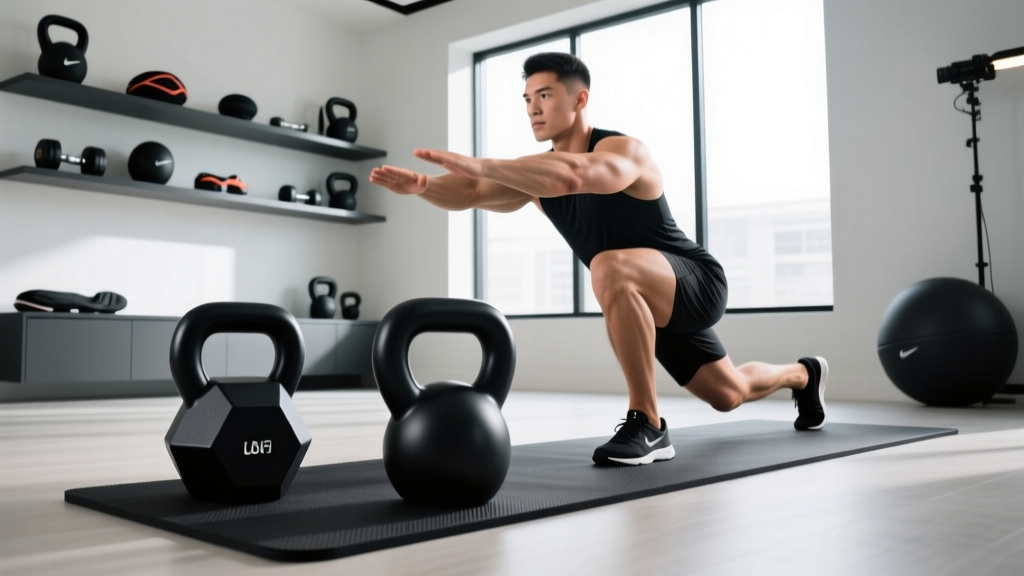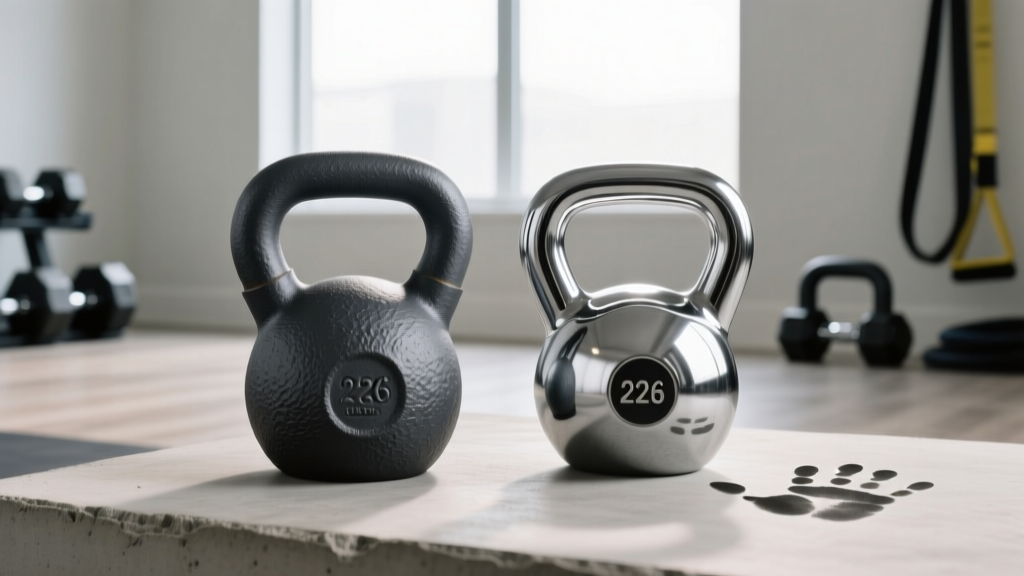
Beyond Dumbbell Exercise Charts: Cast Iron vs Competition Kettlebells
Transition beyond standard dumbbell exercise charts. Our 2026 hands-on review compares cast iron vs competition kettlebells for your home gym.

The Limits of the Laminated Chart
Most home gym owners begin their strength journey with a pair of adjustable dumbbells and a handful of printed dumbbell exercise charts taped to the wall. While dumbbells are exceptional for strict hypertrophy and unilateral pressing, they hit a biomechanical wall when it comes to explosive, multi-planar ballistic movements. You simply cannot perform a high-rep kettlebell snatch or a heavy swing with a dumbbell without risking severe wrist impingement or awkward grip failures.
According to biomechanical analyses published by the National Center for Biotechnology Information (NCBI), the unique offset center of mass in a kettlebell creates a distinct torque profile during hip-hinge movements that dumbbells cannot replicate. This offset forces the posterior chain to work harder to stabilize the load, making the kettlebell an irreplaceable tool for power development. But once you decide to move beyond your standard dumbbell routines and invest in kettlebells, you immediately face the market's biggest dilemma: Do you buy Cast Iron or Competition?
Expert Insight: The Training Style Dictates the Tool
Your choice between cast iron and competition bells should not be based on aesthetics. It must be driven by your training modality. If you follow StrongFirst or traditional Hardstyle programming (focusing on high tension, low rep, explosive power), cast iron is your ideal match. If you train Girevoy Sport (GS) for high-rep endurance and fluid transitions, competition bells are mandatory.
Cast Iron vs. Competition: The Core Differences
Before diving into our 2026 top picks, it is critical to understand the structural differences between these two categories. The manufacturing processes, handle geometries, and weight distributions vary wildly.
| Feature | Cast Iron Kettlebells | Competition Kettlebells |
|---|---|---|
| Dimensions | Scale with weight (a 16kg is much smaller than a 32kg) | Uniform size across all weights (standardized FIKS specs) |
| Handle Diameter | Varies (usually 33mm - 35mm+) | Strictly 33mm (ideal for one-hand snatches) |
| Horn Width | Narrower, better for two-handed swings and goblet squats | Wider, accommodates two bells in the rack position |
| Material | Solid cast iron or steel | Steel shell, often with hollow core fillers on lighter weights |
| 2026 Avg Price | $1.50 - $2.20 per lb | $3.50 - $5.50+ per lb |
Hands-On Review: Top Cast Iron Kettlebells for 2026
Cast iron bells are the workhorses of the home gym. They are dense, durable, and generally more affordable. However, the market is flooded with cheap imports that suffer from rough handles, uneven bases, and brittle paint. Here are the models that survived our rigorous testing.
1. Rogue E-Coat Cast Iron Kettlebell
The Gold Standard for Hardstyle. Rogue’s E-Coat finish is a massive upgrade over traditional powder coating. E-coating (electrocoating) is significantly thinner, meaning it preserves the aggressive texture of the cast iron handle without filling in the micro-pores. During heavy 32kg swings, our testers noted zero slip, even without chalk.
- Handle Diameter: ~35mm on heavier bells (excellent for two-handed grip strength).
- Base Flatness: Machined perfectly flat. No rocking during renegade rows or push-ups.
- Pricing: Approximately $1.85 per lb. A 24kg (53lb) bell will cost around $98.
- Edge Case Warning: The 35mm handle on the 24kg+ sizes can cause forearm pump during high-rep one-arm snatches. If you do a lot of single-arm ballistics, size down or switch to competition.
2. REP Fitness KG Cast Iron Series
The Best Value Alternative. REP Fitness offers a slightly more refined handle geometry on their lighter bells. The 16kg and 20kg models feature a 33mm handle, making them incredibly versatile for both pressing and snatching. The powder coat is smooth but requires occasional chalk for heavy sweat sessions.
- Pros: Color-coded bands on the handle for quick weight identification; highly competitive pricing (~$1.60/lb).
- Cons: The powder coat on the handle can wear smooth over 12-18 months of heavy cleans, requiring light sanding to restore the grip.
Hands-On Review: Top Competition Kettlebells
Competition kettlebells are standardized. Whether you are holding a 12kg or a 32kg, the bell diameter, handle height, and handle thickness (33mm) remain exactly the same. This is crucial for Girevoy Sport athletes who need consistent muscle memory for complex juggling and rack-position transitions.
1. Kettlebell Kings Competition Series (Solid Steel)
The Premium Choice. Many cheaper competition bells use a hollow steel shell filled with sand or ball bearings to achieve the target weight on lighter sizes (like 8kg or 12kg). This results in an annoying rattling sound and a shifted center of gravity. Kettlebell Kings uses a solid steel core insert for their competition line, eliminating the rattle and ensuring the center of mass sits perfectly at the base of the horn.
- Handle Finish: Bare, polished steel. It absorbs chalk beautifully and will not chip or flake.
- Horn Geometry: The wide, rectangular horns rest comfortably against the forearm in the rack position, minimizing the wrist bruising common with cast iron bells.
- Pricing: Premium tier. Expect to pay $4.50+ per lb. A 16kg competition bell will run roughly $155.
2. Bells of Steel Competition Kettlebells
The Budget-Conscious GS Athlete. Bells of Steel offers a highly accurate, color-coded competition line that adheres strictly to IUKL dimensions. While the paint job on the main body can chip if dropped on raw concrete (always use horse stall mats), the handle finish is superb for the price point.
- Pros: Excellent color coding (Yellow for 16kg, Green for 24kg); true 33mm handle across the board.
- Cons: The base plug on the 24kg+ models can occasionally protrude by a millimeter, causing a very slight rock during strict overhead presses if not placed carefully.
Critical Warning on Wrist Bruising: If you are transitioning from dumbbells, your wrists are not conditioned to the impact of the kettlebell clean. Competition bells, with their wider horns and larger surface area, distribute the impact force much more evenly across the forearm than a dense, narrow cast iron bell. If your primary goal includes high-volume cleans, invest in competition bells or wear heavy sweatbands during your first 6 weeks of adaptation.
Real-World Failure Modes: What to Avoid
Through years of testing, we have identified three major failure modes in the kettlebell market that you must avoid:
- The 'Rocking' Base: Many budget cast iron bells on Amazon are poured into molds and left with a rounded or uneven bottom. This makes them dangerous for floor-based movements like Turkish get-ups or renegade rows, as the bell will tip under load.
- Thick Powder Coat Handles: Manufacturers often dip the entire bell in thick plastic powder coating to hide casting imperfections. This fills in the handle texture, turning it into a slippery hazard during overhead presses.
- Seam Lines on the Horn: Poorly finished molds leave a raised ridge of metal (a seam line) on the inside of the horn. During high-rep snatches, this ridge will act like a cheese grater against your calluses, tearing your hands within a single workout.
The Final Verdict: Upgrading Your Arsenal
Moving beyond traditional dumbbell exercise charts and integrating kettlebells into your programming will unlock new tiers of cardiovascular endurance, grip strength, and posterior chain power.
If your training is rooted in heavy, low-rep strength work, tactical conditioning, or CrossFit-style WODs, the Rogue E-Coat Cast Iron series offers the best blend of durability, grip texture, and value. However, if you are dedicated to the sport of kettlebell lifting, high-rep endurance sets, or complex flow routines, the standardized dimensions of the Kettlebell Kings Competition Series are worth the premium investment. Choose the tool that matches your methodology, and leave the dumbbells for the isolation work.
More gear to consider
All reviews
Cable Flyes vs Dumbbell Flys: Adjustable Dumbbell Guide

2026 Olympic Barbell Buying Guide: Weight, Knurling, and the Supinated Dumbbell Row

Beyond the Best Beginner Dumbbell Workout: Barbell Knurling & Weight

Bumper vs Iron Plates: Home Gym Gear for a Lat Workout with Dumbbells
Power Rack vs Squat Rack vs Squat Stand & Dumbbell SVG