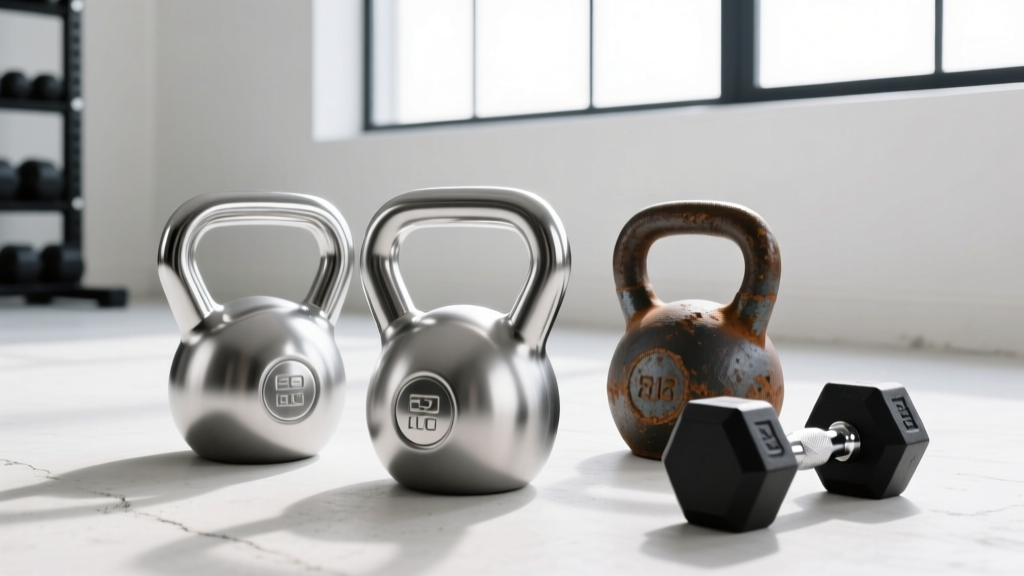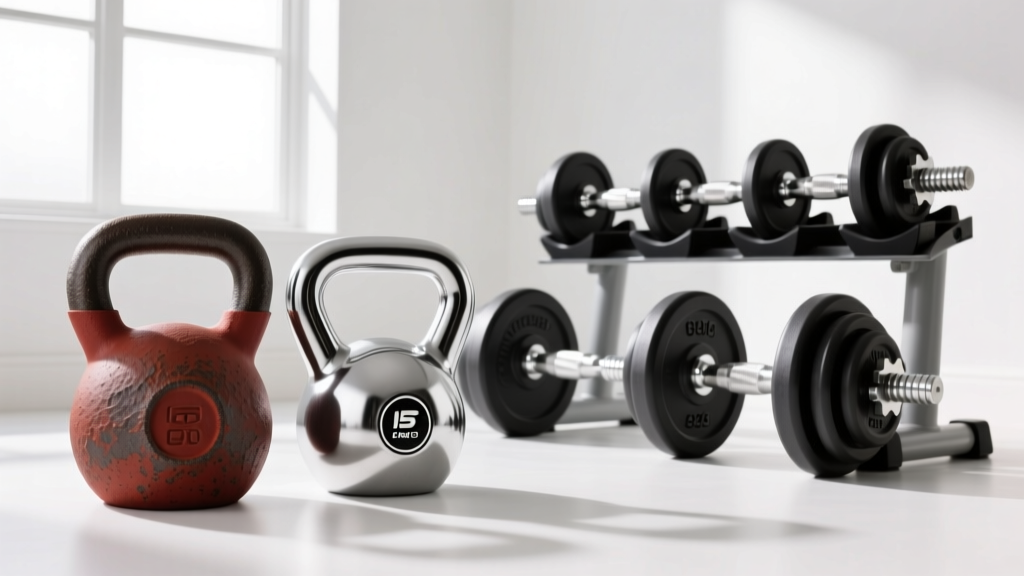
Cast Iron vs Competition Kettlebells & Dumbbell Bent Rows Value
Compare cast iron vs competition kettlebell costs. Plus, a budget breakdown for choosing a dumbbell bent rows setup for your 2026 home gym.

The Metallurgy and Geometry: Cast Iron vs. Competition Steel
Building a functional home gym in 2026 requires navigating a complex landscape of equipment pricing, material durability, and biomechanical efficiency. When outfitting your space for unilateral pulling movements and ballistic hip hinges, the debate between cast iron and competition steel kettlebells is a primary bottleneck for budget-conscious lifters. To make an informed purchasing decision, you must look beyond the sticker price and evaluate the cost-per-pound, manufacturing tolerances, and long-term failure modes of each style.
Cast iron kettlebells, such as the flagship models from Rogue Fitness, are produced via sand casting. This traditional method results in a bell where the physical dimensions scale with the weight. A 16kg cast iron bell will have a noticeably smaller handle diameter (often around 33mm) and a more compact bell profile compared to a 32kg bell, which can feature a handle thickness exceeding 40mm. This variable geometry is ideal for hardstyle training and general strength, but it means your grip adaptation must change as you progress through your weight set.
Conversely, competition kettlebells—like those manufactured by Kettlebell Kings or Onnit—are precision-cast from steel. According to international standards recognized by organizations like StrongFirst, competition bells maintain a uniform dimension regardless of weight: exactly 280mm in height, 210mm in width, and a strict 33mm handle diameter. The internal cavity is filled with steel shot or ball bearings to achieve the target weight. This uniformity ensures that your rack position, clean mechanics, and snatch grip remain identical whether you are lifting an 8kg or a 48kg bell.
Expert Callout: Handle Diameter & Grip FatigueThe 33mm handle on competition bells is universally standardized to accommodate the hook grip and high-repetition snatch cycles without tearing the calluses on the palm. Cast iron bells, particularly those over 24kg, often feature thicker, rougher handles that demand significantly more forearm endurance, altering the stimulus of your workout.
2026 Budget Breakdown: Cost-Per-Pound & Ownership Matrix
When analyzing the financial commitment of free weights, the initial purchase price is only half the equation. You must also factor in shipping density, coating longevity, and the cost of replacing degraded gear. Below is a comparative matrix detailing the true cost of ownership for a standard 16kg, 24kg, and 32kg trio—a staple starter set for most intermediate lifters.
| Metric | Cast Iron (Powder Coat) | Competition Steel | Adjustable Dumbbells (Alternative) |
|---|---|---|---|
| Average Cost Per Pound | $1.80 - $2.20 | $4.50 - $5.50 | $7.00 - $8.50 (Blended) |
| Total Cost (16/24/32kg Set) | ~$315 | ~$780 | ~$400 (5-50lb Pair) |
| Primary Failure Mode | Powder coat chipping, base rust | Horn paint flaking from rack cleans | Internal dial mechanism dropping |
| Resale Value Retention | Moderate (60%) | High (85%) | Low (40%) |
As the data illustrates, cast iron offers a vastly superior entry price. However, competition steel holds its resale value exceptionally well due to its standardized dimensions and appeal to sport-specific athletes. Adjustable dumbbells present a compelling third option, which we will explore in the context of specific hypertrophy movements.
The 'Dumbbell Bent Rows' Dilemma: Biomechanics vs. Budget
Many lifters mistakenly purchase heavy kettlebells specifically for unilateral back work, assuming the tool is universally superior for all pulling motions. However, if your primary training goal is latissimus dorsi hypertrophy through dumbbell bent rows, you need to critically evaluate the biomechanics against the financial cost of a kettlebell set.
According to biomechanical analyses by the American Council on Exercise (ACE), the dumbbell bent row relies on a stable, neutral center of mass to isolate the back musculature. When you perform dumbbell bent rows, the weight is evenly distributed beneath your grip. This balance allows you to drive the elbow toward the hip and achieve true muscular failure on the lats without your grip or forearm flexors bottlenecking the set.
Why Grip Fails Before Lats on Kettlebell Rows
When you attempt the same movement with a kettlebell, the center of mass is offset. The bell hangs below and slightly in front of the handle, creating a rotational torque. To prevent the kettlebell from spinning out of your hand during the concentric pull, your brachioradialis, forearm flexors, and crush grip must work in overdrive. Consequently, during heavy kettlebell rows, your grip often fails long before your latissimus dorsi reaches mechanical tension failure.
- For Ballistics (Swings, Cleans, Snatches): The kettlebell's offset horn is mandatory for proper rack positioning and hip-hinge mechanics.
- For Hypertrophy (Dumbbell Bent Rows): A hex dumbbell or adjustable dumbbell provides the balanced load necessary for pure back isolation.
From a budget perspective, spending $250 on a single 48kg competition kettlebell for heavy rows is a poor allocation of funds. Instead, investing $400 in a high-quality adjustable dumbbell set (like the Nuobell 552 or PowerBlock Elite EXP) provides you with 15 distinct weight increments up to 50lbs per hand. This not only optimizes your dumbbell bent rows for progressive overload but also covers your pressing, curling, and lateral raise requirements, delivering a vastly higher return on investment for general physique development.
Real-World Value Scenarios: Where Should Your Money Go?
To finalize your purchasing decision, map your training objectives to one of the following budget scenarios:
Scenario A: The Hardstyle & Sport Purist (Budget: $500+)
If your training revolves around SFG/RKC hardstyle protocols, Turkish get-ups, or kettlebell sport (GS), cast iron is insufficient due to its variable handle thickness and bulky bell profiles. You must allocate your budget toward competition steel. Start with a 16kg and 24kg competition pair ($350) and supplement with a single cast iron bell for heavy goblet squats where handle geometry matters less.
Scenario B: The Hypertrophy Generalist (Budget: $400)
If your goal is muscle building and you rely heavily on the dumbbell bent row, chest presses, and lunges, skip the kettlebell entirely. Purchase a pair of adjustable dumbbells ($400) and a set of rubber hex dumbbells for heavy floor work. The balanced center of mass will yield superior hypertrophy outcomes, and the cost-per-exercise ratio is unbeatable.
'The best equipment is the one that matches the biomechanical demand of the exercise. Using a $200 competition kettlebell for strict bent-over rows is like using a scalpel to chop wood. Use the right tool for the physiological adaptation you seek.' — FitGearPulse Biomechanics Review Board
Longevity, Failure Modes, and Maintenance
Regardless of whether you choose cast iron, competition steel, or adjustable dumbbells, proactive maintenance is required to protect your investment over a 5-to-10-year lifespan.
- Cast Iron Powder Coat Care: The primary failure mode of cast iron is chipping on the base, which exposes raw iron to ambient humidity. Always use a rubber matting system (3/8-inch thickness minimum) to absorb impact. If the powder coat chips, immediately apply a rust-inhibiting primer and a matte black enamel touch-up to prevent oxidation.
- Competition Steel Horn Maintenance: The paint on the horns of competition bells will inevitably flake due to the friction of rack cleans and snatches. To extend the life of the coating, wrap the horns with athletic tape during high-rep GPP (General Physical Preparedness) cycles, or lightly sand the horns with 400-grit sandpaper and apply a specialized metal sealant.
- Adjustable Dumbbell Mechanisms: Never drop adjustable dumbbells. The internal dial or pin mechanisms are precision-engineered and highly susceptible to misalignment upon impact. Store them in their designated cradles when not in use to prevent dust accumulation in the weight-selection gears.
Ultimately, the choice between cast iron and competition kettlebells hinges on your adherence to sport-specific standards versus general strength training. However, when evaluating the broader scope of your home gym's pulling mechanics, recognizing that the traditional dumbbell bent row remains superior for back isolation will save you hundreds of dollars and yield significantly better muscular development in 2026 and beyond.
More gear to consider
All reviews
EZ Curl vs Straight Bar: Space Layouts for Dumbbell Workout Routines

Barbell vs Dumbbell Shoulder Press: Setup & Barbell Guide

Power Rack vs Squat Rack vs Stand: Hand Weights Dumbbells Mistakes
Rubber Hex vs Urethane: 2026 Dumbbell Cost & Market Trends

Best T Bar Row Alternative with Dumbbells: Loadable Budget Guide