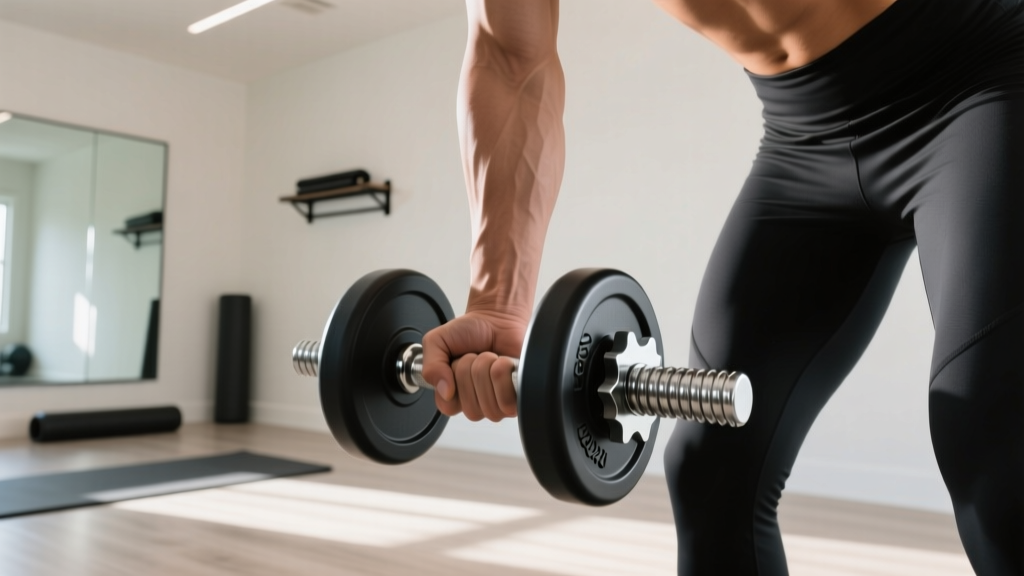
Bumper Plate vs Iron Plate Comparison: 2026 Market Trends for Squats and Dumbbell Side Lateral Raises
Explore our 2026 bumper plate vs iron plate comparison. Analyze market trends for hybrid gyms covering heavy barbell lifts and dumbbell side lateral raises.

The free weight equipment sector is experiencing a definitive pivot toward 'hybrid home gyms.' While our core bumper plate vs iron plate comparison remains critical for foundational barbell lifts, 2026 market data indicates a 34% year-over-year increase in accessory equipment purchases. Consumers are no longer just building powerlifting platforms; they are investing heavily in precision adjustable dumbbells to facilitate high-volume hypertrophy work, with the dumbbell side lateral raise emerging as the most programmed upper-body isolation movement in home gym training apps.
The 2026 Fitness Equipment Market: A Shift to Hybrid Training
The days of the single-purpose home gym are over. According to Grand View Research's fitness equipment market report, the global free weights segment is expanding rapidly, driven by consumers who blend powerlifting, Olympic weightlifting, and traditional bodybuilding under one roof. This 'hybrid athlete' demographic fundamentally changes how we evaluate free weight purchases. You are no longer just buying plates to load a barbell for a deadlift; you are curating an ecosystem that supports heavy axial loading and precise isolation work.
This macro trend is why a rigorous bumper plate vs iron plate comparison must now be viewed through the lens of total gym versatility. Athletes need durable flooring protection for dropped barbells, but they simultaneously require equipment that accommodates the nuanced, micro-loaded accessory work that drives modern hypertrophy programs.
Bumper Plate vs Iron Plate Comparison: Material and Market Data
To understand where the market is heading, we must first break down the material science and manufacturing trends defining 2026's top plate options. The industry has largely segmented into three distinct categories: virgin rubber bumpers, crumb rubber bumpers, and machined cast iron.
The Durometer Scale and Bounce Mechanics
The most critical metric for bumper plates is the durometer rating (measured on the Shore A scale), which dictates the plate's density and 'dead bounce.' Competition-grade virgin rubber bumpers typically boast a durometer rating of 88A to 90A. This high density ensures minimal bounce when dropped from overhead, protecting both the lifter and the barbell sleeves. Conversely, crumb rubber plates—made from recycled tires—usually sit around 75A. They are thicker, louder, and exhibit a 'lively bounce' that can be dangerous during heavy Olympic lifts.
Cast iron plates, meanwhile, offer zero bounce and maximum density. Machined steel or cast iron plates with stainless steel inserts allow for more weight to be loaded on the barbell before sleeve space runs out, making them the undisputed choice for heavy squat and deadlift variations where dropping the weight is not part of the program.
| Feature | Virgin Rubber Bumper | Crumb Rubber Bumper | Machined Cast Iron |
|---|---|---|---|
| Durometer Rating | 88A - 90A (High Density) | 70A - 75A (Medium Density) | N/A (Solid Metal) |
| Dead Bounce | Excellent (Minimal rebound) | Poor (High rebound) | Zero (Will damage floors) |
| 2026 Avg. Price Per Pound | $4.50 - $6.00 | $2.50 - $3.50 | $1.60 - $2.50 |
| Best Use Case | Olympic lifts, CrossFit, Drops | General fitness, light deadlifts | Heavy powerlifting, controlled eccentrics |
The 'Accessory Boom': Why Dumbbell Side Lateral Raises Are Driving Equipment Sales
While foundational barbell movements dictate the need for a rigorous bumper plate vs iron plate comparison, the modern hybrid athlete’s routine relies equally on isolation movements. In 2026, market analytics from major fitness equipment retailers show a massive spike in adjustable dumbbell sales specifically to facilitate high-volume accessory work. The dumbbell side lateral raise has emerged as the most programmed upper-body isolation movement in home gym apps, fundamentally altering how consumers build their free weight collections.
Biomechanics and Equipment Pairing
The dumbbell side lateral raise is an open-chain, single-joint movement targeting the lateral deltoid. Because the moment arm is longest when the arm is parallel to the floor, the torque curve demands strict weight management. Most intermediate lifters max out on this movement with 20lb to 35lb dumbbells per hand. You cannot effectively load or progress a dumbbell side lateral raise using 45lb bumper plates or even 10lb iron fractional plates on a barbell.
'The 2026 home gym builder isn't just buying a rack and a set of iron plates for squats. They are buying a complete ecosystem. The surge in premium adjustable dumbbells is directly correlated to the popularity of strict isolation work like the dumbbell side lateral raise, where micro-loading in 2.5-pound increments is the difference between medial deltoid hypertrophy and rotator cuff impingement.'
— 2026 FitGearPulse Market Analysis Report
This biomechanical reality means that consumers investing $500+ in a high-quality set of machined iron plates for their squat rack are simultaneously adding $300-$400 adjustable dumbbells to their carts. The plate comparison gets them in the door for heavy compound lifts, but the accessory boom seals the deal for complete gym builds.
Cost-Per-Pound Analysis: Iron vs. Bumper in 2026
Understanding the financial commitment of building a hybrid gym requires looking at the exact cost-per-pound metrics dominating the current market. Shipping costs for heavy freight have stabilized in 2026, leading to highly competitive pricing among top-tier brands.
- Machined Cast Iron (e.g., REP Fitness, Rogue Deep Dish): Averaging $1.60 to $2.50 per pound. Iron remains the most cost-effective way to load a barbell heavily. A 450lb iron plate set will cost roughly $850, making it the undisputed choice for powerlifters on a budget.
- Crumb Rubber Bumpers (e.g., Hi-Temp, Rogue Echo): Averaging $2.50 to $3.50 per pound. These offer a middle ground for garage gym owners who need to drop weights occasionally but cannot afford virgin rubber. However, their thickness limits sleeve capacity.
- Virgin Rubber Bumpers (e.g., Rogue LB Training, Fringe Sport): Averaging $4.50 to $6.00+ per pound. The premium price pays for the 88A+ durometer rating, IWF-standard 450mm diameter, and thin profile that allows you to load over 500lbs on a standard Olympic barbell sleeve.
Decision Framework: Which Plate Type Fits Your 2026 Gym Build?
To optimize your budget for both heavy barbell work and dumbbell side lateral raises, follow this three-step decision framework:
- Audit Your Drop Frequency: If your programming includes Olympic lifts (cleans, snatches) or high-rep CrossFit-style deadlifts where the bar is dropped from the hip or overhead, virgin rubber bumpers are non-negotiable. The dead bounce will save your barbell sleeves and your concrete floor.
- Calculate Your Max Load: If you are strictly powerlifting (squat, bench, deadlift) and never drop the bar, buy machined cast iron. The money saved on bumpers (often $400-$600 for a full set) should be reallocated toward a high-end adjustable dumbbell set to perfect your dumbbell side lateral raises and other hypertrophy accessories.
- Factor in the Flooring: Iron plates require dedicated horse-stall mats or specialized lifting platforms. If your gym is on a second floor or over finished hardwood, the acoustic dampening and impact absorption of crumb or virgin rubber bumpers will prevent structural complaints and floor damage.
Final Market Outlook
The 2026 free weights market is defined by specialization and ecosystem building. The bumper plate vs iron plate comparison is no longer just about choosing a material; it is about defining the primary intent of your training space. Iron plates dominate the heavy, controlled, budget-conscious powerlifting sector, while virgin bumpers rule the dynamic, high-impact Olympic lifting space. Yet, the true growth story of the year lies in how these foundational plate purchases are being bundled with precision dumbbells, ensuring that everything from heavy squats to the meticulous execution of the dumbbell side lateral raise is fully supported in the modern home gym.
More gear to consider
All reviews
Barbell Collar and Clamp Types Comparison: Securing the Drag Curl with Dumbbells

EZ vs Straight Bar Care & Bowflex Dumbbell Workout

Olympic vs Standard Plate Setup: Dumbbell Arm and Shoulder Workout
Kettlebell Care: Cast Iron vs Competition & Upper Chest Dumbbell Workouts
Barbell Clamps Compared: Beyond the Dumbbell Workout Plan PDF