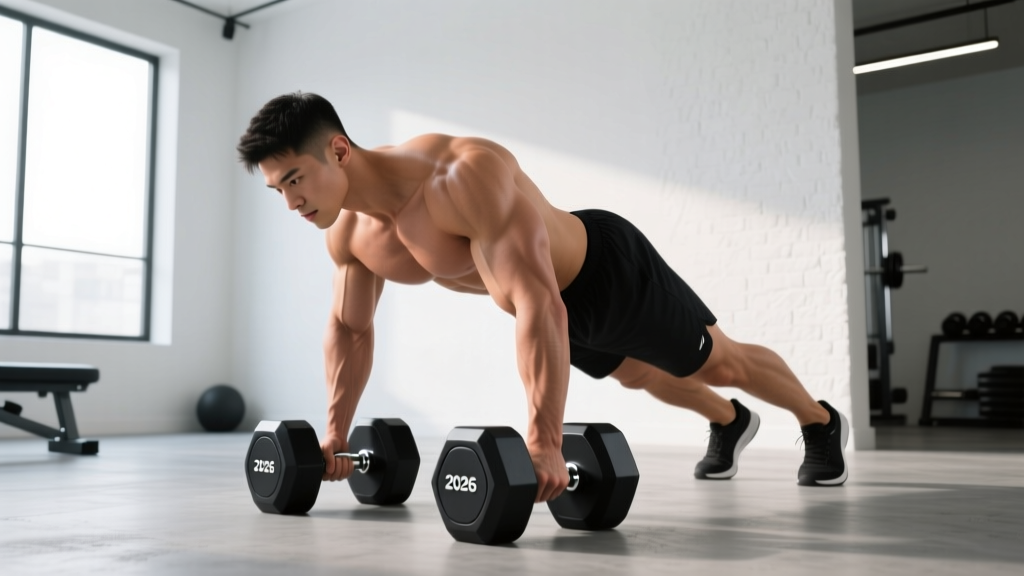
Master Bent Over Dumbbell Row Form: 2026 Adjustable Dumbbell Guide
Master your bent over dumbbell row form with our step-by-step beginner guide and 2026 adjustable dumbbell comparison for optimal home gym gains.

Building a thick, resilient back is a cornerstone of any well-rounded fitness journey, and the bent-over dumbbell row remains one of the most effective movements for targeting the latissimus dorsi, rhomboids, and rear deltoids. However, for beginners, mastering bent over dumbbell row form can be notoriously tricky. Ego-lifting and poor weight distribution often lead to lower back strain and bicep dominance rather than true back development.
This is where modern adjustable dumbbells become your greatest asset. By allowing for micro-loading and incremental progression, adjustable dumbbells let you prioritize biomechanics over sheer poundage. In this comprehensive 2026 guide, we will break down the exact step-by-step form for the bent-over row and review the best adjustable dumbbells on the market specifically through the lens of back training.
Step-by-Step: Perfecting Your Bent Over Dumbbell Row Form
Before we dive into equipment, we must establish the movement pattern. According to the ACE Fitness Exercise Library, the row requires a delicate balance of core stability and scapular mobility. Follow these four steps to build a bulletproof foundation.
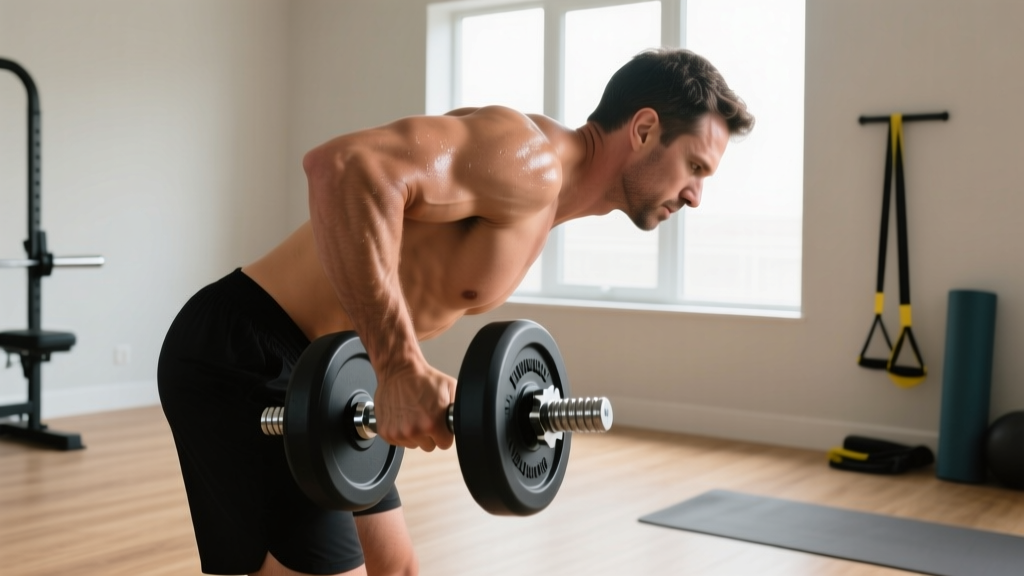
- The Hip Hinge (The Setup): Stand with feet shoulder-width apart, holding a dumbbell in each hand. Push your hips back as if closing a car door with your glutes. Keep a slight bend in your knees. Your torso should be at a 45-degree angle to the floor. Cue: You should feel a deep stretch in your hamstrings.
- The Grip and Brace: Let the dumbbells hang straight down with a neutral grip (palms facing each other). Brace your core as if anticipating a punch to the stomach. Depress your shoulder blades slightly to protect the rotator cuff.
- The Concentric Pull: Drive your elbows up and back toward the ceiling. Do not think about pulling the weight to your chest; think about pulling your elbow to your hip pocket. Squeeze your shoulder blades together at the top of the movement for a full one-second pause.
- The Eccentric Lowering: Lower the dumbbells under strict control for a 2-to-3 second negative. Resist gravity. Reset your scapula at the bottom before initiating the next rep.
If you find yourself jerking your torso upward to heave the weight, the load is too heavy. This shifts the tension from your lats to your erector spinae (lower back). Drop the weight by 5 lbs and focus on the mind-muscle connection.
Why Adjustable Dumbbells are the Ultimate Rowing Tool
When learning bent over dumbbell row form, traditional fixed-weight dumbbells often force beginners into 5 lb or 10 lb jumps. Moving from a 15 lb row to a 25 lb row is a massive 66% increase in load, which almost always breaks down form.
High-quality adjustable dumbbells allow for 2.5 lb micro-increments. This enables a concept called progressive overload via volume—you can add reps or slow down the eccentric phase before you are forced to increase the actual weight. Furthermore, the compact footprint of adjustable sets makes them ideal for home gyms where space is at a premium.
2026 Adjustable Dumbbell Comparison for Back Workouts
Not all adjustable dumbbells are created equal, especially for rowing. Handle length, grip texture, and weight distribution drastically affect your biomechanics. Below is our 2026 comparison matrix of the top contenders.
| Model | 2026 Price | Increments | Handle Length | Row Suitability |
|---|---|---|---|---|
| Nuobell 550 | $399 | 5 lbs | 11.8 inches | ⭐⭐⭐⭐⭐ |
| Bowflex SelectTech 552 | $349 | 2.5 - 5 lbs | 13.5 inches | ⭐⭐⭐ |
| PowerBlock Elite EXP | $329 | 2.5 lbs | 12.0 inches | ⭐⭐⭐⭐ |
1. Nuobell 550: The Biomechanical Winner
For the bent-over row, the Nuobell 550 is currently the gold standard. Unlike dial-based systems, Nuobell uses a twist-handle mechanism that mimics the exact dimensions and knurled grip of a traditional fixed hex dumbbell. With a handle length of just 11.8 inches, your hands can sit closer together without the bulky weight plates clacking against each other at the bottom of the movement. The aggressive knurling ensures the dumbbell won't slip from your grip when your hands get sweaty during high-rep hypertrophy sets.
2. Bowflex SelectTech 552: The Beginner Standard
The Bowflex 552 remains the most popular adjustable dumbbell in the world, and for good reason. The dial system is intuitive, and the 2.5 lb micro-increments up to 25 lbs are phenomenal for beginners learning row mechanics. However, it has a distinct flaw for rowing: the 13.5-inch overall length. The bulky plastic ends force a wider grip, which can slightly alter your natural elbow tracking and cause the dumbbells to collide if you prefer a close-grip row. Pro Tip: Never drop the Bowflex 552; the internal dial mechanism is fragile and will jam if subjected to impact.
3. PowerBlock Elite EXP: The Heavy-Duty Tank
If your primary goal is heavy, low-rep strength work, the PowerBlock Elite EXP is unmatched. The caged, rectangular design is virtually indestructible. You can drop them after a heavy set without fear of breaking the selector pin. However, the cage design restricts wrist movement. During the concentric pull of a row, your wrist naturally wants to extend slightly; the PowerBlock cage can dig into your forearm at heavier weights, making it slightly less comfortable for high-volume back days compared to the Nuobell.
Programming: Sets, Reps, and Progression
Once your form is dialed in and your equipment is selected, you need a structured plan. As noted by the strength coaches at BarBend, the back responds exceptionally well to a mix of mechanical tension and metabolic stress.
- Weeks 1-3 (Form Focus): 3 sets of 12-15 reps. Use a weight where you can pause for a full second at the top of every rep. Rest 60 seconds between sets.
- Weeks 4-6 (Hypertrophy): 4 sets of 8-10 reps. Increase the weight by 2.5 to 5 lbs. Focus on a 3-second eccentric lowering phase. Rest 90 seconds.
- Weeks 7+ (Strength): 4 sets of 5-8 reps. Heavier loads. You may need to use a slight (10%) torso momentum to initiate the pull, but the eccentric must remain controlled.
Troubleshooting Common Rowing Edge Cases
Even with perfect instructions, beginners encounter physical roadblocks. Here is how to troubleshoot the most common failure modes.
✅ Issue: Lower back fatigue precedes back fatigue.Fix: Your hamstrings and glutes are likely tight, preventing a proper hip hinge. Switch to a chest-supported incline row or a single-arm bench row to remove the lower back from the equation while you build baseline lat strength.
✅ Issue: Biceps are taking over the movement.Fix: Use a thumbless (suicide) grip. By wrapping your thumb over the top of the handle alongside your fingers, you turn your hand into a simple 'hook'. This neurologically disengages the bicep and forces the latissimus dorsi to pull the load.
✅ Issue: Dumbbells keep clacking together at the bottom.Fix: Widen your stance by 3-4 inches. This naturally pushes your hips back further and creates a wider gap between your arms, giving bulky adjustable dumbbells (like the Bowflex) the clearance they need.
Final Thoughts on Your Back Training Journey
Mastering your bent over dumbbell row form is a rite of passage for any lifter. It teaches you body awareness, core bracing, and the vital mind-muscle connection required for advanced training. By pairing meticulous form with the micro-loading capabilities of modern adjustable dumbbells like the Nuobell or Bowflex, you guarantee steady, injury-free progress. Grab your dumbbells, hinge at the hips, and start building that resilient back today.
More gear to consider
All reviews
EZ Curl Bar vs Straight Bar: 2026 Data & Svend Press with Dumbbells
Best Dumbbell Lower Back Exercises: Adjustable Dumbbell Mistakes

Why Is Dumbbell Bench Harder Than Barbell? Hex vs Urethane Care

EZ Curl Bar vs Straight Bar: Longevity & Golden Dumbbells Care
Maintaining Loadable Dumbbells for a Safe Dumbbell Workout for Abdomen
