
Barbell Setup Guide: Weight, Knurling & Gym Ball Dumbbell Exercises
Master your 2026 home gym setup. This walkthrough covers Olympic barbell weight and knurling selection, plus layout tips for gym ball dumbbell exercises.

The Complete 2026 Home Gym Installation Walkthrough
Designing a high-performance home gym in 2026 requires more than just dropping equipment onto a concrete slab. A true commercial-grade setup demands a strategic floor plan that separates heavy axial loading from functional accessory work. Whether you are outfitting a two-car garage or a dedicated basement studio, the installation process must prioritize safety, equipment longevity, and biomechanical efficiency.
This comprehensive setup and installation walkthrough focuses heavily on the centerpiece of your gym: the Olympic barbell. We will break down the exact specifications for barbell weight, tensile strength, and knurling profiles to ensure your main lifting platform is perfectly calibrated. Finally, we will transition to the secondary functional zone, detailing the spatial and flooring requirements necessary to safely perform gym ball dumbbell exercises without compromising your heavy lifting footprint.
Zone 1: Olympic Barbell Selection (Weight & Knurling)
The barbell is the only piece of equipment you physically grip during heavy compound movements. Selecting the wrong shaft diameter or knurling profile can lead to torn calluses, premature grip failure, or even wrist impingements. According to extensive testing by BarBend's Barbell Knurling Guide, the geometry of the knurl is just as critical as the steel's tensile strength.
Decoding Barbell Weight and Tensile Strength
Standard Olympic barbells weigh exactly 20kg (44 lbs) for men and 15kg (33 lbs) for women. However, the weight is only the baseline. The true differentiator in a buying guide is the tensile strength, measured in PSI (pounds per square inch). This metric dictates how much weight the bar can hold before it permanently bends or snaps.
- 165,000 to 190,000 PSI: Ideal for multi-purpose and home gym use. Bars like the Rogue Ohio Bar (190k PSI) offer enough whip for Olympic lifts while remaining stiff enough for heavy squats. Priced around $295 to $325, this is the sweet spot for 90% of lifters.
- 195,000 to 215,000+ PSI: Reserved for elite powerlifting and specialized Olympic weightlifting. Eleiko’s competition bars push past 215k PSI, resulting in an incredibly stiff shaft that costs upwards of $1,100. Unless you are competing at a national level, this is an unnecessary investment for a home setup.
Furthermore, pay attention to the shaft diameter. A 28mm shaft provides the optimal 'whip' and grip comfort for dynamic movements, while a 28.5mm or 29mm shaft offers the rigidity required for heavy, slow-grind powerlifting.
The Knurling Matrix: Hill, Mountain, and Volcano
Knurling is the cross-hatched pattern machined into the steel shaft. Manufacturers use CNC lathes to cut these patterns, resulting in three primary geometries:
| Knurl Profile | Geometry Description | Best Application | Example Model (2026) | Estimated Price |
|---|---|---|---|---|
| Hill | Rounded peaks, shallow valleys. Passive grip. | High-rep WODs, barehand lifting, beginners. | Various Amazon/Economy Bars | $150 - $200 |
| Mountain | Sharp, pointed peaks. Aggressive, tears skin if overused. | Heavy 1-3 rep max deadlifts, powerlifting meets. | American Barbell Elite | $350 - $450 |
| Volcano | Peaks are shaved off, creating a rim with deep valleys. Maximum surface area. | All-around training, heavy squats, high-rep grip work. | Rogue Ohio Bar / Rep Fitness Excalibur | $295 - $380 |
When buying a barbell for a home rack, always check the center knurl. For powerlifters, an aggressive center knurl is mandatory to prevent the bar from slipping down your back during low-bar squats. However, if your programming includes high-rep front squats or cleans, an aggressive center knurl will shred your collarbones. Opt for a 'passive' or completely smooth center shaft if your training is heavily front-loaded.
Zone 2: Platform and Rack Installation Steps
Once you have selected your barbell, you must install the environment that supports it. Dropping a 20kg steel bar loaded with 400 lbs of iron onto raw concrete will destroy both the floor and the bar's internal bearings.
Step-by-Step Platform Assembly
- Base Layer (Plywood): Lay down two layers of 3/4-inch OSB or plywood. Stagger the seams and secure them with wood glue and 1.5-inch wood screws. This provides the necessary shock absorption and structural integrity.
- Impact Zone (Rubber Mats): Cut 3/4-inch thick horse stall mats (typically 4x6 feet) to cover the outer edges of the platform where the weight plates will strike. According to Garage Gym Reviews' Flooring Guide, vulcanized rubber mats significantly dampen acoustic vibrations and protect your concrete slab.
- Lifting Surface (Wood Finish): The center 4x4 foot section should be finished hardwood or sealed plywood to provide a flat, non-slip surface for your lifting shoes.
Anchoring the Power Rack
Never leave a power rack freestanding if you plan on doing heavy barbell work. Bolt the rack directly into the concrete using 3/8-inch wedge anchors or drop-in anchors. If your rack sits on the wooden platform, ensure the bolts penetrate through the plywood and into the concrete below to prevent lateral shifting during failed lifts.
Zone 3: Layout for Gym Ball Dumbbell Exercises
A complete 2026 home gym setup is not just about maximal strength; it requires a dedicated accessory zone for unilateral work, core stabilization, and hypertrophy. This is where you integrate space for gym ball dumbbell exercises. Stability ball training demands a completely different spatial and flooring footprint than your heavy deadlift platform.
Spatial and Flooring Requirements
When performing gym ball dumbbell exercises like Swiss ball chest presses, hamstring curls, or overhead tricep extensions, your body's footprint expands significantly. You need a minimum clearance zone of 8x8 feet to ensure your elbows and dumbbells do not strike the power rack or walls during the eccentric phase of the movement.
Flooring Transition: Do not perform stability ball work on the rough horse stall mats used for your deadlift platform. The abrasive texture will eventually degrade the anti-burst PVC of the gym ball. Instead, lay down 5/8-inch interlocking EVA foam tiles in this secondary zone. The foam provides enough grip to keep the ball from sliding out from under you during hamstring curls, while protecting the ball's exterior from punctures.
Equipment Storage Integration
To maintain a clean installation, mount a vertical dumbbell rack at least 3 feet away from the ball zone. When executing gym ball dumbbell exercises, you need to be able to pick up and drop the weights safely without rolling off the ball. Keep adjustable dumbbells (like the Nuobell or PowerBlock Pro sets) on a low, stable bench adjacent to the foam zone to minimize the risk of wrist strain when hoisting heavy weights into position.
Long-Term Maintenance Protocol
The longevity of your equipment relies on a strict maintenance schedule. Environmental humidity and skin oils are the primary enemies of your gear.
Barbell Care
Regardless of whether your bar features zinc, cerakote, or stainless steel finishing, chalk and dead skin will accumulate in the knurling valleys. Once a month, use a stiff brass or nylon brush to scrub the knurl. Follow this by applying a light coat of 3-in-One oil or mineral oil to the shaft and sleeves to prevent oxidation. Never use WD-40, as it attracts dust and degrades the bushings inside the sleeves.
Functional Gear Sanitization
Your stability ball and dumbbell handles require weekly wipe-downs with a non-alcohol-based disinfectant. Alcohol-based cleaners will dry out the PVC of the gym ball, leading to micro-fissures and eventual bursting under load. Inspect the ball's surface for deep scratches before every heavy dumbbell chest press session.
'The difference between a garage full of iron and a true training facility lies in the intentionality of the setup. From the microscopic peaks of a volcano knurl to the shock-absorbing foam beneath your stability ball, every square inch must serve a biomechanical purpose.' — FitGearPulse Editorial Team, 2026
By meticulously selecting your Olympic barbell based on tensile strength and knurl geometry, properly installing your lifting platform, and dedicating a protected zone for gym ball dumbbell exercises, you create a resilient, high-performance environment capable of supporting your training evolution for decades to come. For further reading on barbell specifications and sleeve mechanics, consult the engineering resources available via Rogue Fitness.
More gear to consider
All reviews
2026 Trends: Dumbbell Rack Storage & Dumbbell Dead Bugs

Standard vs Olympic Plates for a Dumbbell Hip Thrust Floor Setup

Close Grip Dumbbell Press: Adjustable Dumbbell Mistakes & Fixes

Maximize Good Workouts With Dumbbells: Adjustable Set Troubleshooting
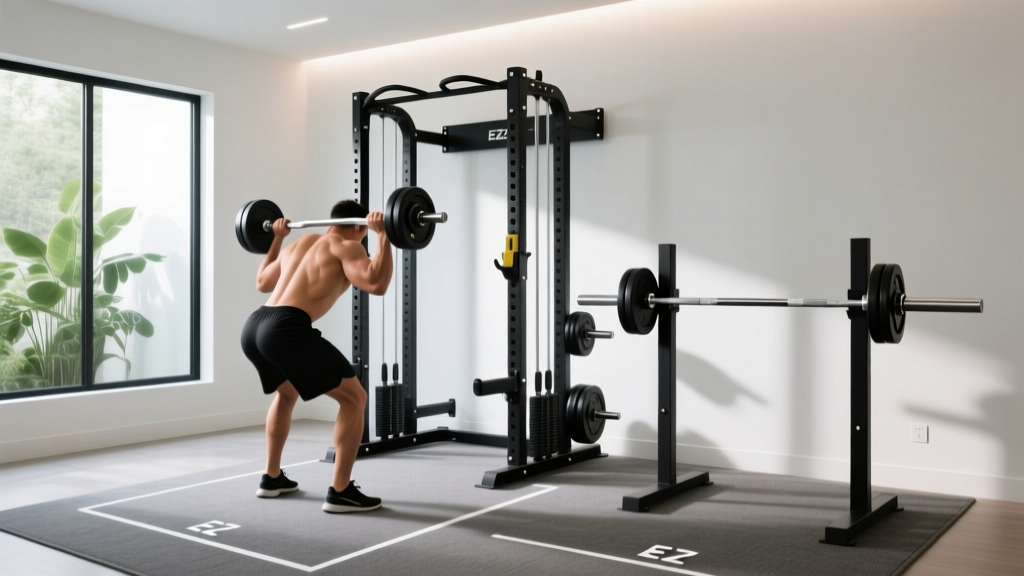
Space-Saving Gym Layouts: Bent-Over Dumbbell Rows, EZ vs Straight Bar
