Barbell or Dumbbell Bicep Curls: Neoprene Mistakes & Fixes
Discover common mistakes when performing barbell or dumbbell bicep curls with neoprene weights. Troubleshoot grip, form, and plateaus for home gyms.

The Equipment Reality Check: Neoprene vs. Steel for Arm Day
When building a home gym on a budget, neoprene-coated dumbbells are often the first purchase. They are colorful, protect hardwood floors from scratches, and are widely available from brands like CAP Barbell and Yes4All, typically costing between $1.20 and $1.80 per pound in 2026. However, when it comes to isolating the biceps brachii, brachialis, and brachioradialis, this synthetic rubber coating introduces unique biomechanical and equipment-based challenges. Whether you are debating the merits of barbell or dumbbell bicep curls, using the wrong equipment or failing to adapt your form to the tool in your hands can completely stall your hypertrophy progress.
Neoprene (polychloroprene) is an excellent material for impact absorption, but it lacks the aggressive knurling found on bare steel, chrome, or high-grade urethane Olympic bars. This fundamental difference in surface friction dictates how you must approach your curling mechanics. Below, we break down the most common mistakes home gym enthusiasts make with neoprene dumbbells and provide actionable troubleshooting steps to break through your arm-building plateaus.
⚠️ The Sweat-Slip Hazard
Neoprene degrades and becomes highly slick when exposed to the sebum and sodium in human sweat. If your dumbbells feel slippery mid-set, do not chalk the neoprene directly (it creates a gummy, degraded paste). Instead, use a microfiber towel between reps or wear lifting straps for high-rep eccentric work.
Top 4 Mistakes in Barbell or Dumbbell Bicep Curls with Neoprene
1. Grip Limitation Masquerading as Muscle Failure
The most frequent error when using neoprene dumbbells for curls is allowing forearm flexor fatigue to end the set before the biceps reach mechanical failure. Because neoprene is smooth, your brain subconsciously recruits excess motor units in the hands and forearms to prevent the dumbbell from slipping. By the time you reach rep 12, your grip gives out, leading you to believe your biceps are fully stimulated. In reality, the target muscle was under-stimulated.
The Fix: Implement the "thumbless" (suicide) grip if your gym setup allows for safe execution, or use figure-8 lifting straps for your heaviest neoprene dumbbells. According to exercise mechanics databases like ExRx.net, removing the thumb from the equation shifts the load directly onto the wrist flexors and biceps tendon, bypassing the friction-dependent finger grip.
2. The "Light Weight, Fast Rep" Trap
Most home neoprene sets max out at 25 or 50 pounds per hand. Once you can curl 25-pound neoprene dumbbells for 15 reps with standard tempo, many lifters simply try to do 30 or 40 reps, turning a hypertrophy session into a cardiovascular endurance test. This fails to provide the necessary mechanical tension required for muscle growth.
The Fix: Manipulate the tempo. Use a 4-1-2-0 tempo (4 seconds eccentric, 1 second pause at the bottom, 2 seconds concentric, 0 seconds rest at the top). This increases Time Under Tension (TUT) and forces muscle damage and metabolic stress without needing to buy heavier weights immediately.
3. Momentum Swinging to Compensate for Thick Handles
Many budget neoprene dumbbells feature ergonomically contoured, thicker handles designed for general fitness rather than strict bodybuilding. A thicker handle increases the moment arm at the wrist, making the weight feel significantly heavier at the bottom of the curl. To compensate, lifters often introduce hip drive and shoulder flexion (swinging) to get the weight moving.
The Fix: Perform strict wall curls. Stand with your back, glutes, and elbows pinned against a wall. This eliminates any sagittal plane momentum and forces the anterior deltoids out of the movement, isolating the elbow flexors completely.
4. Ignoring Wrist Supination Mechanics
When deciding between barbell or dumbbell bicep curls, the primary advantage of the dumbbell is the ability to supinate (rotate the palm upward). The biceps brachii is not just an elbow flexor; it is a primary supinator of the forearm. Many lifters keep their wrists locked in a neutral (hammer) or pronated position throughout the entire neoprene dumbbell curl, effectively turning the movement into a brachialis-dominant hammer curl and neglecting the biceps peak.
The Fix: Begin the rep in a neutral grip. As you pass the 90-degree elbow flexion mark, actively twist your pinky finger outward and upward. Hold this supinated contraction for a full second at the top before controlling the eccentric descent.
Troubleshooting Matrix: Form and Equipment Fixes
Use the table below to diagnose your specific sticking point and apply the correct mechanical or equipment-based solution.
| Symptom / Failure Point | Root Cause | Actionable Solution |
|---|---|---|
| Fingers slipping on rep 8 | Neoprene surface degradation from sweat/oils | Wipe down with isopropyl alcohol; use lifting straps. |
| Elbow pain at the bottom of the curl | Hyperextension due to lack of knurling feedback | Maintain a 5-degree micro-bend at the elbow; avoid locking out. |
| No bicep growth despite 3x/week training | Maxed out neoprene weight (e.g., stuck at 25 lbs) | Upgrade to adjustable dumbbells or incorporate a barbell. |
| Front deltoid fatigue post-set | Shoulder flexion (swinging) to initiate the concentric | Use an incline bench (45 degrees) to stretch the long head and pin elbows. |
When to Transition: Outgrowing Your Neoprene Set
Neoprene dumbbells are phenomenal for beginners, physical therapy, and high-rep metabolic conditioning. However, as outlined by the Mayo Clinic's guidelines on strength training, progressive overload is the non-negotiable driver of muscular adaptation. Once you can strictly curl a pair of 30-pound neoprene dumbbells for 4 sets of 12 reps with a controlled 3-second eccentric, you have effectively outgrown the tool.
The 2026 Upgrade Path
Instead of buying a massive, expensive rack of heavier fixed-weight neoprene or urethane dumbbells, transition to one of the following modalities to continue your progress:
- Adjustable Dumbbells (e.g., Nuobell 55 or PowerBlock Elite USA): These feature steel or knurled metal handles, solving the grip-slip issue entirely. Expect to invest around $350–$450 per pair, but they replace up to 15 pairs of fixed dumbbells.
- The Olympic Barbell: If the debate for you is strictly barbell or dumbbell bicep curls, introducing a standard 45lb Olympic barbell allows for massive bilateral loading. A basic 300lb cast iron plate and bar kit costs roughly $1.50/lb in 2026 and will last a lifetime.
- EZ-Curl Bar: For those experiencing wrist supination pain with straight barbells, a fixed-weight or plate-loaded EZ-Curl bar provides the ergonomic angles necessary to target the short head of the biceps safely.
Frequently Asked Questions
Can I build big arms using only 20 lb neoprene dumbbells?
Yes, but only up to a certain genetic and mechanical threshold. To maximize growth with light neoprene weights, you must utilize advanced intensity techniques such as blood flow restriction (BFR) training, pre-exhaustion supersets (e.g., cable curls immediately into dumbbell curls), and extreme slow-motion eccentrics to create sufficient metabolic stress and muscle damage.
Why do my neoprene dumbbells smell like chemicals after sweating on them?
This is the off-gassing of chloroprene compounds breaking down when exposed to the acidic pH of human sweat and UV light. Clean your neoprene weights weekly with a mild dish soap and water solution. Avoid harsh antibacterial wipes containing bleach or alcohol, as these will dry out the rubber, causing it to flake and become permanently slick.
Is a barbell better than neoprene dumbbells for bicep peaks?
Barbells allow for greater absolute load, which is excellent for overall mass and mechanical tension. However, dumbbells allow for individual arm supination and a greater range of motion, which is superior for targeting the biceps "peak" (the long head). For optimal development, a well-rounded 2026 training block should incorporate both heavy barbell curls and strict, supinated dumbbell curls.
More gear to consider
All reviews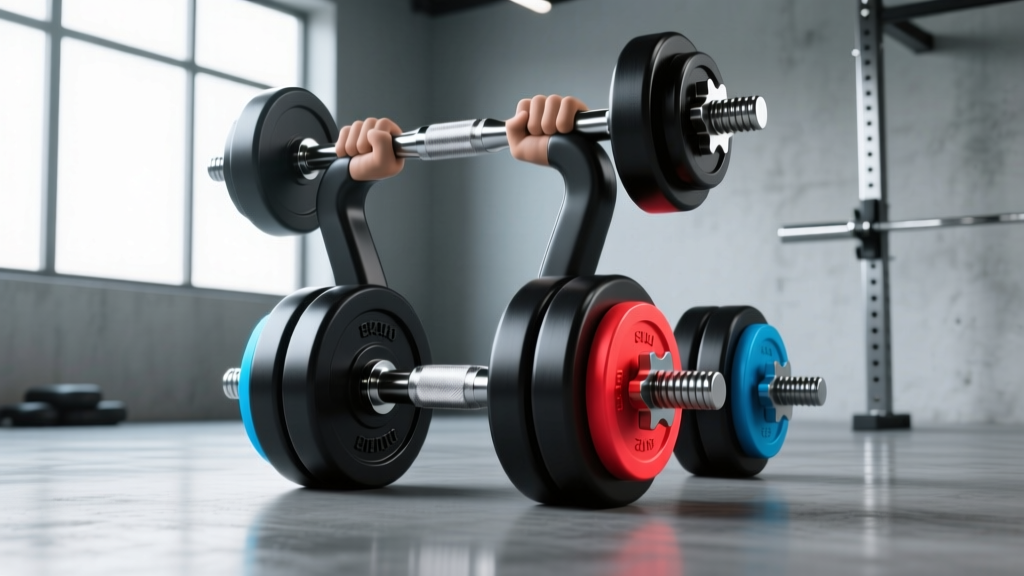
Best Adjustable Dumbbells for Skull Crushers: 2026 Review

Iron Bull Dumbbell & Bar Care: EZ Curl vs Straight Bar Longevity

Back Squats with Dumbbells: Beginner Guide Using Neoprene Weights

Space-Saving Kettlebell Guide & Beginner Dumbbell Workout Women Need

Olympic vs Standard Plates & Love Handles Workout With Dumbbells