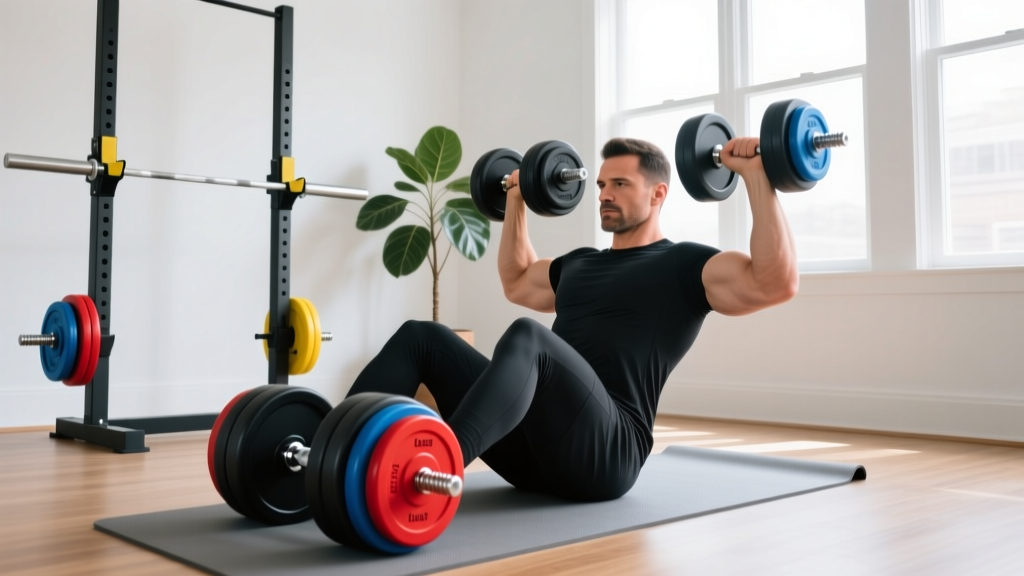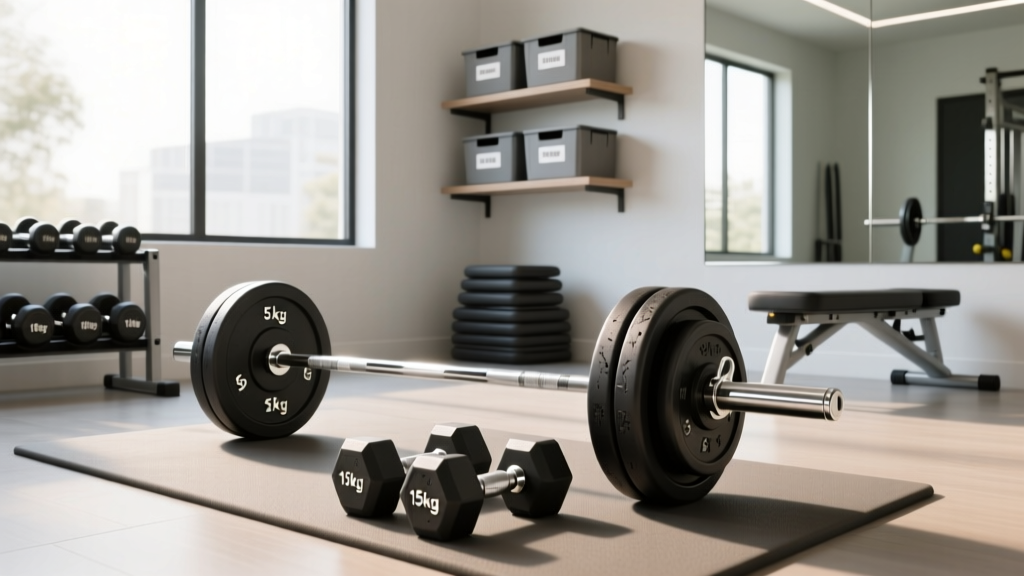
Barbell vs Dumbbell Bench Press Weight Difference & Storage Layouts
Explore the barbell vs dumbbell bench press weight difference and learn how to optimize your home gym layout with space-saving dumbbell rack solutions.

When designing a high-performance home gym, space optimization is just as critical as the equipment you select. While most lifters obsess over squat rack footprints and deadlift platforms, the humble dumbbell rack often becomes an afterthought—until it dominates the room. Interestingly, analyzing the barbell vs dumbbell bench press weight difference is rarely just about strength metrics or muscle activation; it directly dictates your floor plan, storage requirements, and overall layout efficiency. As of 2026, with premium urethane and rubber-coated free weights becoming standard in residential setups, understanding how to store heavy dumbbells safely and efficiently is a cornerstone of modern gym design.
In this comprehensive layout guide, we break down the biomechanical weight discrepancies between barbells and dumbbells, calculate the true spatial footprint of dumbbell storage, and provide actionable frameworks for integrating racks into tight spaces without compromising safety or workflow.
The Biomechanics: Barbell vs Dumbbell Bench Press Weight Difference
To understand your storage needs, you must first understand the load you are actually moving. The barbell vs dumbbell bench press weight difference typically ranges from 20% to 30%, meaning a lifter who can bench press 225 lbs with a barbell will generally max out around 75 to 80 lbs per dumbbell. According to a landmark biomechanics study published in the National Institutes of Health (NIH), this discrepancy is driven by the increased stabilization demands and altered motor unit recruitment required when the hands are not fixed to a single rigid barbell.
While this 20-30% drop in absolute load might seem like a relief for your joints, it creates a massive logistical penalty for your gym layout. A 225 lb barbell setup requires a single 45 lb bar and four 45 lb plates, which can be stored vertically on a compact wall-mounted plate tree taking up roughly 2 square feet of floor space. Conversely, pressing 80 lb dumbbells requires storing an entire graduated set of dumbbells (from 15 lbs up to 80 lbs) to allow for progressive overload and accessory work. This necessitates a multi-tier rack that consumes significantly more square footage.
Data Highlight: The Space-to-Weight Ratio
A standard 7-foot Olympic barbell and 300 lbs of plates require approximately 18 square feet of combined lifting and vertical storage space. A full 5-80 lb rubber hex dumbbell set requires a 3-tier rack consuming 12 to 16 square feet of permanent floor space, plus a wider lifting zone to accommodate the lateral arc of the dumbbell press.
Calculating Your Dumbbell Storage Footprint
When mapping out your gym layout, you must account for both the static footprint (the rack itself) and the dynamic clearance (the space needed to safely pick up and drop the weights). According to facility design guidelines referenced by the National Strength and Conditioning Association (NSCA), you must maintain a minimum of 36 inches of clear walkway space around any free weight storage unit to prevent tripping hazards and allow for proper lifting mechanics.
| Equipment Setup | Max Load Equivalent | Static Rack Footprint | Required Dynamic Clearance |
|---|---|---|---|
| Barbell + Plate Tree | 225 lbs | 2 sq ft (Wall Mount) | 7 ft x 4 ft (28 sq ft) |
| 3-Tier DB Rack (5-80 lbs) | 80 lbs per hand | 8 sq ft (48" x 24") | 6 ft x 6 ft (36 sq ft) |
| 5-Tier DB Rack (5-120 lbs) | 120 lbs per hand | 10 sq ft (48" x 30") | 8 ft x 6 ft (48 sq ft) |
Top Dumbbell Rack Configurations for Tight Spaces
Selecting the right rack is a balancing act between weight capacity, material durability, and spatial geometry. In 2026, the market has moved away from flimsy 2-tier wire racks toward heavy-duty steel constructions with UHMW plastic liners to protect urethane coatings. Here is how different configurations impact your layout.
1. The 3-Tier Horizontal Rack (The Industry Standard)
The 3-tier horizontal rack is the most common solution for commercial and high-end home gyms. A prime example is the Rogue Fitness 3-Tier Dumbbell Rack. Measuring 48 inches long, 22 inches wide, and 38 inches high, it holds up to 15 pairs of dumbbells. The angled shelving design allows for easy reading of weight markings and ergonomic retrieval. However, its 22-inch depth means it cannot be pushed flush against a wall if you have thick baseboards, effectively eating up 2.5 feet of depth when factoring in the required 36-inch walkway.
2. A-Frame and Vertical Towers (The Space Savers)
For garages under 150 square feet, horizontal racks are often non-starters. A-Frame racks utilize vertical space, offering a footprint as small as 24 x 24 inches. While they save floor space, they introduce a biomechanical layout challenge: retrieving heavy dumbbells (over 50 lbs) from the lower tiers of an A-frame requires awkward squatting and twisting, which can compromise your lower back before you even reach the bench. Reserve A-frames for lighter neoprene or vinyl-coated dumbbells used for high-rep accessory work.
3. Wall-Mounted Cradles (The Minimalist Approach)
If you only use one or two pairs of heavy dumbbells for your pressing movements, skip the freestanding rack entirely. Heavy-duty wall-mounted cradles bolted directly into wooden studs or masonry can hold a pair of 100 lb dumbbells while consuming zero square footage of floor space. This is the ultimate layout hack for understanding the barbell vs dumbbell bench press weight difference: since you only need the heavy pairs for your main lifts, store them on the wall and keep your floor entirely clear for a convertible bench.
Layout Integration: Zoning Your Free Weight Area
Proper zoning ensures that the transition from the dumbbell rack to your adjustable bench is seamless and safe. When mapping your layout, adhere to these spatial rules:
- The 45-Degree Retrieval Zone: Position your adjustable bench at a 45-degree angle relative to the dumbbell rack. This allows you to sit on the edge of the bench, reach laterally, and perform a safe dumbbell knee-kick retrieval without having to walk backward while holding 80 lb weights.
- Drop Zone Padding: Unlike barbells which are racked in the air, dumbbells are often dropped to the floor after a grueling set of incline presses. Ensure your layout places the bench directly over 3/4-inch horse stall mats to protect both the concrete subfloor and the dumbbell heads from micro-fractures.
- Mirrored Clearance: If you place a rack against a wall, ensure there is at least 60 inches of clearance in front of it. This accounts for a 6-foot tall lifter bending over, extending their arms, and stepping back without their glutes hitting the opposing wall or equipment.
Edge Cases & Failure Modes in Dumbbell Storage
Even the most meticulously planned layouts can fail if you ignore the physical realities of heavy free weight storage. Be aware of these common failure modes:
Warning: The Center of Gravity Shift. Many budget 2-tier and 3-tier racks feature a uniform depth across all shelves. When you load 100 lb dumbbells onto the top tier, the center of gravity shifts dangerously high and forward. Always verify that the rack you purchase features a staggered depth design (wider at the base, narrower at the top) or includes floor-bolting tabs to prevent catastrophic tip-overs during weight retrieval.
Additionally, consider the material degradation of your dumbbells. As of 2026, premium urethane is the gold standard for home gyms due to its lack of odor and high impact resistance. However, urethane is highly susceptible to cosmetic scratching if stored on bare steel racks. Always ensure your chosen rack features replaceable UHMW (Ultra-High Molecular Weight) polyethylene liners on the shelving lips. Rubber-coated dumbbells, while cheaper, can off-gas in poorly ventilated garages and leave scuff marks on lighter rack finishes, requiring more frequent maintenance and cleaning of your layout zone.
Final Thoughts on Spatial Efficiency
Mastering your home gym layout requires looking beyond the exercises themselves and analyzing the logistical footprint of the equipment. The barbell vs dumbbell bench press weight difference proves that while dumbbells offer superior joint stabilization and range of motion, they demand a much more strategic approach to storage and floor planning. By selecting the right rack geometry, calculating your dynamic clearance zones, and prioritizing safety features like staggered bases and UHMW liners, you can build a free weight zone that is as efficient as it is effective.
More gear to consider
All reviews
Olympic vs Standard Plate Setup & Dumbbell Exercises for Seniors with Pictures

2026 Budget Guide: Loadable Dumbbells for Dumbbell Lunges Exercises

EZ Curl vs Straight Bar Upkeep & One Handed Dumbbell Longevity

Dumbbell Wood Choppers: Maintaining Loadable Interchangeable Plates

Power Rack vs Squat Rack vs Stand: Standing Dumbbell Crunch Guide