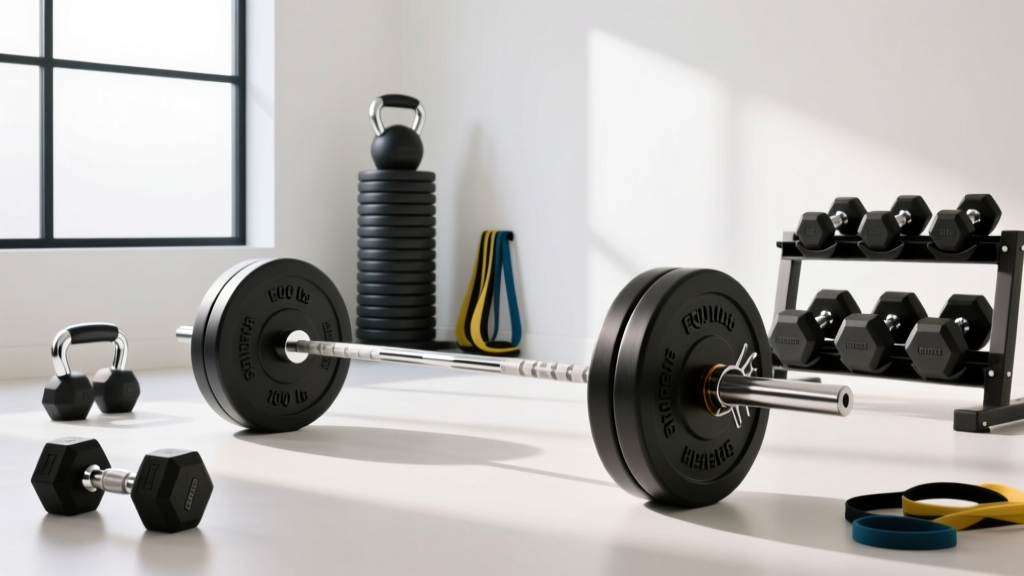
Beyond 100 lb Dumbbells: Olympic Barbell Knurling & Weight Guide
Maxed out your 100 lb dumbbells? Discover how to choose the right Olympic barbell weight, tensile strength, and knurling pattern for heavy 2026 lifts.

The 100 lb Dumbbell Ceiling: Why You Must Transition
For advanced home gym owners, reaching the limit with 100 lb dumbbells is a massive milestone. Whether you are pressing a pair of Rogue Urethane 100s or rowing with Iron Grip 100 lb hex dumbbells, moving this much independent weight requires immense stabilizer recruitment and grip strength. However, the 100 lb dumbbell mark is widely considered the "heavy dumbbell ceiling." Beyond this weight, the physical footprint of the dumbbells becomes unwieldy, the cost per pound skyrockets, and the biomechanical limiting factor shifts from muscular failure to grip fatigue and joint stabilization.
🛑 The 2026 Heavy Dumbbell Reality Check:A pair of premium 100 lb urethane dumbbells now costs between $750 and $900. Conversely, a world-class Olympic barbell costs between $300 and $450, allows you to load upwards of 500 lbs, and takes up a fraction of the floor space. Transitioning from heavy dumbbells to an Olympic barbell is not just an equipment upgrade; it is a neurological and biomechanical necessity for continued progressive overload.
When making this transition, the buying process shifts from simply picking a weight to analyzing metallurgy, tensile strength, and knurling geometry. This guide breaks down the exact specifications you need to look for when buying an Olympic barbell to replace your heavy dumbbell work.
Decoding Barbell Weight and Tensile Strength (PSI)
Unlike dumbbells, where the primary metric is the total mass, an Olympic barbell is defined by its tensile strength—measured in Pounds per Square Inch (PSI). This metric dictates how much load the bar can hold before it permanently deforms (bends) or snaps. If you are transitioning from 100 lb dumbbells, you are likely loading the barbell with 225 lbs to 405 lbs for working sets, meaning you need a bar that can handle extreme dynamic forces.
The PSI Hierarchy for Heavy Lifters
- Under 165,000 PSI (Avoid): These are cheap, big-box store bars. They will permanently bend if you drop a 315 lb deadlift.
- 165,000 - 190,000 PSI (Entry-Level/Multi-Purpose): Good for beginners, but lacks the rigidity needed for heavy, low-rep powerlifting.
- 190,000 - 215,000 PSI (The Gold Standard): This is the sweet spot for 90% of advanced lifters. Bars in this range, like the iconic Rogue Ohio Bar (190k PSI) or the Rogue Ohio Power Bar (205k PSI), offer the perfect blend of durability and "whip" (elastic energy).
- 215,000+ PSI (Elite/Specialty): Bars like the Kabuki Strength New Generation Power Bar (250k PSI) are virtually unbendable, designed for elite powerlifters squatting 600+ lbs.
Note on Yield Strength: While tensile strength measures the breaking point, yield strength measures the point at which the bar bends and does not return to its original shape. According to BarBend's engineering breakdown on barbell selection, a high-quality barbell must possess a yield strength that closely matches its tensile strength to ensure longevity under heavy, repeated loading.
Shaft Diameter: The Grip Shock Factor
One of the most jarring transitions when moving from 100 lb dumbbells to an Olympic barbell is the shaft diameter. Standard heavy dumbbell handles are typically 32mm to 35mm thick to support the massive welded heads. Olympic barbells, however, are much thinner.
| Equipment | Standard Shaft Diameter | Primary Use Case |
|---|---|---|
| Heavy Dumbbells (80-100 lbs) | 32mm - 35mm | Unilateral hypertrophy, stabilization |
| Olympic Weightlifting Bar | 28mm | Snatch, Clean & Jerk (requires whip) |
| All-Around / CrossFit Bar | 28.5mm | Mixed modal, high-rep cycling |
| Powerlifting Bar | 29mm - 29.5mm | Squat, Bench, Deadlift (max rigidity) |
Because your hands are accustomed to the thicker grip of 100 lb dumbbells, a 28mm Olympic bar may initially feel fragile in your hands during heavy deadlifts. For lifters transitioning from heavy dumbbells, a 29mm Power Bar is highly recommended. The extra millimeter provides a much more secure grip and significantly reduces bar whip during heavy squats and deadlifts.
Knurling Profiles: Volcano, Mountain, and Hill
Knurling is the cross-hatched pattern machined into the steel shaft to provide friction. When lifting 100 lb dumbbells, the sheer weight and thick handle often provide enough friction via compression. On a thinner, heavily loaded barbell, the knurl pattern is the only thing keeping the bar from sliding out of your hands.
As detailed in Garage Gym Reviews' comprehensive guide to barbell knurling, the shape of the knurl peaks drastically alters the feel and performance of the bar.
| Knurl Type | Geometry | Aggressiveness | Best For |
|---|---|---|---|
| Hill | Shallow, rounded peaks | Low (Mild) | High-rep conditioning, beginners |
| Mountain | Sharp, flat-topped peaks | High (Harsh) | Heavy low-rep deadlifts (tears calluses) |
| Volcano | Deep valleys with sharp, crater-like rims | Medium-High (Optimal) | All heavy lifting; grips skin without tearing |
Expert Recommendation: If you are moving from heavy dumbbells to a dedicated barbell for strength training, exclusively seek out Volcano knurling. CNC-machined volcano knurling (found on premium bars from Rogue and American Barbell) provides maximum surface area contact. It bites into the skin securely without acting like a cheese grater, which is a common failure point with cheaper "mountain" knurling.
2026 Olympic Barbell Comparison Matrix
Below is a curated comparison of the top Olympic barbells for advanced lifters transitioning from heavy dumbbell training, based on 2026 market availability, pricing, and metallurgical specs.
| Barbell Model | Tensile Strength | Shaft / Knurl | Est. Price (2026) | Ideal Profile |
|---|---|---|---|---|
| Rogue Ohio Power Bar | 205,000 PSI | 29mm / Volcano | $295 - $395 | The ultimate all-around powerlifting bar. Unbeatable value and grip. |
| Kabuki Strength New Gen Power Bar | 250,000 PSI | 29mm / Aggressive Volcano | $450 | Elite lifters moving massive weight who demand zero bar whip. |
| Texas Power Bar (Classic) | ~190,000 PSI | 28.5mm / Mountain | $385 | Old-school deadlifters who prefer a harsh, aggressive bite. |
| Rep Fitness Deep Knurl Power Bar | 200,000 PSI | 29mm / Deep Volcano | $329 | Budget-conscious lifters who refuse to compromise on knurl depth. |
Step-by-Step Selection Framework
Use this actionable framework to finalize your barbell purchase based on your specific training history with heavy dumbbells:
- Audit Your Dumbbell Usage: If your 100 lb dumbbell work was primarily unilateral (Bulgarian split squats, single-arm rows), your core stabilizers are highly developed. You can safely transition to a rigid 29mm Power Bar to maximize your new bilateral squat and deadlift potential.
- Check Your Calluses: Heavy dumbbell handles compress the skin differently than a barbell. If you have thick, raised calluses from dumbbell gripping, avoid "Mountain" knurling at all costs, as it will rip them open. Stick strictly to CNC Volcano knurling.
- Verify the Sleeve Assembly: Since you are buying for heavy loads, ensure the barbell uses bronze bushings rather than needle bearings. Bushings are vastly superior for heavy, slow powerlifting movements (squats/bench), providing a more stable, less wobbly feel during the press.
- Confirm the Center Knurl: If you plan to back squat the weight you were previously goblet squatting or holding with dumbbells, ensure the bar features a center knurl. This small patch of knurling on the middle of the shaft grips your shirt or back, preventing the bar from sliding during heavy squats.
Transitioning from the 100 lb dumbbell ceiling to an Olympic barbell opens the door to virtually limitless progressive overload. By prioritizing tensile strength over 190k PSI, opting for a 29mm shaft, and demanding a precise volcano knurl, you will secure a piece of equipment that will safely support your strength journey for decades.
More gear to consider
All reviews
Budget Storage & Racks for Dumbbells for Women Beginners (2026)

Rubber Hex vs Urethane for Your Boxing Workout with Dumbbells

Bumper vs Iron Plates: Heavy Lifts & Bicep Workouts With One Dumbbell
Rubber Hex vs Urethane: 2026 Gear for a Biceps Routine With Dumbbells

Maintaining Loadable Dumbbells: Dumbbell Bench to Barbell Bench
