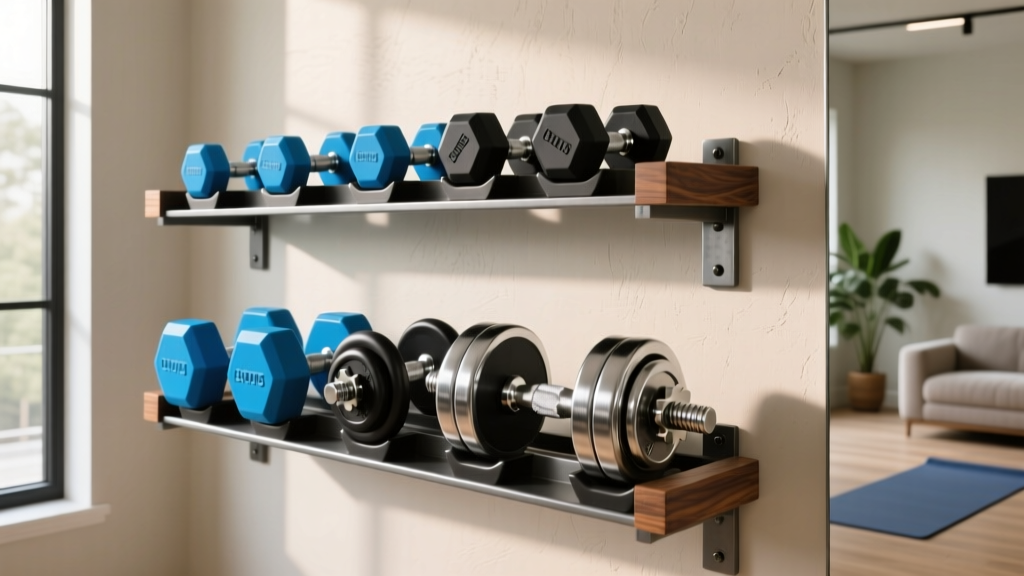
Adjustable Dumbbell Review & Dumbbell Shelf Setup Guide
Compare top adjustable dumbbells and follow our step-by-step dumbbell shelf installation guide for a safe, optimized home gym setup.

Upgrading your home gym space requires a delicate balance between footprint efficiency and heavy lifting capability. In 2026, adjustable dumbbells remain the undisputed champions of space-saving fitness gear, but they introduce unique storage challenges. Unlike traditional hex dumbbells that can be haphazardly tossed onto a tiered wire rack, adjustable sets house complex internal mechanisms that demand careful handling and specific spatial dimensions. This guide merges a comprehensive adjustable dumbbell comparison with a complete, expert-level installation walkthrough for a heavy-duty dumbbell shelf, ensuring your equipment remains safe, accessible, and structurally supported.
The 2026 Adjustable Dumbbell Landscape: Compatibility & Dimensions
Before you unbox a new dumbbell shelf, you must understand the exact dimensions, weight distribution, and failure modes of the adjustable dumbbells you intend to store. According to extensive testing by Garage Gym Reviews, the market is dominated by three primary designs, each with distinct shelf requirements.
| Model | Max Weight | Length | Shelf Depth Req. | Price Range | Primary Failure Mode |
|---|---|---|---|---|---|
| Nuobell 80 | 80 lbs | 15.5 inches | 16+ inches | $429 - $449 | Bent guide rods if dropped on shelf edge |
| Bowflex 552 | 52.5 lbs | 15.75 inches | 18+ inches | $399 - $429 | Cracked plastic selector dials from hard impacts |
| PowerBlock Elite | 50 lbs (base) | 12.0 inches | 12+ inches | $449 - $479 | Welded pin shearing under extreme lateral torque |
Why Adjustable Dumbbells Demand a Heavy-Duty Dumbbell Shelf
Many home gym owners attempt to store adjustable dumbbells on cheap, freestanding wire racks or the manufacturer-provided plastic cradles. This is a critical mistake. A pair of Nuobell 80s weighs 160 lbs combined, concentrated into a remarkably small footprint. This creates immense point-loading on storage surfaces.
Standard wire shelving will inevitably sag under this concentrated load, leading to warped steel and eventual collapse. Furthermore, the plastic cradles included with many adjustable sets are designed for floor use, not for elevated shelf integration. A dedicated, 11-gauge steel dumbbell shelf that mounts directly to a power rack or bolts securely to a structural wall is the only safe long-term solution. When sourcing equipment, looking into commercial-grade storage solutions from Rogue Fitness provides a benchmark for the steel thickness and UHMW plastic lining required to protect your dumbbell housings from scratches and dents.
Complete Dumbbell Shelf Installation Walkthrough
Whether you are mounting a shelf bracket to an existing 3x3 power rack or installing a freestanding wall-mounted dumbbell shelf, precision and structural integrity are paramount. Follow this step-by-step walkthrough to ensure a rock-solid installation.
Phase 1: Tool Gathering and Site Preparation
Do not rely on the cheap Allen wrenches included with flat-pack gym equipment. Gather the following professional-grade tools before beginning:
- Calibrated Torque Wrench: Capable of measuring up to 80 ft-lbs.
- Socket Set: Including 3/4-inch and 13/16-inch deep sockets for structural bolts.
- Rotary Hammer Drill: Required if anchoring a freestanding shelf to a concrete slab.
- Carbide-Tipped Masonry Bit: 1/2-inch diameter for concrete wedge anchors.
- Magnetic Level: 24-inch length for ensuring perfectly horizontal decking.
- UHMW Plastic Strips: To line the shelf and protect dumbbell knurling.
Phase 2: Frame Assembly and Rack Mounting
If you are integrating the dumbbell shelf into an existing power rack, you will typically use sandwich bracket connections. These brackets wrap around the 3x3-inch uprights and secure the shelf support arms using 5/8-inch hitch pins or structural bolts.
- Position the Brackets: Slide the shelf support brackets into the desired height on your rack uprights. For adjustable dumbbells, a height of 30 to 34 inches from the floor is ergonomically optimal, allowing you to lift the heavy sets without excessive spinal flexion.
- Insert the Crossmembers: Slide the horizontal shelf supports into the brackets. Use your magnetic level to ensure both sides are perfectly parallel to the floor. Even a 2-degree slant will cause adjustable dumbbells to slowly slide or place uneven stress on their internal locking mechanisms.
- Torque the Hardware: Using your torque wrench, tighten all 5/8-inch structural bolts to 60-70 ft-lbs. This specific torque setting ensures the joint is rigid enough to handle dynamic loading (setting a heavy dumbbell down forcefully) without stripping the threads or deforming the steel.
Phase 3: Freestanding Anchoring (Concrete & Wood)
If your dumbbell shelf is a freestanding unit or wall-mounted system, it must be anchored to the floor or wall studs to prevent forward tipping when loading heavy sets like the PowerBlock Elite expansions.
For concrete slab floors, industry standards dictate the use of heavy-duty wedge anchors. According to structural anchoring guidelines from Simpson Strong-Tie, proper embedment depth is critical for sheer strength. Drill 1/2-inch holes to a depth of 3.5 inches using your rotary hammer. Clear the concrete dust from the hole using a vacuum or compressed air—this is a frequently skipped step that reduces anchor holding power by up to 40%. Insert 1/2-inch x 3.75-inch wedge anchors through the shelf base plate and torque them to 45 ft-lbs.
For wood-framed walls or wooden subfloors, locate the structural studs or floor joists using a stud finder. Secure the shelf base using 1/2-inch x 4-inch structural lag bolts, driving them directly into the center of the joists.
Phase 4: Decking Installation and Load Testing
Once the frame is secured, lay the steel or diamond-tread decking plates across the support arms. Secure them with carriage bolts to prevent lateral shifting. Finally, adhere UHMW (Ultra-High Molecular Weight) plastic strips to the top surface of the shelf. This high-density plastic absorbs the impact of setting down the dumbbells, protecting both the shelf's powder coat and the delicate outer housings of your adjustable dumbbells.
Load Testing Protocol: Before placing your $400+ adjustable dumbbells on the newly installed shelf, perform a static load test. Place two 45-lb bumper plates (90 lbs total) in the center of the shelf, followed by two more on the outer edges. Inspect the brackets and bolts for any signs of deflection, creaking, or slippage. If the shelf holds 200+ lbs statically without deformation, it is safe for dynamic dumbbell use.Organizing Expansion Kits and Accessories
One of the hidden challenges of adjustable dumbbells is the storage of expansion kits and proprietary tools. PowerBlock, for instance, requires you to store 20-lb and 30-lb expansion cores separately when not in use. A properly designed dumbbell shelf setup should include a secondary lower tier or a specialized pegboard backing. Mount heavy-duty steel pegs to the uprights to hang resistance bands, lifting straps, and the specialized hex tools required to open and maintain the internal mechanisms of your Nuobell or Bowflex sets. Keeping these maintenance tools directly adjacent to the shelf ensures you will actually perform the bi-annual lubrication and dust-cleaning required to keep the selector pins firing smoothly.
Frequently Asked Questions
Can I use a standard bookshelf as a dumbbell shelf?
Absolutely not. Standard particleboard or solid wood bookshelves are rated for distributed static loads (like books), not the extreme point-loading and dynamic impact of dropping a 80-lb steel dumbbell. The shelves will snap, and the vertical supports will buckle outward, creating a severe crush hazard.
How do I prevent my adjustable dumbbells from rolling off the shelf?
Adjustable dumbbells do not have the flat edges of hex dumbbells. You must install a 2-inch steel lip or a heavy-duty bungee retention strap across the front edge of the dumbbell shelf. This physical barrier prevents the cylindrical handles from rolling forward if the shelf is bumped or subjected to seismic vibrations.
What is the best height for a dumbbell shelf?
The optimal height for the top tier of a dumbbell shelf is between 30 and 34 inches from the floor. This aligns with the natural hip-hinge mechanics of most adults, allowing you to deadlift the heavy adjustable sets off the shelf safely without rounding your lower back.
More gear to consider
All reviews
Bumper vs Iron Plates: Value & Dumbbell Pullover Benefits

Barbell Buying Guide: Knurling & Seated Dumbbell Press Muscles Worked

Dumbbell Overhead Triceps Press vs Kettlebell: Cast Iron Value Guide

Best Neoprene Sets to Curl 50 lb Dumbbells at Home (2026 Guide)

Bumper vs Iron Plates & Single Dumbbell Exercises for Shoulders
