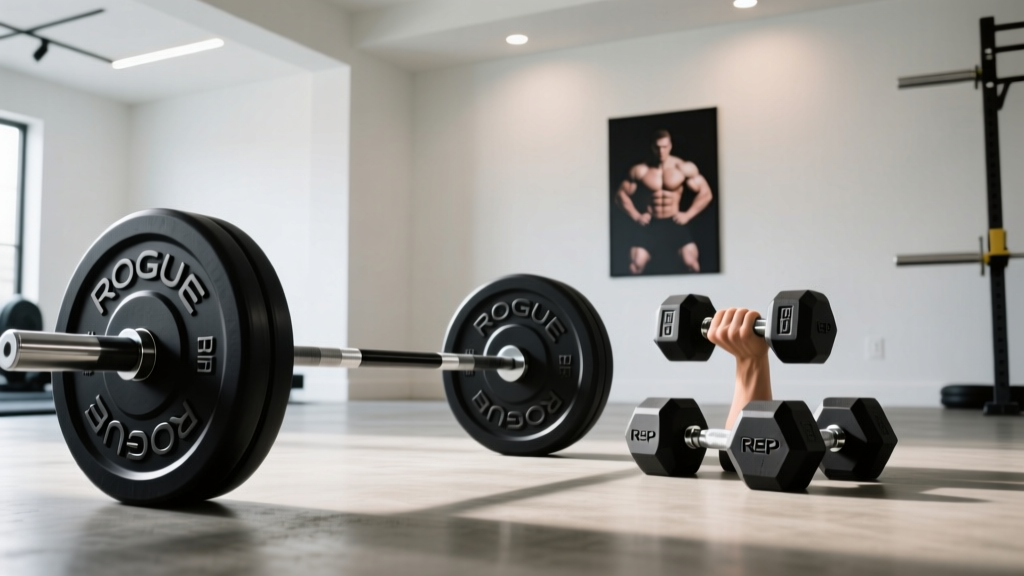
Olympic vs Standard Plates: Sizing Mistakes & Dumbbell Logo Myths
Troubleshoot Olympic vs standard weight plate sizing mistakes. Learn the truth behind the generic dumbbell logo and how to fix mismatched home gym gear.

The 1-Inch vs 2-Inch Trap: Why Your Plates Don't Fit
Building a home gym often starts with a seemingly simple purchase: weight plates. Yet, one of the most frequent troubleshooting issues we see at FitGearPulse involves lifters bringing home a stack of plates only to discover they physically cannot slide onto their barbell. This almost always boils down to the fundamental difference between Olympic and standard weight plates. While they may look identical from a distance, their center hole diameters dictate entirely different equipment ecosystems.
Standard plates feature a 1-inch (25.4mm) center hole, designed to fit the slender sleeves of budget-friendly, entry-level barbells and dumbbell handles. Olympic plates, the gold standard for commercial gyms and serious home setups, feature a 2-inch (50.8mm) hole engineered for the robust, rotating sleeves of Olympic barbells. Mixing these two systems without the proper knowledge leads to frustrating workout interruptions, damaged equipment, and wasted money.
⚠️ The Generic Dumbbell Logo IllusionMany lifters encounter a generic dumbbell logo cast into the face of budget-friendly weight plates and assume it indicates a specific brand, a 'dumbbell-specific' plate, or a mark of quality. In reality, this dumbbell logo is often just a standardized decorative mold used by overseas manufacturers for both standard and Olympic plates. Do not use the presence of a dumbbell logo to gauge the quality, calibration, or sizing of a plate. Always verify the center hole diameter with digital calipers before purchasing unbranded or imported gear.
Troubleshooting Guide: Identifying Your Gear by the Numbers
To fix a mismatched setup, you must first accurately identify what you own. According to equipment guides from REP Fitness, the visual differences can be subtle, especially when dealing with rubber-coated plates where the inner metal ring is obscured. Below is the definitive 2026 specification matrix to help you troubleshoot your gear.
| Feature | Standard Plates | Olympic Plates |
|---|---|---|
| Center Hole Diameter | 1 inch (25.4mm) | 2 inches (50.8mm) |
| Barbell Sleeve Compatibility | 25mm - 28mm | 49mm - 50mm |
| Weight Tolerance (Accuracy) | +/- 5% to 10% | +/- 1% to 3% (Calibrated) |
| Average Cost (2026) | $1.00 - $1.50 / lb | $1.80 - $4.50 / lb |
| Common Materials | Grey Cast Iron, PVC/Sand | Cast Iron, Crumb Rubber, Urethane |
Common Mistakes When Mixing or Upgrading Equipment
Mistake 1: Relying on Adapter Sleeves for Heavy Lifts
When lifters realize their 1-inch standard plates won't fit their new 50mm Olympic barbell, the most common troubleshooting band-aid is purchasing 1-inch to 2-inch plastic or aluminum adapter sleeves. While these adapters (costing around $15-$25 a pair) work fine for light bicep curls or overhead presses, they are a massive failure point for heavy compound movements.
The Failure Mode: During heavy deadlifts or barbell drops, the lateral force can crack plastic adapters or cause aluminum ones to slip. If an adapter slips, the standard plate shifts outward, instantly unbalancing the barbell and creating a severe tipping hazard. Furthermore, adapters add 2-3 inches of lateral overhang to the sleeve, reducing the available loading space and altering the bar's whip and balance.
Mistake 2: The "Cheap Olympic Bar" Wobble
Not all Olympic bars are created equal. The International Weightlifting Federation (IWF) mandates strict tolerances for competition gear, but budget e-commerce brands often cut corners. A common edge case in 2026 is the "48mm sleeve" budget Olympic bar. If you buy true 50mm Olympic plates (like the Rogue Echo Bumpers) and slide them onto a cheap bar with 48mm sleeves, you will experience a 2mm gap. This gap causes the plates to wobble, grind against the steel sleeve, and eventually strip the bar's zinc or chrome finish while creating a distracting clanking noise during lifts.
Material Matters: Cast Iron, Rubber, and Urethane Wear
Troubleshooting your weight plates isn't just about the hole size; it is also about managing material degradation over time.
- Cast Iron Rust & Flaking: Standard plates are almost exclusively grey cast iron. If stored in a garage with humidity fluctuations, they will oxidize. Fix: Scrub with a wire brush and apply a thin coat of 3-in-One oil or mineral oil. Never use WD-40, as it attracts dust and degrades rubber barbell sleeves.
- Virgin Rubber Off-Gassing: Olympic rubber plates (like those from Titan Fitness) are notorious for a harsh chemical smell when new. Fix: Wash them with a mild dish soap and water solution, then let them air-dry in direct sunlight for 14 days to accelerate the VOC off-gassing process.
- Urethane Chipping: Urethane is the premium choice for commercial gyms due to its lack of odor and high durability. However, cheap urethane formulations become brittle in cold environments. If your garage gym drops below 40°F in the winter, dropping urethane plates on bare concrete can cause the edges to chip or shatter. Always use horse-stall mats or a dedicated dropping platform.
"The biggest mistake beginners make is buying a standard 1-inch barbell and plate set because it's $50 cheaper upfront. Within six months, they outgrow the 150 lb weight limit of standard bars and have to sell the entire setup at a loss to upgrade to the 2-inch Olympic ecosystem." — FitGearPulse Equipment Analyst
Step-by-Step: How to Fix a Mismatched Home Gym Setup
If you have already fallen into the sizing trap and own a mix of standard and Olympic gear, follow this actionable protocol to correct your setup safely.
- Audit with Calipers: Do not trust the stamped numbers or the generic dumbbell logo on the plate face. Use a $15 set of digital calipers to measure the exact inner diameter of your plates and the outer diameter of your barbell sleeves.
- Liquidate the Standard Gear: Standard 1-inch plates and bars are in incredibly high demand on Facebook Marketplace and Craigslist for college students and apartment dwellers. You can typically recoup 70-80% of your initial investment by selling standard gear locally.
- Reinvest in 50mm Olympic Plates: Take the capital from your liquidation and invest in a 2-inch Olympic set. For budget-conscious lifters, crumb rubber bumper plates offer the best price-per-pound ratio (around $1.80/lb in 2026) and protect your flooring from drops.
- Upgrade to a Bushing or Bearing Bar: Ensure your new Olympic barbell features bronze bushings or needle bearings, and verify the sleeve diameter is exactly 50mm (1.96 inches) before purchasing to prevent the wobble effect mentioned earlier.
Frequently Asked Questions
Can I drill out a standard 1-inch plate to fit an Olympic bar?
While technically possible with a metal lathe or a heavy-duty drill press, this is highly discouraged. Drilling out cast iron often results in an off-center hole, which ruins the balance of the plate and causes uneven wear on your barbell sleeve. Additionally, the structural integrity of the plate's inner ring is compromised, making it prone to cracking under heavy loads.
Are standard plates ever the right choice?
Yes, but only in highly specific scenarios. If you are outfitting a lightweight dumbbell handle set for isolation work, or if you are buying adjustable plate-loaded machines (like a budget leg press or chest fly machine) that utilize 1-inch pegs, standard plates are perfectly adequate. For any free-weight barbell compound lifting, Olympic is the mandatory standard.
Where can I verify the exact specs of competition plates?
For those interested in calibrated steel plates used in powerlifting and weightlifting, the Rogue Fitness plate catalog and the official IWF technical rulebook provide exact millimeter tolerances for diameter, thickness, and center hole sizing to ensure competition compliance.
More gear to consider
All reviews
Squat Rack vs Power Rack Setup & Chin Up Alternative with Dumbbells

Adjustable Dumbbell Review: Setup for Traps Dumbbell Exercises
Decline Press With Dumbbells: Power Rack vs Squat Rack Guide

Hex vs Round Dumbbells: Rubber vs Urethane (2026 Review)
Barbell Collar Comparison: Securing the Dumbbell Row Without Bench