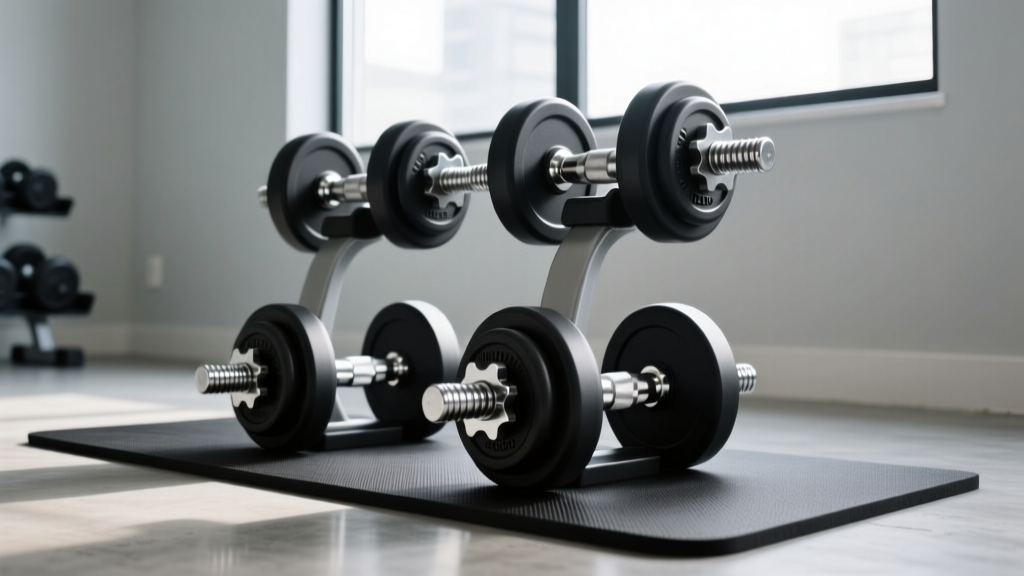
Best Adjustable Dumbbells for Dumbbell Delt Raises: 2026 Guide
Discover the best adjustable dumbbells for the dumbbell delt raise. Our 2026 comparison reviews micro-loading, grip ergonomics, and shoulder isolation.

The dumbbell delt raise—encompassing lateral, front, and rear deltoid variations—is the undisputed king of shoulder isolation. However, executing these movements with progressive overload presents a unique biomechanical challenge: the medial deltoid is a relatively small muscle group that fatigues rapidly and demands precise micro-loading. Jumping from 15 lbs to 20 lbs on a standard fixed dumbbell represents a 33% load increase, which often leads to momentum-driven form breakdown and potential shoulder impingement.
This is where high-quality adjustable dumbbells become essential. As of 2026, the adjustable dumbbell market has evolved significantly, offering mechanisms that cater specifically to the nuanced demands of isolation work. In this comprehensive comparison and review, we evaluate the top adjustable dumbbells through the specific lens of the dumbbell delt raise, analyzing handle geometry, weight increment precision, and physical footprint during strict isolation.
The Biomechanical Demand of the Dumbbell Delt Raise
According to the American Council on Exercise (ACE), the lateral deltoid operates at a significant mechanical disadvantage during a standard dumbbell delt raise. Because the weight is positioned far from the axis of rotation (the shoulder joint), the torque placed on the medial delt is immense even at relatively low absolute weights. This biomechanical reality dictates that shoulder isolation requires micro-loading—the ability to increase weight in 1 lb to 2.5 lb increments rather than the standard 5 lb jumps found in most commercial gym racks.
Furthermore, the physical footprint of the dumbbell matters. When performing seated or standing lateral raises, a bulky dumbbell head can graze the thighs or force the lifter to alter their natural arm path, compromising the isolation of the target muscle. The ideal adjustable dumbbell for delt raises must combine 2.5 lb (or smaller) increments with a compact, cylindrical handle that mimics a traditional fixed dumbbell.
2026 Adjustable Dumbbell Comparison Matrix
Below is our proprietary comparison matrix evaluating the top adjustable dumbbells specifically for shoulder isolation work. Prices reflect the average retail cost for a single dumbbell as of early 2026.
| Model | Min. Increment | Handle Geometry | Footprint at 15 lbs | Price (Single) |
|---|---|---|---|---|
| Nuobell 80lb | 2.5 lbs | Cylindrical, Knurled | Compact (14.5 in) | $329.00 |
| Bowflex SelectTech 552 | 2.5 lbs (up to 25 lbs) | Cylindrical, Smooth | Bulky (16.9 in) | $349.99 |
| PowerBlock Elite USA | 2.5 lbs (w/ add-on) | Rectangular Cage | Very Compact (12 in) | $219.00 |
| Ironmaster Quick-Lock V2 | 1.25 lbs (w/ micro kit) | Cylindrical, Knurled | Compact (14 in) | $389.00 |
In-Depth Model Reviews for Shoulder Isolation
Nuobell 80lb Adjustable Dumbbells: The Biomechanics Winner
For the strict dumbbell delt raise, the Nuobell 80lb is currently the gold standard. Unlike dial-based systems, Nuobell utilizes a twist-handle mechanism that adds or removes weight plates while maintaining a constant, traditional dumbbell handle length. The handle features a mild, comfortable knurl that prevents the dumbbell from rolling in the palm during the 'pinky up' cue often used in lateral raises. At $329 per dumbbell, it is an investment, but the 2.5 lb increments and authentic center of gravity make it the closest experience to a fixed commercial dumbbell. The primary failure mode to be aware of is the internal plastic guide rails; while durable under normal use, dropping them after a burnout set will crack the housing.
Bowflex SelectTech 552: The Micro-Load Budget Option
The Bowflex SelectTech 552 remains a staple in home gyms, largely due to its unique 2.5 lb increment capability from 5 lbs up to 25 lbs. For a beginner or intermediate lifter performing dumbbell delt raises, this micro-loading window is where 90% of shoulder isolation work occurs. However, the SelectTech's major drawback is its physical footprint. Even when set to 15 lbs, the dumbbell retains its maximum 16.9-inch length because the unused weight plates remain stacked on the ends. During strict lateral raises, this bulk can cause the ends of the dumbbells to clip your thighs if you are seated, forcing you to widen your stance or alter your range of motion.
PowerBlock Elite USA: The Heavy Presser's Compromise
PowerBlock dumbbells are virtually indestructible and offer the most compact footprint on the market, making them excellent for heavy pressing movements. However, for the dumbbell delt raise, their rectangular 'cage' design presents a significant ergonomic hurdle. During a front raise or lateral raise, the wrist naturally extends and rotates slightly. The rigid, boxy cage of the PowerBlock can press into the forearm and restrict natural wrist articulation, leading to discomfort at the top of the movement. Furthermore, achieving 2.5 lb increments requires purchasing separate add-on micro-weight kits, increasing the total cost of ownership.
Critical Edge Cases: Handle Geometry and Wrist Impingement
When analyzing equipment for the dumbbell delt raise, most reviewers focus solely on weight increments, ignoring handle geometry. The National Strength and Conditioning Association (NSCA) emphasizes that joint alignment is critical for isolating the target muscle and preventing connective tissue strain. A cylindrical handle (like Nuobell or Ironmaster) allows the lifter to grip slightly off-center or adjust their wrist angle to maintain a neutral joint position during the raise.
Expert Insight: If you experience medial wrist pain during lateral raises, the issue is rarely the weight itself. It is often the result of a non-cylindrical handle forcing the wrist into ulnar deviation at the top of the movement. Switching to a traditional knurled cylindrical handle immediately resolves this in most lifters.
Conversely, cage-style or heavily contoured handles lock the wrist into a fixed path. When the deltoid fatigues and the body naturally attempts to shift the load to the forearm and trapezius via subtle wrist manipulation, a restrictive handle will transfer that sheer force directly into the radiocarpal joint.
Programming Micro-Loaded Delt Raises
Having adjustable dumbbells with 2.5 lb increments opens up advanced hypertrophy techniques that are nearly impossible with standard fixed dumbbells. We recommend the following protocol for maximizing medial deltoid growth using the ExRx biomechanical guidelines for shoulder isolation:
- The 2.5 lb Strip Set: Begin with your 10-rep max (e.g., 20 lbs). Perform 10 strict lateral raises. Immediately drop the weight by 2.5 lbs (to 17.5 lbs) and perform another 8 reps. Drop again to 15 lbs for a final set to failure. The 2.5 lb drop is small enough to keep the muscle under tension but large enough to restore mechanical advantage.
- Seated Strict Isolation: Set an adjustable bench to 85 degrees (not perfectly 90, to avoid lower back compression). Use the Nuobell or Ironmaster dumbbells. The slight backward lean prevents the use of hip drive, ensuring the medial deltoid takes 100% of the load.
- Tempo Eccentrics: Select a weight that is 20% lighter than your normal working set. Raise the weight in 1 second, hold the peak contraction for 1 second, and lower the weight over a strict 4-second count. The micro-loading allows you to maintain perfect tempo even as the muscle fatigues.
Frequently Asked Questions
Can I drop adjustable dumbbells after a burnout set of lateral raises?
No. Regardless of the brand's marketing claims, dropping adjustable dumbbells is the primary cause of mechanism failure. The dial gears in Bowflex, the twist-locks in Nuobell, and the welding on Ironmaster can all suffer micro-fractures from the shock of being dropped on a hard floor. Always place them gently back into their cradles or on a rubber mat.
Are neoprene or urethane coatings better for grip during delt raises?
For heavy compound movements, urethane is superior due to its durability. However, for the dumbbell delt raise, a bare, mildly knurled steel handle (found on the Nuobell and Ironmaster) is vastly superior. Neoprene and smooth urethane become slippery when sweat accumulates, forcing you to grip the dumbbell tighter. This excessive grip tension recruits the forearm flexors and upper trapezius, stealing tension away from the targeted deltoid heads.
More gear to consider
All reviews
Rack Guide for Dumbbell Squat Women: Stands vs Power Racks
Best Dumbbell Racks for Simple Arm Exercises with Dumbbells (2026)

Care Guide: Loadable Dumbbells for Chest Development & Pressing
2026 Dumbbell Rack Budget: Storage for Dumbbell Pull Downs
Barbell Collar Comparison: Beyond the Basic Dumbbell Graphic
