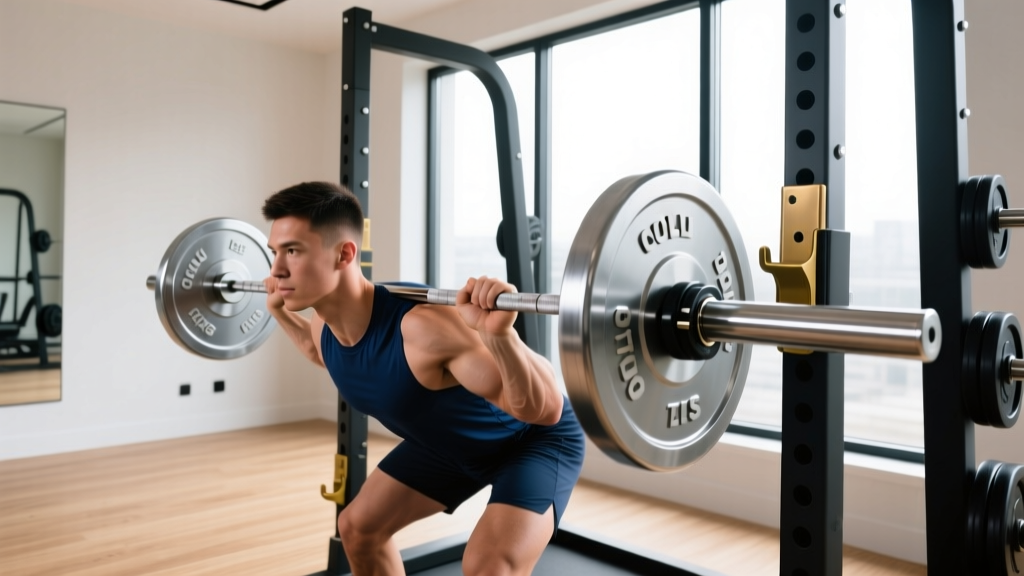
Barbell Collar & Clamp Comparison & Compact Dumbbell Set Guide
Compare barbell collar and clamp types for safety and performance. Plus, discover when a compact dumbbell set is the better space-saving choice for home gyms.

The Critical Role of Barbell Collars and Clamps in 2026
If you have ever heard the terrifying sound of a 45-pound iron plate sliding off an Olympic sleeve during a heavy bench press, you already understand the value of a high-quality barbell collar. Yet, in the hierarchy of home gym equipment, collars and clamps are frequently treated as an afterthought. According to extensive safety testing and equipment reviews by BarBend's fitness equipment experts, using substandard collars is one of the leading causes of uneven barbell loading, which can result in catastrophic rotational torque and severe joint injuries.
However, the modern garage gym is evolving. For many lifters dealing with strict spatial constraints, the traditional barbell setup—complete with plates and collars—is being replaced or supplemented by a high-end compact dumbbell set. This guide provides a deep-dive comparison matrix of the primary barbell collar types on the market today, followed by an analytical look at when ditching the barbell for an adjustable dumbbell system is the superior biomechanical and spatial choice.
⚠️ Safety Warning: The Chalk Slide EffectNever use standard spring collars on heavily chalked Olympic sleeves. Magnesium carbonate acts as a dry lubricant between smooth steel and chrome-plated spring metal, reducing friction coefficients by up to 60% and causing plates to slide off during dynamic movements like power cleans.
Comprehensive Barbell Collar & Clamp Comparison Matrix
Not all collars are created equal. The market is segmented by material, locking mechanism, and intended use case. Below is a 2026 market snapshot of the four dominant collar categories.
| Collar Type | Material | Weight (per pair) | Avg. Price (2026) | Best Application |
|---|---|---|---|---|
| Spring Clip | Chrome Steel | ~0.2 lbs | $8 - $15 | Light accessory work, sled pulls |
| Polymer Pro-Loc | Glass-filled Nylon | ~0.6 lbs | $25 - $35 | CrossFit, Olympic lifting, drop sets |
| Aluminum Clamp | Anodized Aluminum | ~5.0 lbs | $40 - $65 | Heavy powerlifting, static pressing |
| Lever / Cam Collar | Steel / Aluminum Alloy | ~5.5 lbs (2.5kg) | $110 - $150 | IWF Competition, elite weightlifting |
1. Spring Collars: The Budget Standard (and Its Flaws)
The ubiquitous spring collar is the default inclusion with almost every budget barbell kit sold globally. While they cost less than $15 a pair and weigh virtually nothing, their mechanical failure rate under heavy axial load is notoriously high. The primary failure mode is metal fatigue at the apex of the spring loop, leading to a loss of radial tension. Furthermore, if your barbell sleeve has a diameter tolerance that skews even 0.5mm under the standard 50mm Olympic specification, spring collars will spin freely, failing to secure the plates during incline or decline movements.
2. Polymer Pro-Loc Collars: The Dynamic Powerhouse
Constructed from high-density, glass-filled nylon, collars like the Lock-Jaw Pro-Loc utilize a patented squeeze-and-release tab mechanism. Weighing in at just 5 ounces each, they do not alter the calibrated weight of your barbell—a crucial factor for competitive weightlifters. They excel in high-impact environments. When a barbell is dropped from overhead during a snatch, the polymer flexes slightly, absorbing shock without cracking, while maintaining a vice-like grip on the sleeve. Edge Case: Prolonged exposure to direct UV sunlight can cause polymer degradation over 3 to 5 years, making them less ideal for outdoor fitness parks.
3. HG-2 Aluminum Clamps: The Heavy-Duty Standard
For powerlifters moving 400+ pounds, aluminum clamps like the Rogue HG-2 are the gold standard. Weighing 2.5 pounds each, they act as counterbalances and secure the plates via a T-handle screw mechanism that drives an internal polymer pad against the steel sleeve. The massive surface area of the clamp prevents any lateral plate shift. However, they are highly susceptible to grit infiltration. If chalk dust or rust particles enter the threading of the T-handle, the clamp can seize, requiring WD-40 and pliers to remove.
4. Lever Collars: The Competition Choice
Brands like Eleiko and Restyl manufacture lever collars that meet strict International Weightlifting Federation (IWF) specifications, weighing exactly 2.5 kilograms per pair. They use a cam-lever action that multiplies the force applied by the user's hand, creating immense clamping pressure. While they offer the fastest on/off transition time (under 2 seconds), their premium price tag—often exceeding $120 per pair—makes them difficult to justify for non-competitive home gym owners.
"The collar you choose should dictate your training style. If you are doing touch-and-go deadlifts or Olympic lifts, you need polymer or lever collars that survive ground impact. If you are doing heavy, static bench presses, aluminum clamps provide the ultimate peace of mind against lateral shift." — FitGearPulse Biomechanics Team
The Spatial Paradigm Shift: When to Choose a Compact Dumbbell Set
While optimizing your barbell collar setup is essential for traditional lifting, the reality of modern home gyms often demands a different approach. A standard 7-foot Olympic barbell, paired with a set of bumper plates and collars, requires a minimum clearance of 10 feet by 8 feet to operate safely. For lifters in apartments, small garages, or multi-use rooms, investing in a premium compact dumbbell set eliminates the need for external collars entirely while preserving the ability to progressively overload.
Adjustable dumbbells utilize internal locking mechanisms—such as dial-plate selectors or magnetic pin-locking systems—that secure the weight plates to the handle with zero risk of lateral slippage. According to comprehensive testing by Garage Gym Reviews, modern adjustable dumbbells have largely solved the durability issues that plagued early 2010s models.
Top 2026 Compact Dumbbell Set Contenders
- Nuobell 80lb Set ($429): Utilizes a smooth rotational handle mechanism to select weight. The footprint is roughly 17 x 8 inches. Because the handle itself rotates to lock the plates, there are no external collars required, and the weight distribution mimics a traditional fixed hex dumbbell perfectly.
- PowerBlock Elite ($399): Features a blocky, cage-like design with a pin-selector. While the geometry restricts certain movements (like deep dumbbell flyes), the internal steel pin locking system is virtually indestructible, making it the most durable compact dumbbell set for heavy floor presses and rows.
- Bowflex SelectTech 1090i ($549): Expanding up to 90 pounds per hand, this set uses a dial system. It is ideal for users who need micro-increments (2.5 lb jumps) but requires careful handling, as the internal plastic locking tabs can fracture if dropped from overhead.
Real-World Failure Modes: What Goes Wrong?
Whether you are relying on a heavy-duty aluminum barbell clamp or the internal mechanisms of a compact dumbbell set, understanding equipment failure modes is critical for longevity and safety.
- Sleeve Diameter Mismatch: Many budget barbells manufactured overseas have sleeve diameters that measure 49.2mm instead of the true 50mm Olympic standard. This 0.8mm gap allows clamps to spin and plates to rattle, accelerating knurling wear on the barbell sleeve.
- Knurling Interference: If you load fractional plates (e.g., 0.5lb technique plates) that are too narrow, standard collars might rest on the edge of the knurling rather than the smooth sleeve. This damages the knurling and compromises the collar's grip.
- Adjustable Dumbbell Drop Trauma: The most common failure mode for a compact dumbbell set is dropping the weight from the top of a press. Unlike solid cast-iron hex dumbbells, adjustable sets contain complex internal selector rods. Dropping them bends the rods, permanently jamming the weight-selection mechanism.
Final Verdict: Building Your 2026 Home Gym Arsenal
Your choice of weight-securing equipment should be dictated by your training modality and spatial constraints. If your programming revolves around heavy barbell powerlifting, invest $45 in a pair of Rogue HG-2 Aluminum Clamps; the 5-pound combined weight and immense clamping force are non-negotiable for safety. For dynamic CrossFit or Olympic lifting, the $30 Lock-Jaw polymer collars offer the best blend of impact resistance and speed.
However, if your primary goal is hypertrophy, unilateral conditioning, and maximizing a small footprint, bypassing the barbell entirely in favor of a high-quality compact dumbbell set like the Nuobell 80s is a highly efficient, space-saving strategy. By understanding the exact mechanics, tolerances, and failure points of your gear, you ensure that every rep in 2026 is both safe and effective.
More gear to consider
All reviews
What Dumbbell Weight to Use & Best Storage Racks 2026

Rubber Hex vs Urethane Dumbbells for Dumbbell Bicep Curl to Press
Cast Iron vs Competition Kettlebells & Dumbbell Scaption Raise Care

Cast Iron vs Competition Kettlebell Care & Dumbbells at Academy Sports
Dragon Ball Z Dumbbells vs Neoprene: Home Gym Mistakes & Fixes