
Barbell Clamp Types Comparison & Dumbbell Rear Delt Flys Safety
Compare barbell collar and clamp types for safe lifting. Plus, a beginner step-by-step guide to equipment and form for dumbbell rear delt flys.

Introduction to Free Weight Safety and Equipment Selection
Welcome to FitGearPulse, your premier destination for free weight and rack equipment reviews. When building a home gym or stepping into a commercial weight room, understanding how to properly secure and handle your weights is just as critical as the exercises themselves. Whether you are loading up an Olympic barbell for heavy back squats or selecting the perfect pair of hex dumbbells for isolation movements like dumbbell rear delt flys, equipment safety dictates your progress and longevity in the sport.
For beginners, the sheer variety of gym accessories can be overwhelming. This comprehensive, step-by-step guide breaks down the essential gear for securing free weights. We will conduct a deep-dive barbell collar and clamp types comparison, analyzing exact models, price points, and mechanical failure modes. Then, we will contrast barbell safety with the unique equipment requirements for dumbbell training, providing a beginner-friendly tutorial for executing dumbbell rear delt flys with maximum safety and muscle activation.
The Physics of Unsecured Plates: Why Collars Are Non-Negotiable
Before comparing specific products, it is vital to understand the biomechanics and physics of a loaded barbell. Olympic barbells feature sleeves that are exactly 50mm (1.97 inches) in diameter. When you perform dynamic movements like cleans, snatches, or even controlled bench presses, the plates experience rotational inertia and lateral shifting.
Expert Insight: According to equipment safety guidelines referenced in BarBend's Barbell Collar Equipment Guide, a shifting plate alters the barbell's center of mass. If a 45-pound plate slides just two inches outward on one side, the asymmetrical torque can cause the bar to twist violently in your hands, leading to severe wrist, shoulder, or lower back injuries.Standard spring clips—the ones often left scattered around commercial gyms—frequently fail to prevent this. Over time, the zinc-plated steel coils fatigue, reducing their clamping force from an initial 50 pounds of pressure to less than 10 pounds. This is why investing in high-quality locking collars or clamps is a mandatory step for any serious lifter.
Barbell Collar and Clamp Types Comparison
Not all collars are created equal. The market is segmented into four primary categories, each with distinct mechanisms, price points, and ideal use cases. Below is a detailed breakdown of the most popular types available in 2026.
1. Traditional Spring Clips
- Price Range: $8 - $15 per pair
- Mechanism: Steel coil tension
- Pros: Extremely fast to apply and remove; inexpensive.
- Cons: Prone to metal fatigue; offers zero lateral stability on dusty or chalky sleeves; difficult to squeeze for users with weaker grip strength.
- Verdict: Acceptable only for light, controlled accessory work. Never use them for Olympic lifts or heavy squats.
2. Cam-Lock Collars (e.g., Rogue HG 2.0)
The cam-lock design is the gold standard for most commercial and home gyms. The Rogue Fitness HG 2.0 Collars utilize a glass-filled nylon body with a steel cam lever that bites down onto the 50mm sleeve. Weighing just 0.25 lbs each, they do not interfere with calibrated plate weights. The internal TPU lining grips the steel sleeve securely, preventing lateral slide even during heavy deadlift drops.
3. Clamp-Style Collars (e.g., Lock-Jawz PRO)
Clamp-style collars use a ratcheting or hinged plastic mechanism that snaps shut around the barbell sleeve. The Lock-Jawz PRO model (retailing around $45) is famous in the powerlifting community. Because it physically encases the sleeve and locks via a rigid plastic jaw, it is virtually impossible for plates to slide off, even if the bar is dropped from overhead. However, they can be bulkier and occasionally crack if left on a bar that is dropped onto metal J-cups.
4. Competition Calibrated Collars
Used in IPF powerlifting and IWF weightlifting meets, these are precision-machined steel or aluminum collars that weigh exactly 2.5 kg (5.5 lbs) each. Brands like Eleiko manufacture these to strict tolerances, costing upwards of $160 per pair. They are secured via heavy-duty thumb screws or specialized levers. Unless you are hosting a sanctioned meet or require exact calibrated weights, these are overkill for general fitness.
Comparison Matrix: Finding Your Ideal Collar
| Collar Type | Model Example | Est. Price | Security Level | Best Application |
|---|---|---|---|---|
| Spring Clip | Generic Gym Brand | $12 | Low | Light isolation, quick changes |
| Cam-Lock | Rogue HG 2.0 | $35 | High | General strength, CrossFit, home gyms |
| Clamp-Style | Lock-Jawz PRO | $45 | Very High | Powerlifting, heavy eccentrics |
| Competition | Eleiko Calibrated | $160 | Maximum | Sanctioned meets, calibrated lifting |
Step-by-Step: Securing Your Barbell Properly
Owning the right clamp is only half the battle. Follow this step-by-step protocol to ensure your barbell is safe before every lift:
- Load Symmetrically: Always load plates evenly on both sides. An unevenly loaded bar without collars will tip off the J-hooks instantly.
- Wipe the Sleeves: Use a towel to wipe excess chalk, sweat, or grease off the 50mm sleeve. Friction is your friend; a slippery sleeve defeats the internal lining of a cam-lock collar.
- Pack the Plates Tightly: Push all plates flush against the inner sleeve shoulder. Eliminate any gaps between the plates.
- Apply the Collar Flush: Slide the collar directly against the outermost plate. Do not leave a gap between the plate and the collar.
- Engage and Test: Lock the cam or clamp. Give the collar a firm twist with your hand. If it rotates freely around the sleeve, it is not tight enough. Adjust the tension dial (if applicable) until the collar is completely immobilized.
The Dumbbell Contrast: Gear and Form for Dumbbell Rear Delt Flys
While barbells require external collars to maintain structural integrity, dumbbells rely on their internal manufacturing and your grip security. This distinction is incredibly important when performing isolation exercises that involve a wide arc of motion, such as dumbbell rear delt flys.
The dumbbell rear delt fly is a staple posterior-chain exercise targeting the posterior deltoids, rhomboids, and middle trapezius. Because the lever arm (your extended arm) is long, the rotational force placed on the dumbbell handle at the peak of the movement is significant.
Equipment Selection: Fixed Hex vs. Adjustable Dumbbells
For beginners, selecting the right dumbbell type is crucial for this specific movement. Fixed rubber or urethane hex dumbbells are the safest choice. Their solid cast-iron or steel cores mean there are zero moving parts to fail mid-rep.
If you are using adjustable dumbbells (like Bowflex SelectTech, PowerBlock, or Nuobell), you must perform a critical safety check before initiating dumbbell rear delt flys. Ensure the selector dial or pin is fully seated in the weight groove. The inertial force at the transition point between the eccentric (lowering) and concentric (lifting) phases can cause a loosely engaged adjustable plate to rattle or, in worst-case scenarios, detach from the handle. Always give adjustable dumbbells a gentle 'shake test' near the floor before raising them to shoulder height.
Beginner Step-by-Step Guide to Dumbbell Rear Delt Flys
Proper form on rear delt flys requires strict control. Momentum is the enemy of muscle isolation and joint safety. Refer to the ExRx.net Kinesiology Directory for detailed biomechanical breakdowns of shoulder joint articulation during transverse extension.
- Select Your Weight: Beginners should start exceptionally light—typically 5 to 15 lbs per hand. The rear delts are small muscles and fatigue quickly.
- The Hinge: Stand with feet shoulder-width apart, holding a dumbbell in each hand with a neutral grip (palms facing each other). Hinge at the hips until your torso is nearly parallel to the floor. Keep a slight bend in your knees and maintain a flat, neutral spine.
- The Arc: With a slight, fixed bend in your elbows, raise the dumbbells out to your sides in a wide arc. Imagine you are trying to touch the walls on either side of you.
- The Peak Contraction: Stop when your upper arms are parallel to the floor. Squeeze your shoulder blades together for a full one-second pause. Do not swing the weights up using your lower back.
- The Eccentric: Slowly lower the dumbbells back to the starting position under your own muscle control, taking 2-3 seconds for the descent.
Frequently Asked Questions (FAQ)
Do I need collars for light barbell warm-up sets?
Yes. Developing the habit of using collars for every single set, even just the empty 45lb bar with 10lb technique plates, builds a safety routine that prevents catastrophic forgetfulness when you eventually load heavy working sets.
Can I use Olympic 50mm collars on a standard 1-inch home barbell?
No. Standard home gym barbells typically feature 25mm (1-inch) sleeves. Olympic collars will slide right off. You must purchase specific 1-inch spring clips or standard-sized star-lock nuts for these bars.
What are the most common form mistakes on dumbbell rear delt flys?
The most common error is using too much weight, which forces the lifter to use momentum from the hips and lower back to heave the weight up. This shifts the tension away from the rear delts and places dangerous shear forces on the lumbar spine. Drop the weight, slow the tempo, and focus on the mind-muscle connection.
How often should I replace my barbell collars?
High-quality cam-lock or clamp collars from reputable brands will last a decade or more. However, if you notice the internal rubber lining tearing, or if the cam lever no longer creates a flush, tight seal against the sleeve, it is time to replace them to maintain gym safety standards.
More gear to consider
All reviews
Neoprene Dumbbell Setup: The Best Tricep Dumbbell Exercise
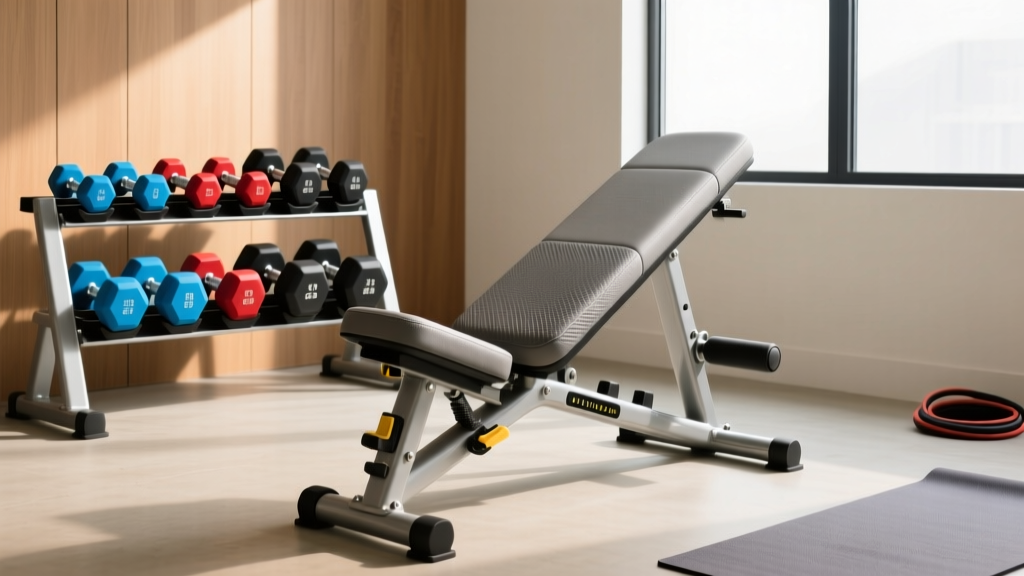
Setting Up Your Home Gym for the 30 Degree Incline Dumbbell Press

EZ Curl Bar vs Straight Bar: Best Arm Tools After Dumbbell Lifts for Chest

Space-Saving Flat Bench with Dumbbells: Loadable Plate Guide

Power Rack vs Squat Rack Setup for Dumbbell Squat Jumps
