
Back Extension Bench Mistakes + Compact Lat Pulldown Machine Guide
Fix common back extension bench mistakes and balance your posterior chain by integrating a compact lat pulldown machine into your home gym setup.

Building a resilient, hypertrophied posterior chain in a home gym often starts with a single piece of equipment: the 45-degree back extension bench. However, as home fitness setups evolve in 2026, we are seeing a massive trend of lifters developing severe muscular imbalances and lumbar pain. Why? Because they are making critical biomechanical mistakes on the hyperextension bench and completely ignoring the vertical traction required to decompress the spine.
If you want to build a bulletproof back, you must master the hip hinge on your extension bench and pair it with a compact lat pulldown machine to balance horizontal extension with vertical pulling. This comprehensive troubleshooting guide will fix your bench form and show you exactly how to integrate a space-saving pulldown unit for optimal spinal health and latissimus dorsi growth.
The Biomechanics of the Hinge: Where Most Lifters Fail
The back extension bench (often inaccurately called a 'Roman Chair') is designed to isolate the erector spinae, glutes, and hamstrings through a hip-hinge movement. According to biomechanical analyses documented by ExRx on the 45° Back Extension, the primary axis of rotation must occur at the hip joint, not the lumbar spine. When lifters misuse the equipment, they turn a safe posterior chain builder into a lumbar shear-force nightmare.
⚠️ Warning: The 'Superman' FinishThe most common and dangerous mistake is hyperextending the lumbar spine at the top of the movement. Your torso and legs should form a single, straight line at the peak. Arching your back past 180 degrees to 'feel the squeeze' compresses the posterior elements of your vertebrae and is a primary cause of gym-induced spondylolysis.
Troubleshooting the 3 Most Common Bench Mistakes
1. The Pivot Point Misalignment (The ASIS Rule)
The single most critical adjustment on any back extension bench is the height of the main thigh pad. The top edge of the pad must sit exactly just below your Anterior Superior Iliac Spine (ASIS)—the bony prominences at the front of your hip bones.
- If the pad is too high: It pins your pelvis, preventing anterior pelvic tilt. You will be forced to round your lower back to descend, causing severe lumbar flexion under load.
- If the pad is too low: Your hips are free to move, but you will end up using your lower back as the primary lever arm rather than your glutes and hamstrings, leading to erector spinae spasms.
Fix: On standard models like the Titan Fitness 45-Degree Hyperextension, use the spring-pin to adjust the main pad so your hip crease is entirely unobstructed and free to bend over the edge of the 2.5-inch high-density EVA foam pad.
2. Ankle Lock Spacing and Achilles Strain
Many budget benches feature fixed ankle rollers. If the rollers press directly against your Achilles tendon rather than the upper calcaneus (heel bone) or lower calf, you risk tendonitis. Ensure your bench has adjustable rear rollers, and position them to hook securely over the back of your heel.
3. Craning the Cervical Spine
Staring at the wall or ceiling during the ascent forces the cervical spine into unnatural extension. Keep your chin tucked and your neck in a neutral alignment with your thoracic spine throughout the entire range of motion.
The Missing Link: Why You Need a Compact Lat Pulldown Machine
Fixing your bench technique is only half the battle. Back extension benches train the posterior chain in a horizontal, compressive vector. Repeatedly loading the spine in this manner without a counterbalancing vertical traction exercise leads to chronic stiffness and nerve impingement risks. As noted in Mayo Clinic guidelines on back pain and exercise, balancing compressive core and back work with decompressive movements is vital for long-term spinal hygiene.
This is where a compact lat pulldown machine becomes non-negotiable for small home gyms. Unlike massive commercial cable crossovers, modern compact units (like the Fitness Reality 1000 Super Max or the Powertec Work Bench Lever system) offer a footprint of roughly 49 by 28 inches, making them perfect for garages and spare bedrooms.
'Vertical pulling not only develops the latissimus dorsi and teres major, but the act of hanging or pulling from an overhead cable provides essential axial decompression to the intervertebral discs after heavy hip-hinging movements.'
— Biomechanics Principles of Spinal Loading
How the Compact Lat Pulldown Balances Your Routine
- Axial Traction: Kneeling lat pulldowns allow you to stretch the lats and decompress the thoracolumbar fascia immediately after heavy weighted back extensions.
- Scapular Depression: While extensions train the erectors and rhomboids, the cable lat pulldown trains the lower traps and lats to depress the scapula, fixing the rounded-shoulder posture that many desk-bound lifters suffer from.
- Space Efficiency: A plate-loaded compact lat pulldown machine utilizes your existing Olympic plates, eliminating the need for a 200lb selectorized weight stack and saving valuable floor space.
2026 Home Gym Equipment Matrix: Configuring Your Back Station
When designing your back training zone, you must weigh the spatial and financial costs of different setups. Below is a comparison of how to integrate these tools in 2026.
| Setup Configuration | Combined Footprint | Avg 2026 Cost | Pros & Cons |
|---|---|---|---|
| Standalone 45° Bench | 48" x 28" | $180 - $250 | Pro: Cheap, portable. Con: Zero vertical pulling capability. |
| All-in-One Combo Tower | 65" x 45" | $650 - $900 | Pro: Unified footprint. Con: Fixed, non-adjustable pivot points. |
| Separate Bench + Compact Lat Pulldown | 75" x 50" (Modular) | $450 - $650 | Pro: Fully adjustable, superior biomechanics. Con: Requires two distinct floor zones. |
Step-by-Step: The 'Decompression' Superset Protocol
To maximize hypertrophy while protecting your spine, use this superset protocol. It pairs the compressive hinge of the bench with the decompressive pull of the compact lat pulldown machine.
- Exercise A: Weighted 45° Back Extension
Perform 3 sets of 10-12 reps. Hold a 25lb or 45lb plate against your chest. Focus on a 3-second eccentric descent, pausing at the bottom stretch, and driving through the hamstrings to return to a neutral, straight-line position. Do not hyperextend. - Transition (15 Seconds): Move immediately to your compact lat pulldown machine. Grab the lat bar with a slightly wider than shoulder-width pronated grip.
- Exercise B: Kneeling Lat Pulldown with Axial Stretch
Perform 3 sets of 12-15 reps. Kneel on the floor (or use the machine's knee pad if equipped). As you pull the bar to your upper chest, focus on scapular depression. At the top of the movement (when the weight stack is fully elevated), allow your lats to stretch and your torso to lift slightly, letting the cable provide 5 seconds of gentle axial traction to your spine.
Final Thoughts on Back Training Architecture
Troubleshooting your back extension bench is largely an exercise in geometry: align the pivot point with your hips, keep the spine neutral, and respect the limits of your lumbar facets. But true back health and complete muscular development require a multi-planar approach. By investing in a high-quality, compact lat pulldown machine to complement your extension work, you create a self-correcting, space-efficient ecosystem that builds thick, powerful back musculature while actively safeguarding your spine for decades to come.
More gear to consider
All reviews
Chest Supported Row and Lat Pulldown Machine Exercise Space Guide
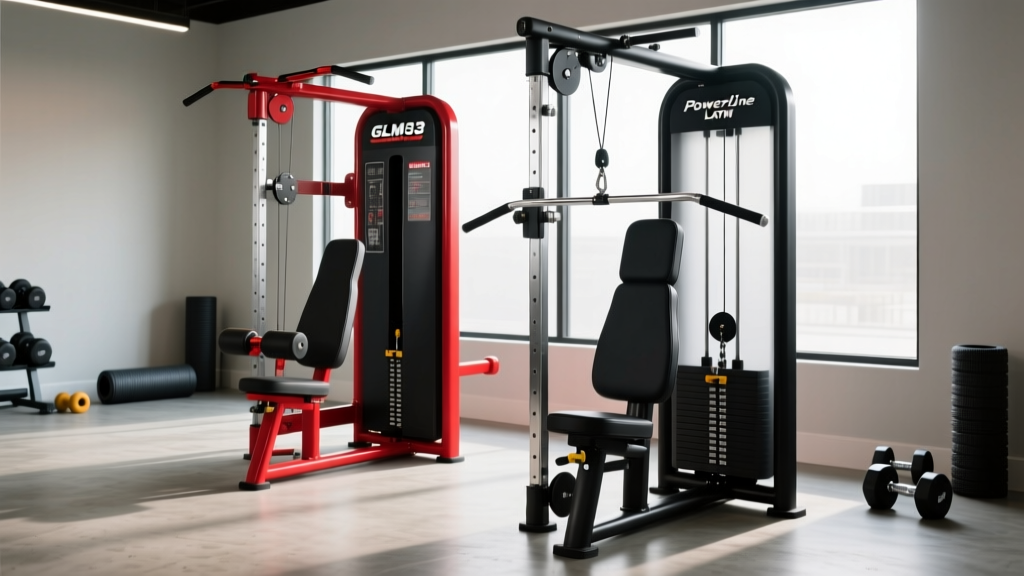
Body-Solid Lat Pulldown Machine Showdown: GLM83 vs LATM

Budget Back: T-Bar Rows vs Straight Arm Lat Machine Pulldowns

Inversion Table & Lat Pulldown Machine for Back Fat: Maintenance Guide

Hyperice For Beginners: A Practical, Evidence-Informed Guide to Recovery Tools
