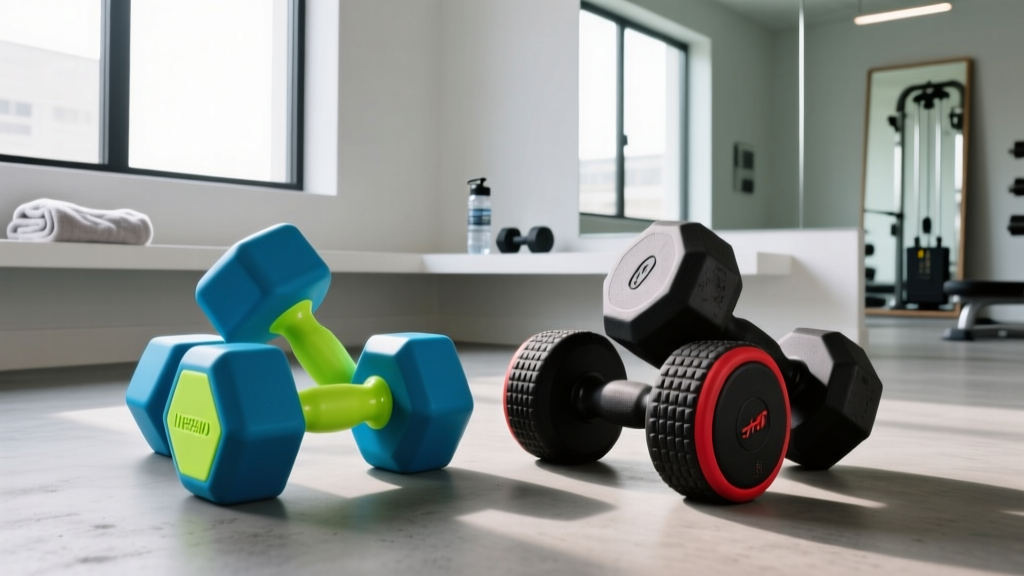
Arm Workouts With Dumbbells: Urethane vs Rubber Hex 2026 Trends
Analyze 2026 market trends comparing urethane and rubber hex dumbbells. Discover which is best for high-volume arm workouts with dumbbells in any gym.

The 2026 Free Weight Market: A Material Shift
If you have stepped into a newly built commercial fitness center or browsed premium home gym setups in 2026, you have likely noticed a distinct shift in the dumbbell rack. The classic rubber hex dumbbell, long the undisputed king of budget-friendly garage gyms, is increasingly being swapped out for premium polyurethane (urethane) alternatives. But when it comes to designing effective arm workouts with dumbbells, does the material of the weight actually matter? According to recent fitness equipment market analyses, the answer is a resounding yes. The transition from vulcanized rubber to urethane is not just an aesthetic upgrade; it fundamentally alters the biomechanics, grip ergonomics, and spatial dynamics of high-volume isolation training.
As supply chains for virgin rubber have fluctuated over the last few years, the price gap between high-end rubber and entry-level urethane has narrowed. Today, commercial-grade rubber hex dumbbells (such as those from REP Fitness or CAP Barbell) generally retail between $1.50 and $2.20 per pound. Conversely, urethane models (like the flagship lines from Rogue Fitness and Titan Fitness) command anywhere from $3.80 to $5.50 per pound. For the consumer, this raises a critical question: is the urethane premium justified for your specific training goals?
Why Material Density Dictates Arm Workouts With Dumbbells
When programming arm workouts with dumbbells, most lifters focus on the weight on the handle, ignoring the physical footprint of the dumbbell head. This is a crucial oversight. Polyurethane is significantly denser than the recycled or virgin rubber used in hex dumbbells. Polyurethane boasts a density of roughly 1.15 to 1.25 g/cm³, while standard rubber sits closer to 0.95 to 1.05 g/cm³.
Expert Insight: The Volume DiscrepancyBecause of the density gap, a 50lb rubber hex dumbbell can be up to 20% bulkier and wider than a 50lb urethane dumbbell. When performing close-grip neutral curls, hammer curls, or lying tricep skull crushers, this physical footprint is the difference between a fluid range of motion and two massive rubber heads violently clanking together at the top of the movement.
For advanced lifters executing strict isolation movements, the compact profile of urethane dumbbells allows for a tighter, more anatomically natural hand placement. When performing dumbbell skull crushers, bringing the weights close together over your forehead is essential for targeting the long head of the triceps. Bulky rubber hex heads often force the lifter to widen their grip artificially, shifting the mechanical tension away from the triceps and placing undue stress on the elbow joints. As highlighted by the equipment testing team at Garage Gym Reviews, the spatial efficiency of urethane makes it the superior choice for serious arm hypertrophy work.
Grip Ergonomics and High-Rep Fatigue
Arm isolation routines typically demand higher rep ranges (12 to 20+ reps) to achieve metabolic stress and muscular fatigue. In these high-rep scenarios, grip endurance often becomes the limiting factor before the biceps or triceps actually fail. The handle design on rubber hex dumbbells vs. urethane dumbbells reflects their different target markets.
The Rubber Hex Handle Profile
Most budget and mid-tier rubber hex dumbbells feature thick, solid chrome handles. These handles are often unknurled or feature a very shallow, stamped diamond knurl that wears smooth over time. Furthermore, the handle diameter on cheaper hex sets frequently exceeds 38mm. During high-rep bicep curls or tricep kickbacks, this thick, slick chrome forces the lifter to over-squeeze the handle, leading to premature forearm pump and grip failure.
The Urethane Ergonomic Advantage
Premium urethane dumbbells, such as the Rogue Urethane Dumbbells, are typically paired with high-grade steel handles featuring a medium, machine-cut knurl. More importantly, the handle diameter is usually strictly controlled at 35mm. This 35mm sweet spot allows the fingers to wrap securely without requiring excessive crush-grip force. The result? You can push your triceps to absolute failure on overhead extensions without your grip slipping or your forearms cramping prematurely. According to biomechanics experts featured on BarBend, a proper knurled steel handle is non-negotiable for maximizing time-under-tension during arm isolation routines.
2026 Market Comparison Matrix
To help you make an informed purchasing decision, we have compiled a direct comparison of the current market standards for both materials.
| Feature | Rubber Hex (e.g., REP / CAP) | Urethane (e.g., Rogue / Titan) |
|---|---|---|
| Price per Pound (2026) | $1.50 - $2.20 | $3.80 - $5.50 |
| Head Density & Profile | Lower (Bulky at 40+ lbs) | Higher (Compact, streamlined) |
| Handle Ergonomics | Thick chrome, often unknurled | 35mm steel, medium knurl |
| Drop Tolerance | High (Bounces, may chunk) | Medium (Can crack on concrete) |
| Odor / Off-Gassing | High (Lasts 2-6 months) | None / Negligible |
| UV & Ozone Resistance | Low (Dries out outdoors) | High (Weather resilient) |
Durability, Off-Gassing, and Real-World Failure Modes
While urethane wins on ergonomics and spatial efficiency for arm workouts with dumbbells, rubber hex dumbbells still hold a distinct advantage in one specific area: drop tolerance and environmental abuse. Understanding the failure modes of both materials is essential for protecting your investment.
The Rubber Hex Failure Mode: Chunking and Oxidation
Virgin and recycled rubber are highly elastic. If you drop a 60lb rubber hex dumbbell from shoulder height during a heavy set of dumbbell shrugs or a failed tricep extension, the rubber will absorb the shock and bounce. However, rubber is highly susceptible to oxidation and UV degradation. If your home gym is in a garage that experiences extreme temperature fluctuations, the rubber will eventually dry out, harden, and begin to 'chunk' or flake off at the edges. Furthermore, the off-gassing (the notorious 'new tire' smell) can take up to six months to fully dissipate in a poorly ventilated room.
The Urethane Failure Mode: Concrete Cracking
Polyurethane is incredibly tough, resistant to UV rays, and completely odorless. It will not degrade if left in a humid garage or a sunlit studio. However, urethane lacks the high-elastic bounce of rubber. If a urethane dumbbell is dropped from chest height directly onto bare, unsealed concrete, the shockwave can travel through the dense material and cause the urethane head to split or crack near the steel core. Urethane is designed to be dropped on rubber horse-stall mats or commercial gym flooring, not bare cement.
The ROI Framework: Which Should You Buy in 2026?
Choosing between rubber hex and urethane ultimately comes down to your budget, your flooring, and how seriously you take your isolation training. Use the following decision framework to guide your purchase:
- Choose Rubber Hex If: You are outfitting a garage gym on a strict budget (under $1,000 for a full set), your floors are bare concrete without adequate matting, and your programming focuses heavily on full-body movements, functional fitness, and drop-sets where the dumbbells are frequently released from the hands.
- Choose Urethane If: You are prioritizing hypertrophy and bodybuilding, specifically high-volume arm workouts with dumbbells. The compact heads will allow for proper biomechanics during close-grip skull crushers and neutral curls, while the 35mm knurled handles will ensure your grip does not fail before your target muscle group. If you have proper rubber flooring and the budget to absorb the $3.80+ per pound cost, urethane is a 'buy-it-for-life' investment that will look and feel brand new a decade from now.
As the 2026 fitness equipment market continues to mature, the gap between commercial and home gym gear is virtually non-existent. While the rubber hex dumbbell will always have a place in budget-friendly and CrossFit-style facilities, the urethane dumbbell has firmly established itself as the gold standard for serious hypertrophy and precision isolation work. Assess your flooring, evaluate your grip needs, and invest in the tool that best supports your physiological goals.
More gear to consider
All reviews
Rack Guide: Power Rack vs Squat Stand for Biceps Dumbbell Workouts

Bumper vs Iron Plates: Gym Space & Incline Dumbbell Press Shoulders

Beyond Lifting Dumbbell Routines: EZ Curl Bar vs Straight Bar

Cast Iron vs Competition: Good Full Body Dumbbell Workout Swap

Beyond the Lunge Dumbbell: Olympic vs Standard Plate Mistakes
