Air Bike vs Assault Bike Cost Guide & Moving a NordicTrack Treadmill
Compare the Rogue Echo and Assault AirBike with a full budget breakdown, maintenance costs, and logistical insights on moving a NordicTrack treadmill.

The Heavyweight Contenders: Rogue Echo vs. Assault AirBike
Building a high-performance home gym in 2026 requires more than just picking the flashiest cardio machine; it demands a rigorous analysis of total cost of ownership, spatial economics, and long-term mechanical reliability. When it comes to high-intensity interval training (HIIT), air bikes remain the undisputed champions of metabolic conditioning. According to the American College of Sports Medicine (ACSM), HIIT protocols on wind-resistance ergometers yield superior VO2 max adaptations compared to steady-state cardio, making them a staple for elite athletes and weekend warriors alike.
But which machine offers the best return on investment? The market is dominated by two primary titans: the Rogue Echo Bike and the Assault AirBike Classic. While both utilize wind resistance to scale effort infinitely with user output, their underlying engineering, drive systems, and logistical footprints differ wildly. In this comprehensive budget and value analysis, we will break down the exact costs, mechanical failure modes, and spatial realities of owning an air bike—while contrasting these agile machines with the heavy logistical burdens of traditional cardio equipment, specifically the realities of moving a NordicTrack treadmill.
5-Year Budget Breakdown & Value Matrix
To understand true value, we must look beyond the sticker price. Freight shipping, replacement parts, and relocation costs drastically alter the 5-year financial footprint of your cardio equipment. Below is a detailed cost matrix comparing the Rogue Echo, the Assault AirBike Classic, and a benchmark heavy treadmill (the NordicTrack Commercial 1750) to illustrate hidden expenses.
| Cost Factor | Rogue Echo Bike | Assault AirBike Classic | NordicTrack 1750 (Benchmark) |
|---|---|---|---|
| Base MSRP (2026) | $995.00 | $799.00 | $1,999.00 |
| Freight / Delivery | $150 - $200 | $120 - $180 | $250 (Threshold) / $400 (Room of Choice) |
| Assembly Time / Cost | 1.5 Hours (DIY) | 2.5 Hours (DIY) | 3+ Hours / $150 Pro Assembly |
| 5-Year Maintenance | $45 (Belt tensioning) | $120 (Chain lube / stretch) | $250+ (Belt wax, motor vac) |
| Relocation Cost | $0 (1 Person + Dolly) | $0 (1 Person + Dolly) | $300 - $600 (Pro Movers Required) |
| Total 5-Year Cost | ~$1,190 | ~$1,099 | ~$3,049+ |
The Relocation Reality: Air Bikes vs. Heavy Treadmills
One of the most overlooked aspects of home gym budgeting is spatial flexibility and relocation logistics. Air bikes are remarkably dense but manageable. The Rogue Echo weighs 125 lbs and measures 52.5" L x 29" W. If you need to move it to a different room or take it with you during a local move, a single person can tilt it onto a standard $40 furniture dolly and roll it away. Zero disassembly is required, and there are no sensitive calibration sensors to reset.
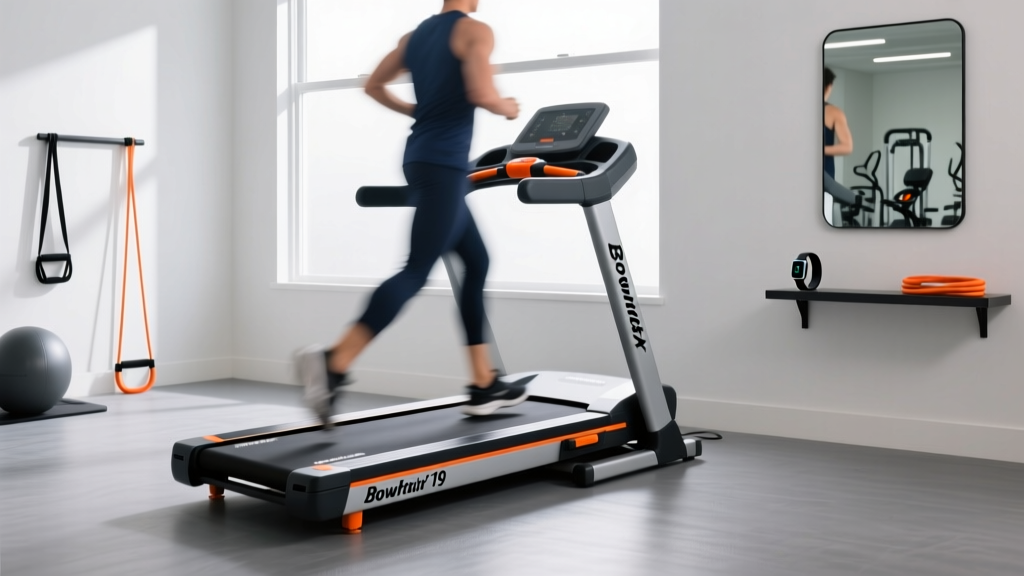
Contrast this with the sheer logistical nightmare of moving a NordicTrack treadmill. Take the NordicTrack Commercial 1750 as a prime example. It weighs a staggering 310 lbs and measures 80" x 38". Moving a NordicTrack treadmill is not a simple "tilt and roll" operation. If you attempt to move it intact, you risk snapping the plastic console uprights, pinching the delicate telemetry wires that run through the frame, or throwing the incline motor out of its factory calibration.
⚠️ Expert Warning: Incline Motor CalibrationWhen moving a NordicTrack treadmill, the incline motor gear must be properly reset upon reassembly. If the machine is plugged in and the console boots up while the deck is flat but the internal sensor thinks it is at a 15% incline, the motor will attempt to force the deck downward. This will instantly strip the plastic incline gears—a $150 replacement part that requires a full teardown to install. Always run the manual calibration sequence (holding the speed up and incline up buttons simultaneously) immediately after reassembling your treadmill in a new location.
Because of these risks, most homeowners hire professional movers for treadmill relocation. Movers typically charge between $100 and $150 per hour with a two-hour minimum, meaning the simple act of moving a NordicTrack treadmill down a flight of stairs or to a new house will cost you an additional $300 to $600. When evaluating the long-term value of an air bike versus a traditional motorized treadmill, this logistical flexibility represents a massive, hidden financial advantage for the air bike.
Mechanical Failure Modes: Chain vs. Belt Drives
Beyond the initial purchase price, the drivetrain of your air bike will dictate your long-term maintenance budget and user experience. The Rogue Echo and Assault AirBike Classic take fundamentally different engineering approaches to transferring power from the pedals and arms to the fan cage.
The Rogue Echo: Belt-Driven Precision
Rogue utilizes a heavy-duty poly-v belt drive system. Belts are inherently quieter, require zero lubrication, and do not stretch in the same unpredictable manner as metal chains. The primary failure mode for the Echo is dust accumulation. Because the fan cage acts as a massive vacuum, it pulls ambient dust, pet hair, and chalk directly into the belt pulley. If left unchecked for 18-24 months, this debris can cause the belt to slip under maximum wattage outputs (800+ watts). Maintenance is as simple as removing three hex screws, taking off the side cover, and vacuuming the pulley track. Total cost: $0.
The Assault Classic: Chain-Driven Brutality
The Assault AirBike Classic uses a traditional steel chain drive, similar to a bicycle. This provides a raw, mechanical feel and is virtually indestructible under normal human power outputs. However, chains require regular maintenance. Over a 5-year period of heavy HIIT usage, the chain will elongate (stretch). If you fail to lubricate the chain every 3 to 6 months with a dry PTFE bike lube, the sprocket teeth will wear down, leading to chain skip under heavy resistance. Replacing the chain and sprocket assembly on an Assault bike costs roughly $45 to $60 in parts and requires a chain-breaker tool and moderate mechanical aptitude.
"The Echo's belt drive is a 'set it and forget it' system built for commercial gym abuse, while the Assault's chain drive appeals to the tinkerer who doesn't mind periodic maintenance in exchange for a slightly lower upfront price point." — FitGearPulse Lab Testing Notes, 2025
Space Planning and Footprint Economics
In 2026, residential square footage is at a premium. When calculating the value of your cardio equipment, you must assign a dollar value to the floor space it occupies. The Rogue Echo requires a dedicated footprint of roughly 10.5 square feet, but you must add an additional 12 square feet of "swing radius" to account for the user's arms and legs during high-cadence sprints.
Conversely, a treadmill like the NordicTrack 1750 demands a minimum of 25 square feet of static space, plus a mandatory 2-foot safety clearance zone behind the deck to prevent severe friction burns in the event of a fall. If you are converting a spare bedroom or a section of your garage into a gym, the spatial efficiency of an air bike allows you to retain room for a squat rack, dumbbell set, and plyometric area, whereas a treadmill often monopolizes the entire zone.
Final Verdict: Maximizing Your Cardio ROI
If your primary goal is maximum metabolic output with minimal spatial and logistical friction, the air bike category is the undisputed winner. Between the two market leaders, the Rogue Echo Bike commands a $200 premium over the Assault Classic, but it easily justifies this cost through its superior belt-drive longevity, heavier 125-lb steel frame (which prevents walking during all-out sprints), and virtually zero-maintenance design.
However, the true value of the air bike is revealed when you contrast it with the hidden costs of traditional cardio. The financial and physical burden of assembling, maintaining, and eventually moving a NordicTrack treadmill makes it a static, permanent fixture in your home. An air bike, by contrast, is a highly mobile, low-maintenance metabolic weapon that adapts to your space and your budget, delivering elite cardiovascular adaptations for a fraction of the 5-year total cost of ownership.
More gear to consider
All reviews
NordicTrack T8 Treadmill Motor Size & Horsepower Troubleshooting
Why Does My Treadmill Stop When I Step On It? Bike Value Guide

Reebok i Treadmill Maintenance & Folding Deck Guide

T Series 8 Treadmill Motor Guide: Sizing & Troubleshooting

Rowing Machine vs. Anti-G Treadmill: 2026 Buying Guide & Technique