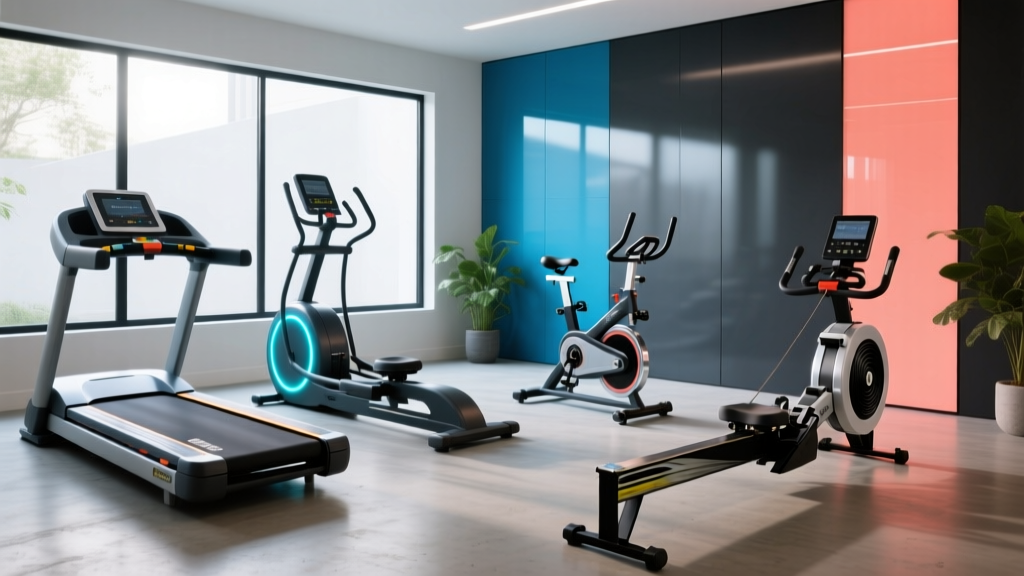
Elliptical Trainer or Treadmill: Which One is Better? (Rower Guide)
Debating elliptical trainer or treadmill, which one is better? Our 2026 rowing machine buying guide and technique breakdown reveals the ultimate cardio winner.

The Great Cardio Debate: Elliptical Trainer or Treadmill, Which One is Better?
Walk into any commercial gym or browse any home fitness forum, and you will inevitably encounter the same question: elliptical trainer or treadmill, which one is better? It is the classic cardiovascular showdown. Treadmills offer high-impact, weight-bearing bone density benefits, while ellipticals provide a low-impact, glute-heavy alternative that spares the knees and ankles. But in 2026, fitness science and home gym optimization have shifted the spotlight to a machine that outperforms both in total-body muscle recruitment and spatial efficiency: the rowing machine.
While the elliptical vs. treadmill debate usually centers on lower-body impact and calorie expenditure, the rowing machine (ergometer) bypasses this binary entirely. According to data published by Harvard Health Publishing, vigorous rowing burns between 255 and 440 calories in just 30 minutes depending on body weight, rivaling a 6 MPH treadmill run. However, unlike running or elliptical striding, rowing engages approximately 86% of the body's musculature per stroke. If you are trying to decide where to invest your $1,000 to $2,500 home gym budget, this comprehensive buying guide and technique breakdown will prove why the rower is the ultimate head-to-head victor.
Head-to-Head Comparison Matrix: Rower vs. Elliptical vs. Treadmill
Before diving into the mechanics of buying and using a rower, let us look at the hard data. This matrix compares the top-tier 2026 models across the three major cardio categories.
| Metric | Treadmill (e.g., Sole F80) | Elliptical (e.g., NordicTrack SE7i) | Rowing Machine (e.g., Concept2 RowErg) |
|---|---|---|---|
| Primary Muscle Focus | Lower body (Calves, Quads, Hamstrings) | Lower body + Core (Glute bias) | Full Body (60% Legs, 30% Core, 10% Arms) |
| Joint Impact | High (2-3x body weight per strike) | Low (Zero-impact continuous glide) | Low (Seated, horizontal force vector) |
| Avg. Calorie Burn (30 min) | 280 - 400 kcal | 220 - 350 kcal | 255 - 440 kcal |
| Floor Space Footprint | ~22 sq ft (Cannot fold easily) | ~16 sq ft | ~8 sq ft (Stores vertically) |
| 2026 Avg. Premium Price | $1,899 | $1,499 | $1,100 - $2,495 |
The 2026 Rowing Machine Buying Guide: What to Look For
If you have decided to bypass the elliptical trainer or treadmill debate and opt for a rower, you must understand the hardware. Not all ergometers are built equally. Here are the critical specifications to evaluate.
1. Resistance Mechanisms
- Air Resistance: The gold standard for competitive rowers and CrossFit athletes. The fan wheel creates infinite resistance based on your effort. The Concept2 RowErg (approx. $1,100) remains the undisputed king here. Drawback: They are loud, often exceeding 75 decibels at high stroke rates.
- Magnetic Resistance: Uses electromagnets to create drag. These are nearly silent (under 50 dB) and offer precise, programmable wattage targets. The NordicTrack RW900 ($1,699) is a top 2026 pick for interactive, studio-style classes.
- Water Resistance: Utilizes a paddled wheel inside a polycarbonate water tank. It provides the most authentic 'catch' feel and a soothing swoosh sound. Look at the WaterRower Natural (approx. $1,595). Maintenance Note: You must drop a chlorine purification tablet into the tank every 6 months to prevent algae buildup.
2. Rail Length and User Height
A common failure point for tall users buying budget rowers is running out of rail. If you are over 6'2", you need a monorail that accommodates at least a 38-inch inseam. Always check the maximum user height specification, as a short rail will result in the seat hitting the drive mechanism before your legs fully extend.
3. The Monitor and Telemetry
In 2026, Bluetooth FTMS (Fitness Machine Service) connectivity is mandatory if you plan to use third-party apps like Zwift or EXR. Ensure the machine's monitor broadcasts stroke rate (SPM), split time (/500m), and wattage seamlessly to your tablet or smart TV.
Mastering the Technique: The 4-Phase Rowing Stroke
Unlike a treadmill where you simply walk or run, rowing requires technical proficiency. Poor form on a rower does not just reduce calorie burn; it leads to lumbar strain. According to the biomechanical standards outlined by Concept2, the stroke is divided into four distinct phases. The power distribution should always be 60% legs, 30% core swing, and 10% arm pull.
Phase 1: The Catch
This is the starting position. Your shins should be vertical (no further forward, or you will compress the knee joint unnecessarily). Your torso is hinged forward at roughly 11 o'clock, arms straight, and shoulders relaxed. Pro Tip: Do not grip the handle too tightly; use a hook grip with your fingers to prevent forearm pump.
Phase 2: The Drive
The power phase. Push explosively through your heels. Do not pull with your arms yet. Your arms act merely as ropes connecting your torso to the handle. Once your legs are 90% extended, hinge your hips backward (the core swing), and finally, draw the handle to your lower sternum.
Phase 3: The Finish
Legs are fully extended, torso is leaned back to 1 o'clock, and the handle is resting just below your ribcage. Your wrists should be flat, not flexed.
Phase 4: The Recovery
The recovery is the exact reverse of the drive and should take twice as long. Extend the arms first, hinge the torso forward past the hips, and only then allow the knees to bend as the seat slides forward. Common Error: 'Shooting the slide' occurs when you push your legs down but leave your hips behind, forcing your lower back to take the entire load. This is the number one cause of rowing-induced herniations.
Biomechanical Warning: If you experience lower back pain while rowing, you are likely 'shooting the slide' or rounding your thoracic spine at the Catch. Engage your lats at the Catch and ensure your hips and shoulders move backward together during the Drive. For more on safe aerobic exercise mechanics, refer to the Mayo Clinic's guidelines on aerobic conditioning.
Programming Your Workouts: Moving Beyond the 5K
Once your technique is dialed in, you need a structured approach to cardiovascular conditioning. Here are two highly effective, data-driven workouts to replace your standard 45-minute elliptical slog.
The 'Dirty Thirty' Interval Sprint
- Warm-up: 10 minutes at a conversational pace (18-20 SPM).
- Work: 30 seconds of maximum effort (28-32 SPM). Aim to hold a split time that is 10-15 seconds faster than your baseline 2K pace.
- Rest: 30 seconds of complete rest (sit still, do not paddle lightly).
- Repeat: 10 to 15 rounds.
- Cool-down: 5 minutes easy paddling.
The Aerobic Base Builder (Steady State)
Rowing is exceptional for Zone 2 cardio. Set your monitor to a 45-minute single distance piece. Cap your stroke rate at a strict 20 SPM. By forcing a low stroke rate, you must generate more wattage per stroke (power per stroke), which builds immense muscular endurance in the quads and glutes without spiking your heart rate into the anaerobic zone.
Frequently Asked Questions
Is a rowing machine better for bad knees than an elliptical?
Yes. While ellipticals are low-impact, they still require weight-bearing stabilization. A rowing machine is entirely non-weight-bearing and horizontal. The forces are applied linearly through the kinetic chain, making it a preferred rehabilitation tool for patellofemoral pain syndrome, provided the user does not over-compress the knees at the Catch.
Why is the damper setting on my Concept2 set to 10, but pros use 4?
The damper is not a 'difficulty' dial; it is a gearing system. A setting of 10 allows maximum air into the flywheel housing, creating a high drag factor (approx. 200). This feels like rowing a heavy, sluggish wooden boat. Elite rowers set the damper between 3 and 5 (drag factor 100-130) to simulate the sleek glide of a racing shell on water, allowing for faster, more efficient stroke turnover.
Can I store a water rower vertically?
Yes, most modern water rowers (like the WaterRower or Mobofitness) are designed to be stood on their end tank. However, ensure the tank is sealed properly to prevent micro-leaks, and keep it out of direct sunlight to prevent UV degradation of the polycarbonate tank and algae growth in the water.
More gear to consider
All reviews
Encore 1500 Treadmill Review & 2026 Small-Space Market Trends

Air vs Assault Bike: The Amazon Commercial Dad on Treadmill Actress

Walking Pad vs Ironman Treadmill: Review & Troubleshooting

Under Desk Treadmill Width & Budget Guide: 2026 Office Value Analysis
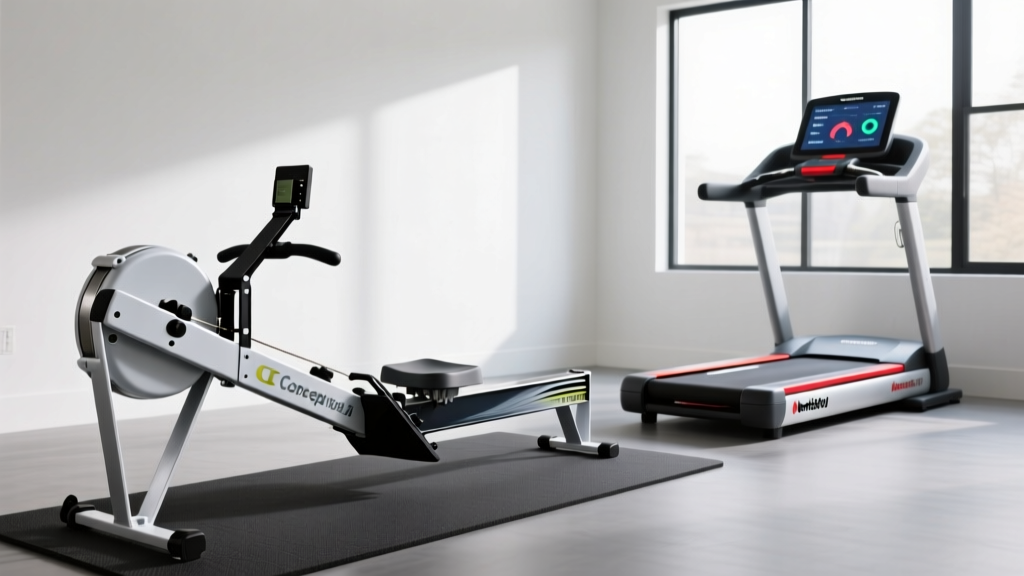
Rowing Machine Setup Guide & NordicTrack C950i Treadmill Specs