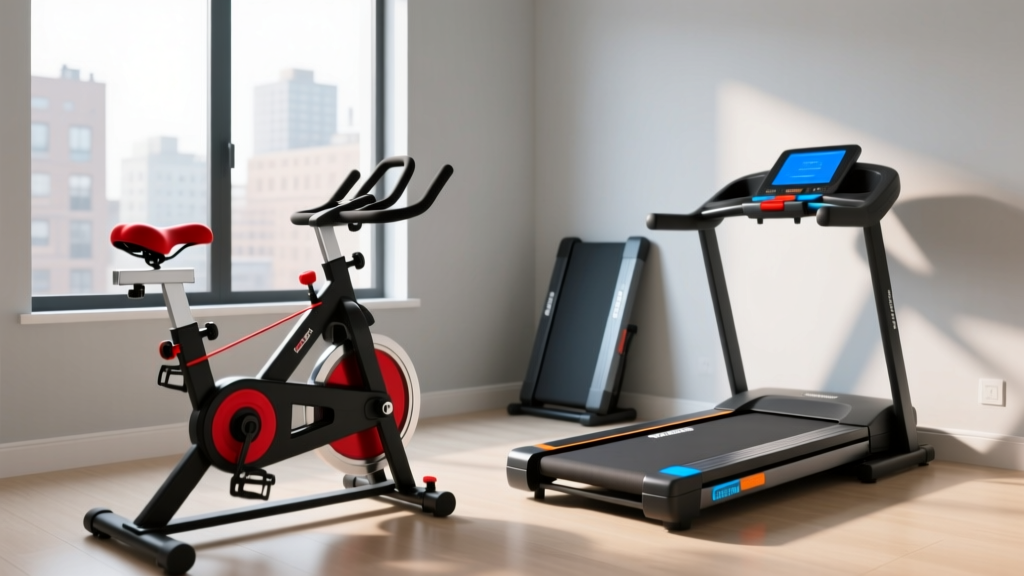
Which Is Better: Exercise Treadmill or Stationary Bike in Small Spaces
Wondering which is better, exercise treadmill or stationary bike for small spaces? We compare Air vs Assault bikes for optimal home gym layouts.

The Spatial ROI: Rethinking the Compact Home Gym Debate
When designing a micro-gym or converting a spare bedroom into a fitness space, homeowners inevitably ask: which is better, exercise treadmill or stationary bike? Traditional magnetic stationary bikes offer a small footprint but lack upper-body engagement, while treadmills demand massive floor space and high ceilings. However, spatial optimization experts and interior fitness designers are increasingly pivoting to a third category that delivers maximum metabolic ROI per square foot: the fan bike.
Specifically, the battle between the Rogue Echo Bike (often generically called an air bike) and the Assault Fitness AssaultBike Pro X (the definitive assault bike) dominates the high-intensity cardio market. But when square footage is your primary constraint, how do these two titans compare? This guide bypasses generic workout advice and dives deep into the architectural, dimensional, and environmental realities of integrating a fan bike into a space-optimized 2026 home gym layout.
Dimensional Breakdown: Static Footprint vs. Dynamic Envelope
Evaluating cardio equipment for small rooms requires looking beyond the manufacturer's stated dimensions. You must calculate the Dynamic Envelope—the total volume of space required for the machine, the user's biomechanical movement, and safe mounting/dismounting clearance.
| Metric | Rogue Echo Bike (Air) | AssaultBike Pro X | Standard Treadmill |
|---|---|---|---|
| Static Footprint (L x W) | 53' x 30' (11.0 sq ft) | 51' x 27' (9.5 sq ft) | 76' x 35' (18.4 sq ft) |
| Machine Weight | 123 lbs | 104 lbs | 200+ lbs |
| Handlebar Swing Width | 30' (Fixed axis) | 27' (Fixed axis) | N/A |
| Required Side Clearance | 12' minimum | 10' minimum | 24' (Safety fall zone) |
| Total Dynamic Envelope | ~22 sq ft | ~19 sq ft | ~45 sq ft |
| 2026 Average Retail Price | $995 | $1,099 | $1,500 - $2,500 |
While the AssaultBike Pro X wins on pure static footprint by a margin of 1.5 square feet, the Rogue Echo's heavier 123-pound chassis provides superior stability during violent, high-RPM interval sprints without the need for floor anchoring—a critical factor if you are placing the bike on luxury vinyl plank (LVP) or engineered hardwood where drilling is prohibited.
Vertical Clearance and Ceiling Constraints
One of the most overlooked spatial metrics in home gym design is vertical clearance. According to Mayo Clinic guidelines on home exercise safety, ensuring adequate overhead space is vital to prevent joint hyperextension and equipment strikes.
The Treadmill Disadvantage
A standard treadmill deck sits 8 to 10 inches off the ground. Add a 6-foot-tall user, and you suddenly require a minimum ceiling height of 7 feet 6 inches just to stand still. During an incline sprint, the user's vertical bounce demands an 8.5 to 9-foot ceiling to avoid the psychological and physical hazard of head-strikes.
The Fan Bike Advantage
Both the Rogue Echo and AssaultBike Pro X feature seat heights that peak around 40 inches. Even with aggressive out-of-the-saddle standing sprints, the user's head remains well below standard 8-foot residential ceilings. This makes fan bikes the undisputed champions for basement conversions, attic gyms, and low-clearance garage layouts.
⚠️ Spatial Warning: The Airflow Intake Zone
Fan bikes generate massive wind resistance by pulling air through the front fan cage. If you push the front wheel flush against a wall, you will starve the fan of intake air, artificially lowering the resistance curve and causing the internal belt or chain to overheat. Rule of Thumb: Always maintain a minimum of 24 inches of clearance directly in front of the fan cage to ensure proper aerodynamic draw and thermal dissipation.
Layout Strategy: Placement and Acoustic Management
Fan bikes are notoriously loud. The decibel output of a Rogue Echo at 80 RPM can exceed 85 dB—comparable to a lawnmower. In a compact, multi-use space (like a studio apartment or a shared home office), acoustic layout is just as important as physical footprint.
- The Corner Wedge Strategy: Placing the bike in a 90-degree corner amplifies low-frequency sound waves. If you must use a corner, install 2-inch thick acoustic foam panels on the adjacent walls at the height of the fan cage (approx. 24 inches off the ground) to absorb the primary noise vector.
- Vibration Decoupling: The AssaultBike Pro X utilizes a chain drive, which introduces a distinct metallic 'clatter' that transfers through the floor joists. The Rogue Echo uses a polyurethane belt drive, which is significantly quieter and transfers less structural vibration. If your gym is on a second floor above a living space, the Echo's belt drive is mandatory for spatial harmony.
- Wall Protection: High-intensity intervals produce significant sweat projection. Positioning either bike too close to drywall will result in sweat-induced paint degradation and mold growth. Maintain an 18-inch buffer from painted walls, or install a washable PVC backsplash panel behind the bike.
Maintenance in Confined Quarters: Belt vs. Chain
When optimizing a small room, equipment is often pushed into tight alcoves or closets when not in use. This spatial reality drastically impacts maintenance requirements.
The AssaultBike Pro X relies on a heavy-duty steel chain. While virtually indestructible under load, chains require regular lubrication. In a tight, unventilated space, airborne dust and pet dander will stick to the oiled chain, creating an abrasive grinding paste that accelerates sprocket wear. If your spatial layout forces the bike into a dusty corner, you will need to degrease and re-lube the chain every 30 days.
Conversely, the Rogue Echo utilizes a sealed belt drive system. It requires zero lubrication and is highly resistant to dust ingestion. For the 'set-and-forget' home gym owner operating in a confined, multi-purpose room (like a home office or guest bedroom), the Echo's belt drive eliminates the spatial mess of chain oil and degreasers.
'In micro-gym design, the best equipment isn't just the one that fits the floor plan; it's the one whose maintenance lifecycle doesn't disrupt the primary function of the room. The belt-driven Echo wins the spatial maintenance war.' — Home Fitness Architecture Principles, 2026
Cost-Per-Square-Foot (CPSF) Analysis
To truly answer the question of spatial efficiency, we must look at the financial investment relative to the dynamic envelope required. By dividing the 2026 retail price by the total dynamic envelope (including safety clearances), we get the CPSF metric.
- Rogue Echo: $995 / 22 sq ft = $45.22 per sq ft
- AssaultBike Pro X: $1,099 / 19 sq ft = $57.84 per sq ft
- Standard Motorized Treadmill: $1,800 / 45 sq ft = $40.00 per sq ft
While the treadmill technically boasts a slightly lower CPSF, it yields a vastly inferior metabolic output per minute and monopolizes the room's visual and physical flow. Between the two fan bikes, the Rogue Echo offers a better financial return on the spatial footprint it demands, largely due to its lower entry price and superior long-term belt-drive reliability in dusty home environments.
Final Verdict for the Space-Conscious Athlete
So, returning to the original dilemma: which is better, exercise treadmill or stationary bike? If your primary constraint is a compact room with standard 8-foot ceilings, neither traditional option matches the spatial and metabolic efficiency of a fan bike.
Choose the AssaultBike Pro X if you are outfitting a garage gym with concrete floors, have a strict 19-square-foot maximum footprint, and don't mind routine chain maintenance. Choose the Rogue Echo if you are designing a multi-use indoor space (like a bedroom or office), require second-floor vibration dampening, and prefer the zero-maintenance reliability of a belt drive. Both machines will deliver elite cardiovascular conditioning while leaving enough floor space to actually walk around your home.
More gear to consider
All reviews
Running Machines Weight Loss Benefits: Treadmills vs Ellipticals 2026

Reebok Z Tech Treadmill Review: Small Space Verdict

Sole F80 Treadmill Assembly vs Under Desk Treadmills: Office Guide

Life Fitness Treadmill Belt vs Walking Pads: Belt Troubleshooting
Curved vs Motorized: Best for a Treadmill Sprint Workout?
