Beginner Back Muscle Workouts With Dumbbells: 2026 Gear Review
Master back muscle workouts with dumbbells using our 2026 beginner guide. We compare top adjustable sets and provide step-by-step routines for gains.

Why Adjustable Dumbbells Are the Ultimate Tool for Back Development
Building a strong, resilient posterior chain is a primary goal for any beginner stepping into strength training. However, outfitting a home gym with a full set of fixed-weight dumbbells to accommodate the heavy pulling movements required for back development is both space-prohibitive and financially draining. This is where adjustable dumbbells become indispensable. When designing back muscle workouts with dumbbells, you need equipment that allows for rapid weight jumps, micro-loading for isolation exercises, and durable knurling to prevent grip fatigue from cutting your sets short.
In this 2026 comprehensive guide, we evaluate the top adjustable dumbbell sets on the market specifically through the lens of back training. We will break down handle ergonomics, weight distribution, and mechanical reliability, before transitioning into a step-by-step beginner routine designed to maximize latissimus dorsi, rhomboid, and erector spinae hypertrophy.
2026 Adjustable Dumbbell Comparison Matrix for Back Training
Not all adjustable dumbbells are created equal. Pulling movements place unique stress on the handle and the internal locking mechanisms. Below is a comparative analysis of the top three models dominating the home gym market in 2026.
| Model | Mechanism | Max Weight | Handle Length | 2026 Est. Price | Best For Back Training |
|---|---|---|---|---|---|
| Nuobell 80 LB | Twist-Grip | 80 lbs | 6.5 inches | $449 | Heavy rows and lat pullovers requiring a wider grip. |
| Bowflex SelectTech 552 | Dial System | 52.5 lbs | 5.5 inches | $399 | Beginners focusing on micro-loading (2.5 lb jumps) for rear delt flyes. |
| PowerBlock Elite USA | Selector Pin | 50-90 lbs | 5.0 inches | $349 | Durability and compact cage design for strict, controlled movements. |
Key Ergonomic Takeaways for Pulling Movements
When performing back muscle workouts with dumbbells, handle length and knurling depth are critical. The Nuobell 80 features a traditional barbell-like knurling pattern and a longer handle, allowing you to maintain a secure grip during heavy single-arm rows without the plates digging into your forearm. Conversely, the PowerBlock Elite utilizes a caged design. While virtually indestructible, the cage restricts wrist extension, which can slightly alter the biomechanics of exercises like dumbbell pullovers or high-elbow rows.
Step-by-Step: Top 3 Back Muscle Workouts With Dumbbells
According to research published in PubMed regarding EMG activation in latissimus dorsi exercises, varying the angle of pull and the degree of shoulder extension is vital for complete back development. Here is a beginner-friendly, step-by-step routine utilizing your adjustable set.
Step 1: The Chest-Supported Dumbbell Row
The chest-supported row is the gold standard for beginners. By removing the lower back from the equation, you isolate the mid-back (rhomboids, mid-traps) and lats without risking lumbar strain.
- Setup: Set an adjustable incline bench to a 30-to-45-degree angle. Grab your adjustable dumbbells (start with 15-20 lbs per hand) and lie face down on the bench.
- Execution: Let your arms hang straight down with a neutral grip (palms facing each other). Retract your shoulder blades first, then drive your elbows up and back toward your hips.
- Tempo: 1 second up, 2-second squeeze at the top, 3-second eccentric lowering.
- Prescription: 3 sets of 10-12 reps. Rest 90 seconds between sets.
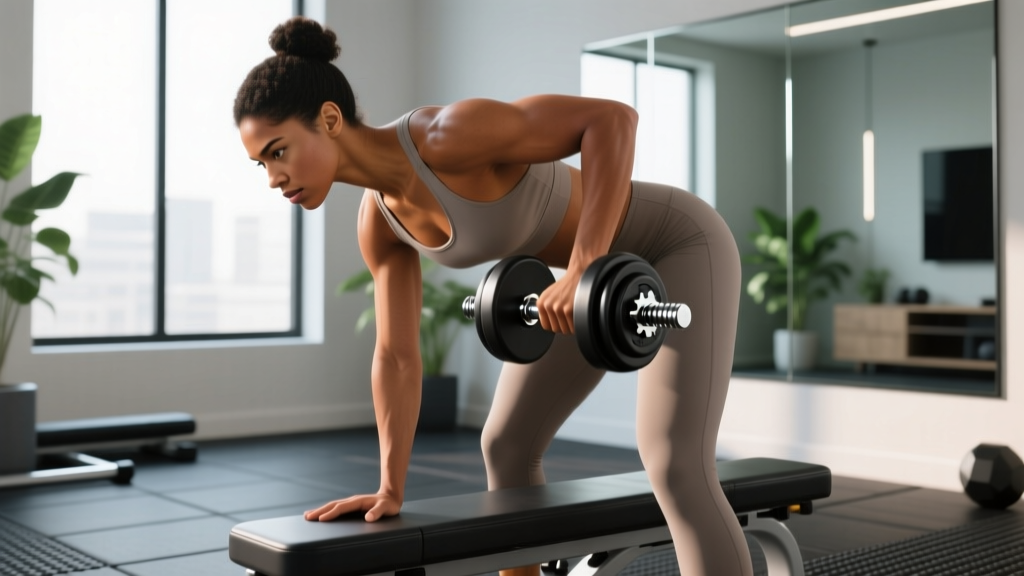
Step 2: Single-Arm Tripod Dumbbell Row
This unilateral movement addresses muscle imbalances and allows for a deeper stretch at the bottom of the movement. The biomechanical breakdown of the dumbbell row on ExRx.net highlights the importance of spinal neutrality during this hinge pattern.
- Setup: Place your left knee and left hand on a flat bench. Your right foot should be planted firmly on the floor, slightly behind your torso. Grab the adjustable dumbbell with your right hand.
- Execution: Keep your torso parallel to the floor. Pull the dumbbell toward your hip pocket, not your armpit. This specific trajectory targets the lower lats rather than the upper back.
- Prescription: 3 sets of 8-10 reps per arm. Increase the weight by 5 lbs once you can comfortably complete all sets.
Step 3: Dumbbell Pullover
The pullover is a unique movement that trains the lats through shoulder extension, mimicking the mechanics of a cable straight-arm pulldown.
- Setup: Lie perpendicular across a flat bench, supporting only your upper back and shoulders. Hips should be slightly below shoulder level. Hold a single adjustable dumbbell by the inner plates with both hands.
- Execution: With a slight bend in your elbows, lower the weight backward over your head until you feel a deep stretch in your lats and ribcage. Contract the lats to pull the weight back over your chest.
- Prescription: 3 sets of 12-15 reps. Use lighter weight (e.g., 20-30 lbs total) to focus on the mind-muscle connection.
Beginner Warning: The Grip Fatigue Factor
During back muscle workouts with dumbbells, your forearm flexors will likely fail before your latissimus dorsi. If you find your grip slipping on heavy rows, consider investing in a pair of cotton lifting straps. The American Council on Exercise (ACE) guidelines on rowing mechanics emphasize that using straps is not cheating; it is a necessary tool to ensure the target muscle group reaches mechanical failure.
Equipment Failure Modes & Maintenance Protocols
As a beginner investing $350 to $450 into adjustable dumbbells, protecting your investment is paramount. Back workouts involve moving heavy weights from the floor to the bench, increasing the risk of drops. Here are the specific failure modes you must avoid:
- Dial Mechanism Jamming (Bowflex): Never set the Bowflex SelectTech dials down on a hard surface while the weight is adjusted. If the outer casing shifts even a millimeter, the internal interlocking plates will jam. Always return them to their cradle before changing weights.
- Shear Pin Snapping (Nuobell): The Nuobell relies on an internal steel pin that slides through the weight plates when the handle is twisted. Dropping a Nuobell dumbbell from a height greater than 12 inches can snap this pin or warp the handle sleeve, rendering the set useless. Lower the weights to the floor with control after every set.
- Urethane Degradation (PowerBlock): While the PowerBlock cage is highly durable, the urethane coating on the internal weight blocks can chip if slammed together during heavy rowing repetitions. Maintain controlled eccentrics to preserve the coating and reduce noise.
Progressive Overload: How to Scale Your Back Workouts
The primary advantage of adjustable dumbbells for back training is the ability to implement micro-progressive overload. The back muscles are large and capable of moving heavy loads, but the supporting stabilizers (like the rear deltoids and rotator cuff) require precise, incremental jumps.
"Strength gains in the first 12 weeks of a beginner program are largely neurological. Utilizing 2.5 lb micro-jumps allows the central nervous system to adapt to heavier loads on compound rows without compromising the structural integrity of the shoulder joint."
When utilizing the Bowflex 552, take advantage of the 2.5 lb increments for rear deltoid flyes and high-elbow rows. Once you transition to heavy single-arm lat rows, switch to the Nuobell 80 or PowerBlock Elite to utilize 5 lb or 10 lb increments, ensuring your lats are continuously challenged well into your second year of training.
Frequently Asked Questions
Can I build a wide back using only adjustable dumbbells?
Yes. While barbells and cable machines are popular, adjustable dumbbells allow for a greater range of motion and unilateral loading. By consistently applying progressive overload to your rows and pullovers, you will stimulate significant latissimus dorsi hypertrophy, resulting in a wider, more V-tapered back.
How often should beginners train their back with dumbbells?
Beginners should aim to train their back 2 times per week, allowing at least 48 to 72 hours of recovery between sessions. This frequency optimizes muscle protein synthesis while preventing central nervous system burnout.
Do I need an incline bench for these back workouts?
While an adjustable incline bench is highly recommended for chest-supported rows and pullovers, you can substitute a sturdy coffee table or a flat bench for tripod rows. However, investing in a basic adjustable bench (typically $100-$150) will exponentially increase the variety of back muscle workouts with dumbbells you can safely perform at home.
More gear to consider
All reviews
Olympic Barbell Guide & Dumbbell Spotter Stands Compared

Power Rack vs Squat Rack vs Stand for Trojan Dumbbell 200 Bench

Budget Dumbbell Storage for the Dumbbell Upright Row Exercise
EZ Bar vs Straight Bar: Upgrading Triceps Extension With Dumbbells

Loadable Dumbbells for Single Arm Dumbbell Overhead & Small Gyms