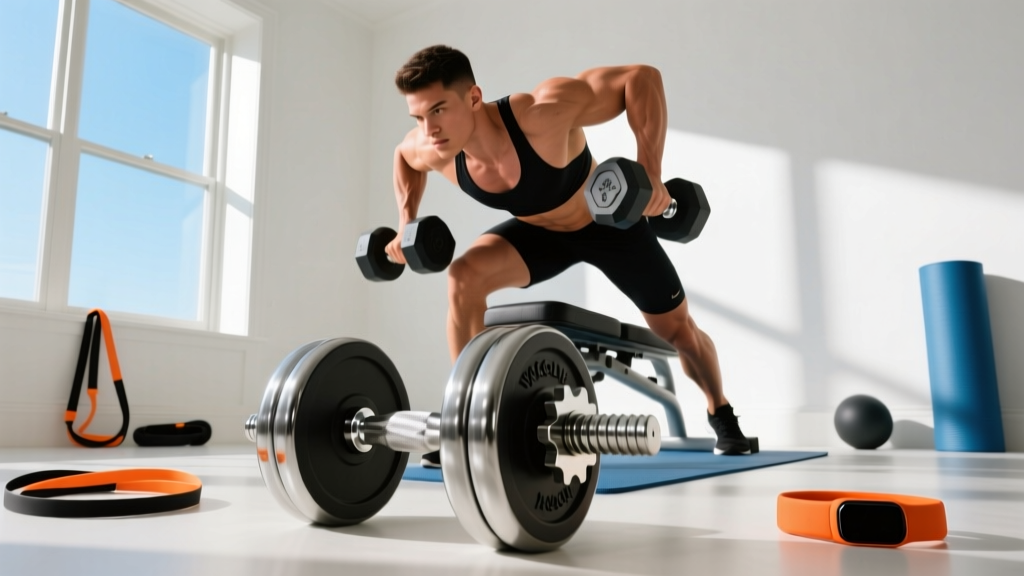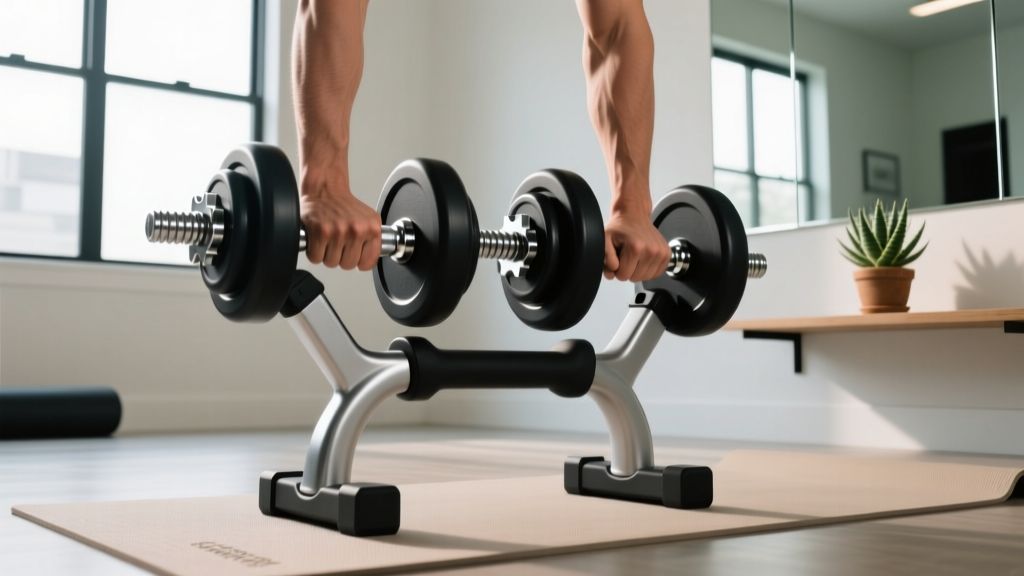
Best Adjustable Dumbbells for Arm and Shoulder Exercises
Discover the best adjustable dumbbells for arms and shoulders. Our 2026 beginner's guide compares top models and includes step-by-step workout tips.

The Ultimate Beginner's Guide to Adjustable Dumbbells
Building a home gym in 2026 doesn't require a massive dedicated room or thousands of dollars in cast iron. For beginners looking to master dumbbell exercises for arms and shoulders, adjustable dumbbells are the undisputed kings of space efficiency and progressive overload. Instead of buying a full rack of fixed-weight hex dumbbells—which can cost upwards of $1,500 and take up an entire wall—a single pair of adjustable dumbbells gives you an entire gym's worth of resistance in a compact footprint.
However, not all adjustable mechanisms are created equal. The transition from fixed weights to adjustable models introduces new variables: handle balance, dial durability, and weight increment precision. In this step-by-step guide, we will compare the top adjustable dumbbell models on the market, break down exactly how to choose the right set for your upper body goals, and walk you through the foundational movements to build impressive arms and boulder shoulders.
2026 Adjustable Dumbbell Comparison Matrix
Before diving into the exercises, you need the right tool. Below is a head-to-head comparison of the three most popular adjustable dumbbell systems for home lifters this year.
| Feature | Bowflex SelectTech 552 | Nuobell 80 LB | PowerBlock Elite EXP |
|---|---|---|---|
| Weight Range | 5 - 52.5 lbs | 5 - 80 lbs | 5 - 50 lbs (Expandable) |
| Adjustment Style | Rotating Dial | Pull-Pin / Slide | Selector Pin |
| Increments | 2.5 lbs (up to 25 lbs) | 5 lbs | 2.5 lbs (with add-on) |
| Handle Feel | Standard knurled steel | Contoured, fixed-length | Caged, blocky grip |
| Approx. Price (2026) | $399 - $429 | $449 - $479 | $379 - $419 |
| Best For | Beginners needing micro-loads | Intermediate lifters pressing heavy | Durability and expandability |
Step-by-Step Guide: Choosing Your First Set
Selecting the right adjustable dumbbell for upper-body training requires looking past the marketing and focusing on biomechanics and build quality. Follow these steps to make an informed purchase.
Step 1: Assess Your Weight Range Needs
Shoulder isolation movements (like lateral raises) require very light weights, often starting at 5 to 10 lbs. Conversely, compound shoulder presses and heavy bicep curls will quickly outgrow a 25 lb limit. Ensure the set you buy starts at 5 lbs for warm-ups and isolation, but caps out at least at 50 lbs. According to research on muscle hypertrophy mechanisms, mechanical tension is a primary driver of muscle growth, meaning you will need heavier loads as your neurological adaptations improve over the first 6 to 12 months.
Step 2: Evaluate the Adjustment Mechanism
For arm and shoulder supersets, speed matters. The Nuobell pull-pin system allows for near-instant weight changes, mimicking the speed of grabbing a new dumbbell off a commercial gym rack. The Bowflex dial system takes about 3-5 seconds to adjust and requires you to ensure the dial is fully seated, or the plates will jam. If your workouts involve rapid drop-sets for bicep burnouts, lean toward the Nuobell or PowerBlock pin systems.
Step 3: Check Handle Ergonomics and Balance
When performing dumbbell exercises for arms and shoulders, wrist stability is crucial. The PowerBlock features a unique caged, blocky design. While incredibly durable, the fixed cage length can feel awkward during supinated bicep curls or close-grip overhead presses. The Bowflex and Nuobell retain the traditional cylindrical dumbbell shape, which most beginners find significantly more intuitive for rotational movements like hammer curls and Arnold presses.
Step-by-Step Execution: Top Dumbbell Exercises for Arms and Shoulders
Once your equipment arrives, it is time to build your routine. The CDC physical activity recommendations suggest targeting all major muscle groups at least twice a week. Here is a beginner-friendly, step-by-step breakdown of three foundational movements.
1. The Seated Dumbbell Overhead Press (Shoulders)
This is your primary mass-builder for the anterior and medial deltoids.
- The Setup: Set an adjustable bench to a 75-to-85-degree angle (not perfectly 90 degrees, which can impinge the shoulder joint). Set your adjustable dumbbells to a moderate weight (e.g., 15-20 lbs to start).
- The Clean: Kick the dumbbells up to your shoulders using your thighs. Keep your elbows tucked slightly forward (about 30 degrees from your torso), not flared straight out to the sides.
- The Press: Drive the weights upward in a slight arc until your elbows lock out. Do not clang the weights together at the top.
- The Descent: Lower the weights slowly over 2-3 seconds until the plates lightly touch your upper chest/shoulder area.
2. Standing Alternating Supinating Bicep Curls (Arms)
Targeting the biceps brachii and brachialis for peak and thickness.
- The Setup: Stand tall with a dumbbell in each hand, arms fully extended, palms facing your thighs (neutral grip).
- The Curl: Curl the right dumbbell upward. As the weight passes your thigh, begin rotating (supinating) your wrist so your palm faces the ceiling at the top of the movement.
- The Squeeze: Hold the contraction at the top for one full second, actively squeezing the bicep.
- The Return: Lower the weight slowly, rotating the wrist back to a neutral position as it reaches the bottom. Repeat on the left side.
3. The Dumbbell Lateral Raise (Shoulder Isolation)
Crucial for building shoulder width (the 'V-taper' look).
- The Setup: Drop the weight significantly. Lateral raises are an isolation movement; 10 to 15 lbs is plenty for most beginners. Stand with a slight forward hinge at the hips.
- The Lift: With a slight bend in your elbows, raise the dumbbells out to your sides. Lead with your elbows, not your hands.
- The Peak: Stop when your upper arms are parallel to the floor. Imagine pouring out a pitcher of water (pinkies slightly higher than thumbs).
- The Control: Resist gravity on the way down. Do not let the weights drop rapidly.
Maintenance and Common Failure Modes
Adjustable dumbbells are precision instruments, not indestructible slabs of iron. Understanding their failure modes will save you hundreds of dollars in replacement parts.
- Dial Jamming (Bowflex): The most common issue with dial-adjustable models is internal plate misalignment. Never adjust the dial while the dumbbell is resting on your leg or at an angle. Always adjust them while they are seated flat in their cradle.
- Pin Bending (Nuobell / PowerBlock): Forcing the selector pin when the plates are not perfectly aligned in the rack can bend the metal pin. Always lift the dumbbell straight up out of the cradle to ensure the internal slots are lined up before inserting or pulling the pin.
- Dropping the Weights: Unlike fixed urethane dumbbells found in commercial gyms, adjustable dumbbells contain plastic housings, gears, and pins. Dropping a 50 lb adjustable dumbbell from the top of a shoulder press will almost certainly shatter the internal mechanism. You must lower them to the floor or bench with control after every set.
Frequently Asked Questions (FAQ)
Can I build significant muscle mass using only adjustable dumbbells?
Absolutely. Muscle tissue does not know the difference between a fancy cable machine, a barbell, or an adjustable dumbbell; it only recognizes mechanical tension and metabolic stress. As noted by Mayo Clinic's strength training guidelines, consistent progressive overload is the key to hypertrophy. Once you max out a 52.5 lb dumbbell on presses, you can transition to unilateral (single-arm) work or increase time-under-tension to continue stimulating growth.
Are adjustable dumbbells worth the high upfront cost?
Yes. A full set of rubber hex dumbbells from 5 to 50 lbs (in 5 lb increments) requires 20 pairs. At an average of $2.00 per pound, that set costs roughly $1,100 to $1,300, plus the cost of a heavy-duty storage rack. A $400 pair of adjustable dumbbells provides the exact same weight range, takes up less than 2 square feet of floor space, and pays for itself immediately.
How often should I train arms and shoulders as a beginner?
For optimal recovery and growth, train your upper body 2 to 3 times per week on non-consecutive days. Shoulders are heavily involved in chest pressing movements, so be mindful of overlapping fatigue. A push/pull/legs split or a full-body routine performed three days a week are excellent frameworks for beginners utilizing adjustable dumbbells.
More gear to consider
All reviews
Maintaining Kettlebells and Gear for Dumbbell Bench Press Workouts

Olympic vs Standard Plates Guide: Dumbbell Press Works What Muscles?

Space-Saving Layouts: Building a 140 lb Dumbbell with Plates
Ethos Rubber Hex Dumbbell vs Neoprene: Beginner Guide

Power Rack vs Squat Rack vs Stand: Beyond the Dumbbell Buying Guide