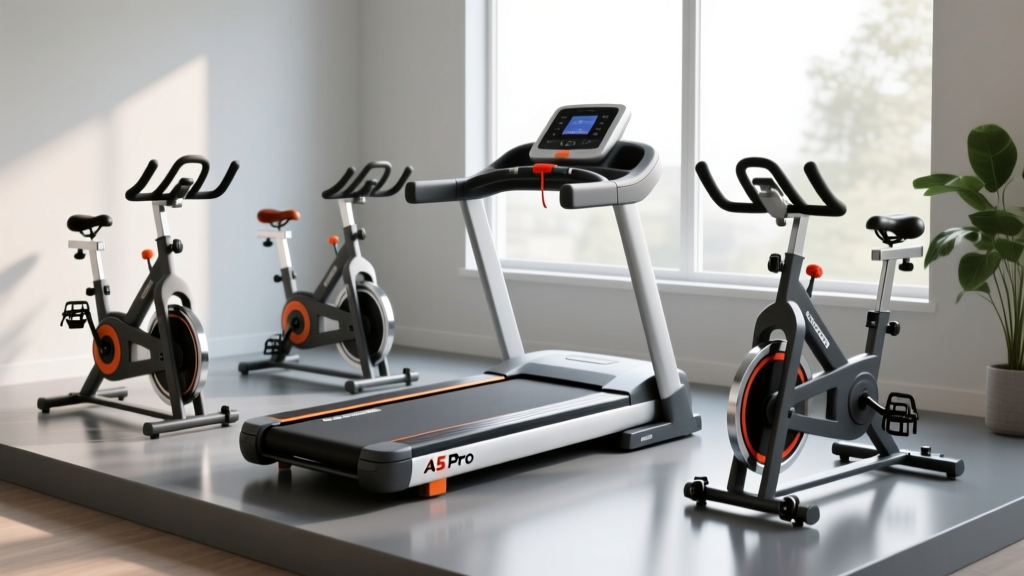
A5 Pro Treadmill vs Stationary Bikes: Maintenance Guide
Compare A5 Pro treadmill care with upright, recumbent, and spin bikes. Learn expert maintenance tips to extend your cardio equipment's lifespan.

The Cardio Equipment Longevity Paradigm
When outfitting a home gym, enthusiasts often focus heavily on initial specs—like the 3.0 CHP motor and 20x55-inch running belt of the popular A5 Pro Treadmill—while overlooking the long-term maintenance required to protect that investment. According to the Consumer Reports exercise equipment guide, the average lifespan of a well-maintained cardio machine is 10 to 15 years, whereas neglected machines frequently suffer critical failures within 36 months.
While the A5 Pro Treadmill demands rigorous belt lubrication and deck inspection, stationary bikes present an entirely different set of mechanical challenges. To maximize your equipment's ROI in 2026, we must break down the specific maintenance protocols for the three primary stationary bike types: upright, recumbent, and spin. This guide contrasts the A5 Pro Treadmill's care regimen with the nuanced requirements of stationary bikes, providing actionable, technical insights for home gym owners.
2026 Service Rate Alert: Professional in-home fitness equipment repair rates have climbed to an average of $95–$150 per hour this year. Mastering the DIY maintenance steps outlined below can save you $200+ annually per machine.Upright Stationary Bikes: Belt Tension and Console Care
Upright bikes, such as the Schwinn IC4 or NordicTrack S22i, mimic traditional outdoor cycling geometry. Because they rely on internal drive systems rather than treadmills' high-friction decks, their maintenance focuses heavily on internal belt tension and electronic sweat protection.
Poly-V Drive Belt Maintenance
Unlike the A5 Pro Treadmill, which requires 100% silicone lubricant every 150 miles to reduce deck friction, upright bikes utilize a Poly-V ribbed drive belt to connect the pedals to the flywheel. Over time, this belt stretches.
- Inspection: Every 6 months, remove the side shroud and check the belt deflection. Press down on the center of the longest belt span; it should yield exactly 1/2 inch (12mm) of play.
- Adjustment: If deflection exceeds 3/4 inch, loosen the flywheel mounting bolts and slide the tensioner bracket forward. Retighten to 25 Nm of torque.
- Replacement Cost: A replacement Poly-V belt costs between $35 and $60. Do not use automotive belt dressing, as it will degrade the bike's internal acoustic dampening.
Console and PCB Sweat Corrosion
The Mayo Clinic's fitness equipment guidelines emphasize the importance of hygiene and equipment care to prevent premature degradation. Upright bikes place the rider's sweat zone directly above the console and motherboard. In 2026, replacing a proprietary smart-bike console can cost upwards of $450. Always use a microfiber cloth and a 50/50 water-isopropyl alcohol solution post-workout. Never spray cleaner directly onto the screen, as liquid ingress into the PCB is the number one cause of upright bike failure.
Recumbent Bikes: Seat Rail Lubrication and Step-Through Stress
Recumbent bikes, like the Sole R92 or NuStep recumbent cross-trainers, are designed for low-impact rehabilitation and extended comfort. Their unique horizontal geometry shifts the maintenance focus away from high-tension drive belts and toward linear bearings and step-through frame stress points.
Seat Carriage and Linear Bearings
The adjustable seat on a recumbent bike glides along a metal or aluminum extrusion track. Dust, pet hair, and skin cells accumulate here, turning into an abrasive paste that destroys the plastic linear bearings.
- Cleaning: Vacuum the seat track weekly using a crevice tool.
- Lubrication: Unlike the A5 Pro Treadmill's liquid silicone, recumbent seat tracks require a PTFE (Teflon) dry lubricant. Wet lubes will attract dust and cause the seat to jerk during adjustments.
- Application: Spray PTFE onto a clean rag and wipe the track monthly. Never spray directly onto the track to avoid overspray on the resistance motor.
Frame Stress and Pedal Arm Torque
Because users step down into a recumbent bike, the bottom bracket and pedal arms endure asymmetrical lateral forces. Every 3 months, use a torque wrench to verify the pedal arm bolts are tightened to 35–40 Nm. A loose pedal arm will strip the square taper or spline interface within weeks, turning a $5 tightening job into a $120 crankset replacement.
Spin and Indoor Cycling Bikes: Magnetic Calibration and Sweat Corrosion
Spin bikes (e.g., Peloton Bike+, Keiser M3i) are built for high-cadence, out-of-the-saddle sprints. They endure the highest mechanical stress of any stationary bike type, requiring rigorous attention to the flywheel gap and pedal cleat interfaces.
Magnetic Resistance Gap Calibration
Modern spin bikes use eddy-current magnetic resistance. The resistance magnets never physically touch the aluminum flywheel. However, the cable or stepper motor that moves the magnets can lose calibration, resulting in a 'dead zone' at low resistance or an inability to reach maximum wattage.
- The Symptom: You feel zero resistance at levels 1 through 10, followed by a sudden spike at level 11.
- The Fix: Access the bike's developer or calibration menu (varies by brand). Follow the on-screen prompts to recalibrate the stepper motor's home position. This requires no tools and takes 4 minutes.
Galvanic Corrosion on Handlebars and Seat Posts
Sweat is highly acidic and contains sodium chloride. When it pools in the aluminum adjustment sleeves of a spin bike, it causes galvanic corrosion, effectively welding the seat post to the frame. To prevent this, apply a thin layer of marine-grade anti-seize compound or white lithium grease to the seat and handlebar posts every 6 months. Wipe away any excess to prevent staining your cycling apparel.
Maintenance Matrix: A5 Pro Treadmill vs. Stationary Bikes
To visualize the differing maintenance demands, compare the baseline A5 Pro Treadmill against the three bike categories. The American Council on Exercise (ACE) consistently highlights that matching your maintenance schedule to your specific equipment type is the key to long-term fitness consistency.
| Equipment Type | Primary Wear Point | Maintenance Interval | DIY Cost (2026) |
|---|---|---|---|
| A5 Pro Treadmill | Running Belt & Deck Friction | Every 150 miles / 3 months | $15 (100% Silicone) |
| Upright Bike | Poly-V Drive Belt Tension | Every 6 months | $0 (Adjustment) |
| Recumbent Bike | Seat Track Linear Bearings | Monthly | $12 (PTFE Dry Lube) |
| Spin Bike | Handlebar/Seat Post Corrosion | Every 6 months | $8 (Anti-Seize) |
Advanced Troubleshooting & Edge Cases
Even with meticulous care, edge cases arise. Here is how to diagnose the most common, non-obvious failures across cardio machines.
The 'Phantom' Squeak
If your upright or spin bike develops a rhythmic squeak that matches your cadence, do not immediately assume it is the bottom bracket. In 80% of cases, the noise originates from the reed switch and magnet located near the flywheel, which calculates your RPM. If the magnet shifts slightly and grazes the plastic sensor housing, it creates a high-pitched click. Realign the magnet to maintain a 2mm gap from the sensor.
Treadmill vs. Bike: Motor Dust Accumulation
The A5 Pro Treadmill's 3.0 CHP motor relies on an internal cooling fan. Over a year, this fan pulls in microscopic dust, coating the motor's carbon brushes and causing overheating. While bikes do not have large drive motors, their magnetic resistance servos can still overheat if placed in unventilated corners. Always ensure a minimum 12-inch clearance around any motorized cardio housing.
Pro-Tip: Never use a standard household vacuum to clean the inside of a treadmill motor hood or a bike's internal flywheel casing. The static discharge from the vacuum hose can instantly fry the machine's lower control board. Always use a can of compressed air or an anti-static electronics duster.
Final Thoughts on Equipment Longevity
Whether you are maintaining the heavy-duty deck of an A5 Pro Treadmill or fine-tuning the magnetic resistance of a high-end spin bike, the secret to longevity is proactive, scheduled care. By understanding the unique mechanical stresses of upright, recumbent, and spin bikes, you can transition from reactive repairs to proactive preservation. Keep your tools calibrated, your lubricants specific to the application, and your environment controlled, and your cardio fleet will easily surpass the decade mark.
More gear to consider
All reviews
Treadmill Versus Elliptical Machine: Space Layouts & Belt Care

Curved vs Motorized Setup and Life Fitness Treadmill Maintenance
Hiking Workout on Treadmill: Noise Fixes & Machine Comparison

Treadmill Motor Size Guide for Your Treadmill Laptop Holder Setup

Layout Guide: Bike Types vs NordicTrack X16 Treadmill Dimensions
