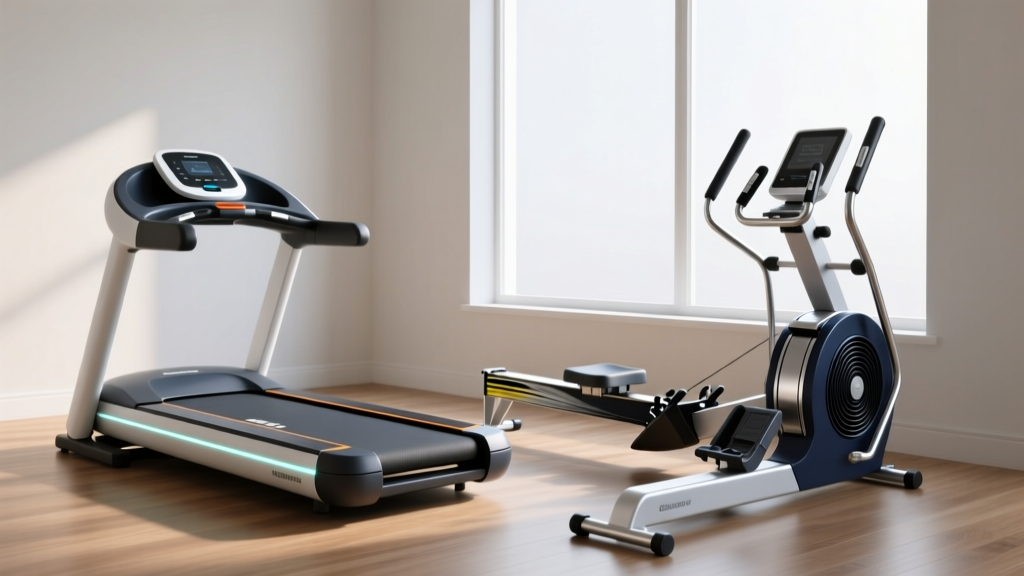
Is 15 Incline on Treadmill Good? Home Stair Climber Guide
Discover if a 15% incline treadmill is safe, and explore our step-by-step beginner guide to choosing and using a stair climber machine for home use.

The Viral 15% Incline Trend: Biomechanics and Joint Risks
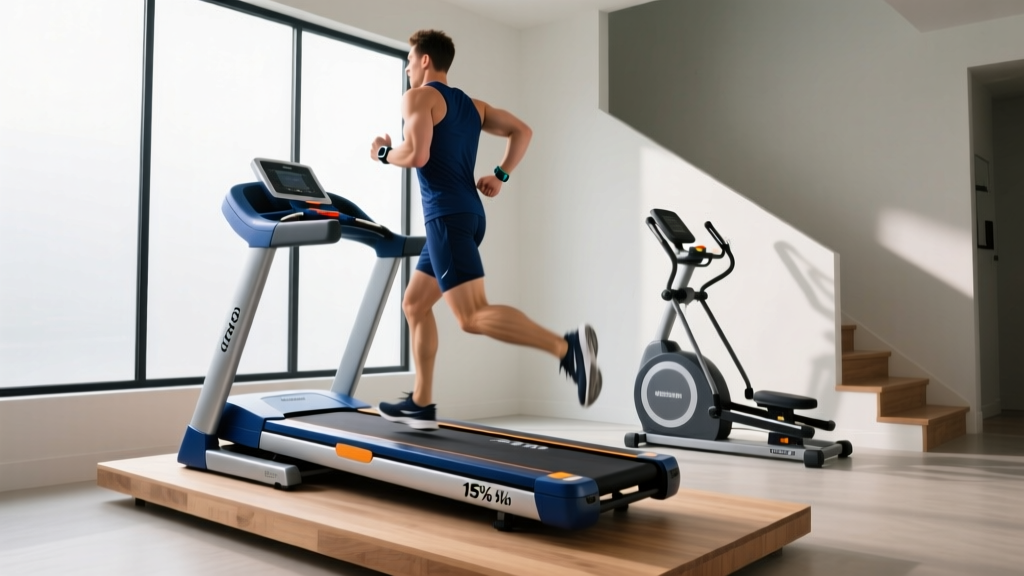
If you have spent any time on fitness forums or social media, you have likely encountered the viral "12-3-30" workout and asked yourself: is 15 incline on treadmill good for burning fat and building glutes? The short answer is that while a 15% grade maximizes posterior chain engagement, it introduces significant biomechanical risks for beginners attempting this at home without proper conditioning.
A 15% incline means the treadmill belt rises 15 inches for every 100 inches of forward movement. This steep grade forces the ankle into extreme dorsiflexion. According to gait analysis studies, walking at this incline requires upwards of 35 degrees of ankle dorsiflexion. If your ankle mobility is restricted, your body will compensate through lumbar extension (arching the lower back) or knee valgus (caving inward), leading to chronic shin splints, Achilles tendinopathy, and lower back shear. For many beginners, a dedicated stair climber machine offers a vastly superior, lower-impact alternative that mimics the glute activation of a steep incline without the joint strain.
⚠️ Biomechanical Warning: Walking at a 15% incline while holding onto the handrails completely negates the caloric and postural benefits. It shifts the load from your glutes to your shoulders and spine. If you must hold on to keep up with the belt, the incline is too high for your current conditioning level.Matrix: 15% Incline Treadmill vs. Home Stair Climbers
When outfitting a home gym, footprint, ceiling clearance, and joint impact are just as critical as calorie burn. Below is a 2026 market comparison of high-incline treadmills versus the three primary types of home stair climbers.
| Feature | 15% Incline Treadmill | Hydraulic Mini-Climber | Magnetic Climber Hybrid | Rotating Stepmill |
|---|---|---|---|---|
| 2026 Avg. Price | $1,200 - $2,500 | $120 - $250 | $1,500 - $2,800 | $3,200 - $5,500 |
| Joint Impact | Moderate (Achilles/Knee) | Low | Very Low | Low (High Fatigue) |
| Ceiling Requirement | Standard (8 ft) | Standard (8 ft) | Standard (8 ft) | High (9+ ft) |
| Glute Activation | High | Moderate | High | Very High |
| Footprint | Large (75" x 30") | Tiny (25" x 18") | Medium (50" x 30") | Large (70" x 35") |
Step-by-Step Guide: Choosing and Setting Up Your Home Climber
Transitioning from incline walking to stair climbing requires selecting the right machine for your spatial and physiological needs. Follow this framework to make your purchase.
Step 1: The Ceiling Height Calculation (Crucial for Stepmills)
The most common mistake beginners make when buying a rotating stepmill (like the StairMaster FreeClimber) is ignoring ceiling clearance. When you are at the peak of the step, your head is significantly higher than when standing on the floor.
- The Formula: Your Height + Machine Step-Up Height (usually 12 to 14 inches) + 4 inches of safety clearance.
- Example: If you are 6'0" (72 inches), plus a 14-inch step-up, plus 4 inches of clearance, you need a minimum ceiling height of 90 inches (7 feet 6 inches). If you have standard 8-foot ceilings, opt for a magnetic hybrid climber or a hydraulic mini-stepper instead.
Step 2: Selecting the Drive Mechanism
Your budget and space will dictate the resistance type. Hydraulic gas cylinders (found in budget models like the Sunny Health SF-E3911) are compact but offer a shorter, choppier stroke length that can irritate the patellar tendon if used for more than 20 minutes. Magnetic eddy-current brakes (found in the Bowflex Max Trainer M9 or NordicTrack FS14i) provide a fluid, elliptical-like stepping motion that aligns with the American Heart Association's recommendations for sustained, joint-friendly aerobic conditioning.
Your 4-Week Beginner Step-Up Protocol
To safely adapt your tendons and cardiovascular system to vertical climbing, avoid the temptation to max out the resistance on day one. Use this progressive 4-week framework, aiming for 3 sessions per week.
- Week 1: Tendon Adaptation (15 Minutes)
Set the resistance to level 2 or 3. Target a cadence of 60 Steps Per Minute (SPM). Focus entirely on pressing through the heel of your foot rather than pushing off your toes. This ensures the gluteus maximus absorbs the load, not the calves. - Week 2: Aerobic Base Building (20 Minutes)
Increase cadence to 70 SPM. Introduce postural checks every 5 minutes: release the handrails, engage your core, and ensure your torso remains upright. Leaning heavily on the console reduces caloric expenditure by up to 20%. - Week 3: Interval Integration (25 Minutes)
Warm up for 5 minutes. Then, alternate between 2 minutes at 85 SPM (high resistance) and 2 minutes at 60 SPM (recovery). This mimics the cardiovascular demand of a 15% incline treadmill walk but with zero impact shear on the Achilles. - Week 4: Glute Isolation (30 Minutes)
Maintain a steady 75 SPM. Introduce "skip steps" (pressing down every other step) for 30-second bursts to increase the range of motion and deepen the hip flexion stretch, maximizing posterior chain engagement.
Real-World Maintenance: Preventing Home Machine Failure
Home cardio machines degrade differently than commercial gym equipment due to dust accumulation and uneven usage patterns. To protect your investment, implement these specific maintenance checks:
Expert Troubleshooting Tip: If your hydraulic mini-climber develops a "spongy" feel on the downward stroke, the gas shock cylinder has likely suffered a micro-leak due to dried-out O-rings. Do not use WD-40, which degrades rubber. Instead, apply a 100% silicone-based lubricant to the piston rods monthly to preserve the seals.
For magnetic hybrid climbers, the primary failure mode is brake dust accumulation on the flywheel. Every 90 days, unplug the machine, remove the side shroud, and use a vacuum with a soft brush attachment to clear debris from the magnetic housing. Ignoring this causes the resistance to feel inconsistent and can overheat the internal alternator.
Final Verdict: Should You Ditch the Incline Treadmill?
So, is 15 incline on treadmill good? It is highly effective for conditioned athletes with excellent ankle mobility. However, for the vast majority of beginners setting up a home gym, the biomechanical risks of extreme incline walking outweigh the benefits. A stair climber provides an equivalent, if not superior, cardiovascular and glute-building stimulus while respecting the longevity of your joints. By following the ceiling clearance rules and the 4-week progressive protocol outlined above, you can build a resilient, powerful lower body safely from the comfort of your home.
For more foundational movement guidelines, refer to the CDC's Physical Activity Basics to ensure your weekly cardio volume aligns with current health standards.
More gear to consider
All reviews
Curved vs Motorized: BowFlex Results Series Treadmill Fixes
Best Apple GymKit Treadmills: 2026 Buying Guide & Comparison

Home Gym Layout: Fitting a C990 Treadmill & Stationary Bikes

Evolve Treadmill vs Elliptical: Space-Saving Home Cardio

Is It OK to Walk on a Treadmill Barefoot? Home Stair Climber Guide