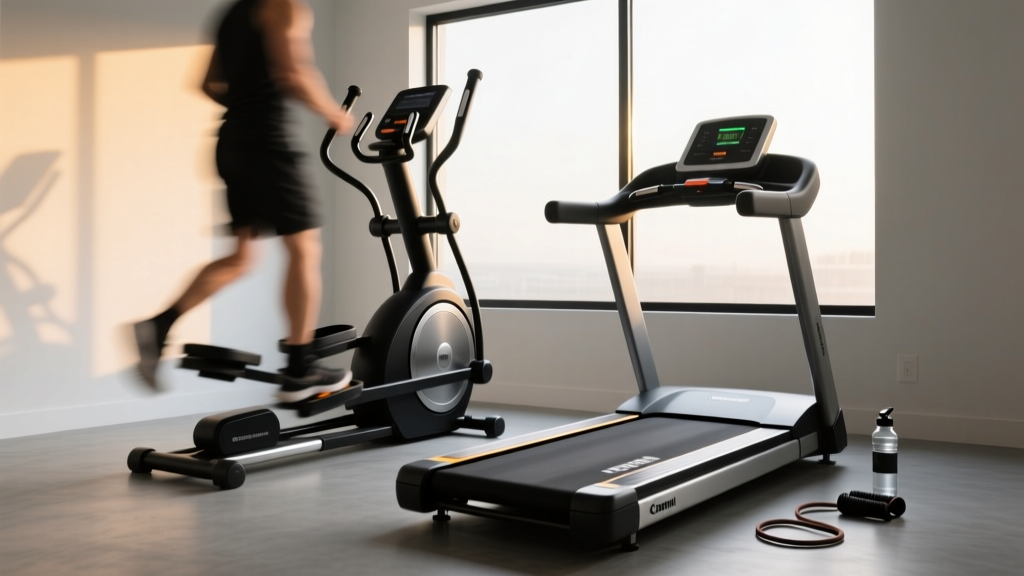
ProForm Carbon TL Treadmill Specifications & Motor Size Guide
Analyze ProForm Carbon TL treadmill specifications to master CHP vs peak horsepower. Our motor size guide helps you choose the right fitness machine.

The Engineering Reality: CHP vs. Peak Horsepower
When shopping for home cardio equipment in 2026, marketing jargon often obscures the most critical component of the machine: the motor. To make an informed purchase, you must understand the difference between Peak Horsepower and Continuous Horsepower (CHP). Peak horsepower measures the maximum output the motor can achieve under zero load for a fraction of a second. It is essentially a vanity metric used to inflate spec sheets. Continuous Horsepower, conversely, measures the motor's ability to sustain power output under a continuous, heavy load (i.e., a human running on the belt) without overheating.
According to testing standards highlighted by Consumer Reports, CHP is the only reliable metric for comparing treadmill longevity and performance. A treadmill advertising a '4.0 Peak HP' motor might only possess a 2.0 CHP motor, which will quickly thermal-throttle or fail when subjected to a 200-pound runner. Understanding this distinction is the foundation of our treadmill motor size and horsepower guide.
ProForm Carbon TL Treadmill Specifications: A Baseline Analysis
The ProForm Carbon TL has become a staple in the budget-to-mid-tier home gym market. When analyzing the ProForm Carbon TL treadmill specifications, the standout feature for budget buyers is the inclusion of a 2.6 CHP Mach Z Commercial Motor. This is a significant upgrade from the 2.0 to 2.25 CHP motors typically found in the sub-$700 price bracket.
The 2.6 CHP rating means the motor can continuously draw and convert electrical energy into mechanical force to support a 300-pound user capacity at speeds up to 10 mph. The Mach Z motor utilizes an internal cooling fan and a brushless DC design, which reduces friction and extends the lifespan of the commutator. However, because it is paired with a relatively narrow running surface (18' x 55') and a manual 0-8% incline, the motor is rarely subjected to the extreme gravitational loads seen on premium models with 15% power inclines. This makes the 2.6 CHP motor perfectly adequate for walking, jogging, and light running, but potentially undersized for heavy sprinters or severe incline training.
⚖️ The Weight-to-Motor Ratio Rule
Biomechanical studies on ground reaction forces, such as those indexed by the Office of Disease Prevention and Health Promotion, show that runners exert up to 2.5 times their body weight on the deck with every footstrike. This impact directly translates to motor load. The Golden Rule: If the primary user weighs over 200 lbs, add 0.5 CHP to your minimum motor requirement to prevent premature belt lag and controller burnout.
2026 Comparison Matrix: Carbon TL vs. Class Competitors
To contextualize the ProForm Carbon TL's motor size, we must compare it against direct competitors in the 2026 home fitness market. The following table breaks down motor specifications, user capacities, and pricing to help you determine which machine aligns with your biomechanical needs.
| Treadmill Model | Motor Size (CHP) | Max Speed | User Capacity | Est. Price (2026) | Best Use Case |
|---|---|---|---|---|---|
| ProForm Carbon TL | 2.6 CHP | 10 mph | 300 lbs | $599 - $699 | Walkers & Light Joggers |
| Sole F63 | 3.0 CHP | 12 mph | 325 lbs | $999 - $1,099 | Daily Runners & Heavy Users |
| Horizon T101 | 2.5 CHP | 10 mph | 300 lbs | $799 - $849 | Power Walkers & Intervals |
| NordicTrack T 8 | 2.6 CHP | 10 mph | 300 lbs | $549 - $649 | Space-Saving Walking |
As the matrix illustrates, the Carbon TL's 2.6 CHP motor punches slightly above its weight class in terms of raw pricing, matching the NordicTrack T 8 while offering a slightly more robust frame. However, if your training regimen involves sustained running at 8+ mph or you weigh over 220 lbs, stepping up to the 3.0 CHP motor in the Sole F63 is a necessary investment for long-term reliability.
Real-World Failure Modes: The Cost of Undersized Motors
According to safety data monitored by the U.S. Consumer Product Safety Commission (CPSC), overheating motors and electrical failures remain a leading cause of home fitness equipment recalls and household fires. When a treadmill motor is undersized for the user's weight and speed, a cascade of mechanical and electrical failures occurs:
- Thermal Throttling & Belt Stutter: As the DC motor overworks, it generates excess heat. The internal thermal sensor will intentionally restrict power to prevent a fire, causing the belt to 'stutter' or lag beneath your feet—a major tripping hazard.
- PWM Controller Burnout: The Pulse Width Modulation (PWM) board regulates voltage to the motor. An undersized motor draws excessive amperage to maintain belt speed under heavy footfalls. This sustained high-amperage draw will eventually blow the MOSFET transistors on the lower control board, resulting in a dead treadmill and a $150+ replacement part.
- Drive Belt Degradation: To compensate for lack of torque, the motor pulley slips against the drive belt, generating friction dust and eventually snapping the belt.
Step-by-Step Framework: Sizing Your Treadmill Motor
Use this actionable framework to determine the exact Continuous Horsepower you need for your home gym in 2026:
- Identify Your Primary Activity: Walking requires a minimum of 2.0 CHP. Jogging requires 2.5 CHP. Running requires 3.0 CHP or higher.
- Calculate the Weight Multiplier: Weigh the heaviest intended user. If they exceed 200 lbs, add 0.5 CHP to your baseline requirement.
- Factor in Incline Usage: If you plan to use inclines above 10% regularly, add an additional 0.5 CHP. Gravity exponentially increases the torque required to move the belt.
- Verify the Spec Sheet: Ignore 'Peak HP' or 'Treadmill HP'. Look strictly for 'CHP' or 'Continuous Duty HP' in the manufacturer's manual.
Frequently Asked Questions
Q: Can I upgrade the motor on my ProForm Carbon TL later?
A: No. Treadmill motors are paired specifically with their lower control boards and drive pulleys. Upgrading from a 2.6 CHP to a 3.0 CHP motor would require replacing the motor, the PWM controller, and potentially the wiring harness, which costs more than replacing the entire machine.
Q: Does treadmill belt lubrication affect motor size requirements?
A: Yes. A dry belt creates massive friction against the deck, forcing the motor to draw extra amperage to maintain speed. Regularly applying 100% silicone lubricant reduces motor strain, effectively allowing a 2.5 CHP motor to perform closer to a 2.75 CHP motor under load.
Q: Are AC motors better than DC motors for home treadmills?
A: AC motors (found in commercial gym treadmills) offer superior torque and longevity but require heavy, expensive inverters. For 95% of home users, a high-quality, brushless DC motor (like the Mach Z in the Carbon TL) is the correct choice for balancing power, noise reduction, and cost.
More gear to consider
All reviews
Treadmill Track Sticking? Motor Size & Installation Setup Guide
Under Desk Treadmill Review & Care vs NordicTrack 6.5 Treadmill
ProForm Treadmill Not Turning On? Fix It & Air vs Assault Bike Guide

Curved vs Motorized: Troubleshooting Treadmill Weight Limit 300 lbs

NordicTrack T Series Treadmill vs Curved Manual: Mistakes & Fixes