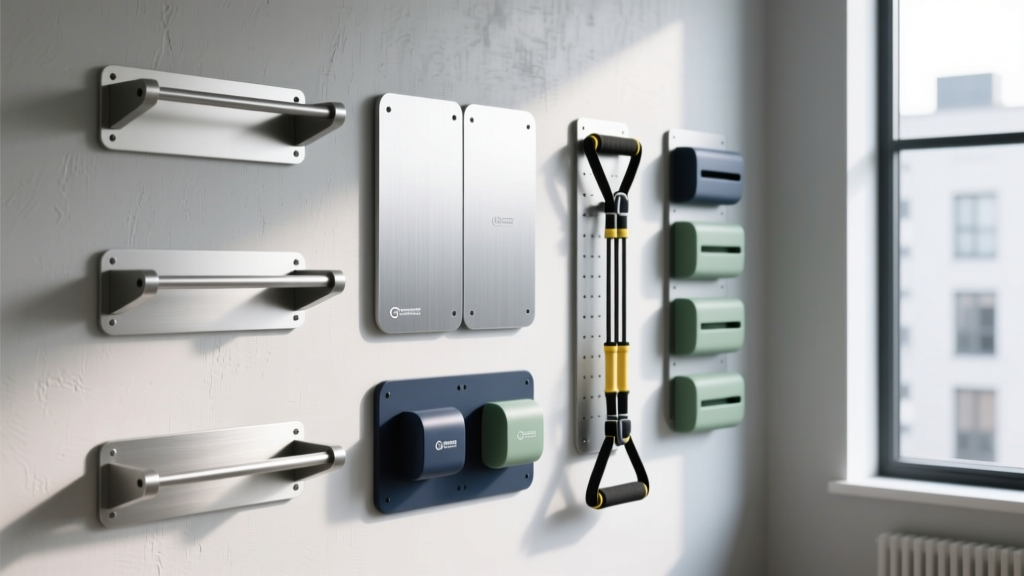
Wall Mounted Home Gym Equipment Storage: 2026 Market Trends
Explore 2026 market trends in wall mounted home gym equipment storage. Discover space-saving innovations, pricing shifts, and top modular systems.

The paradigm of the home gym has fundamentally shifted as we move through 2026. While the post-pandemic boom initially focused on sheer equipment acquisition, the current market is defined by spatial efficiency and architectural integration. With urbanization accelerating and average residential square footage remaining constrained, home gym equipment storage has evolved from an afterthought into a primary market driver. Wall-mounted storage systems, in particular, have emerged as the dominant solution for serious lifters who refuse to compromise on equipment quality despite limited floor plans.
The 2026 Market Shift: Why Vertical Storage is Dominating
According to recent market analyses, the footprint of the average dedicated home gym has shrunk by nearly 18% over the last four years, dropping from an average of 220 square feet to under 185 square feet in urban and suburban environments. This spatial compression has triggered a massive pivot toward vertical real estate. Wall-mounted racks and storage systems are currently experiencing a compound annual growth rate (CAGR) that outpaces traditional freestanding power racks by a factor of 1.4.
'The modern home athlete is no longer just buying iron; they are buying spatial optimization. Wall-mounted systems allow for the preservation of multi-use living spaces while maintaining a commercial-grade lifting environment.' — 2026 Residential Fitness Architecture Report
Data from Statista's Home Fitness market tracking indicates that consumers are increasingly willing to pay a premium for modular, space-saving designs. This is corroborated by Grand View Research's fitness equipment analysis, which highlights a distinct surge in demand for 'architecturally integrated' fitness hardware. Lifters want their gear to disappear into the walls when not in use, driving innovations in folding wall-mount racks and flush-mount accessory holders.
Material and Engineering Trends in Wall-Mounted Racks
The days of flimsy, 14-gauge steel wall mounts are over. In 2026, the industry standard for premium home gym equipment storage has firmly settled on 11-gauge steel with 3x3 inch uprights. This specific dimension ensures compatibility across major ecosystems, allowing users to mix and match attachments from brands like Rogue, Rep Fitness, and Bells of Steel.
Laser-Cut Numbering and UHMW Liners
Two micro-trends have become macro-expectations this year:
- Laser-Cut Height Numbering: Stamped or sticker-based numbering is obsolete. Premium wall mounts now feature laser-cut height markers directly into the steel, filled with contrasting powder-coat for instant readability.
- UHMW Plastic Liners: Ultra-high-molecular-weight polyethylene liners are now standard on J-cups and safeties to protect barbell knurling and dampen noise—a critical feature for garage gyms with shared walls or sleeping family members nearby.
Top Wall-Mounted Storage Configurations (Comparison Matrix)
To understand the current pricing and feature landscape, we analyzed the three most prevalent wall-mounted systems dominating the 2026 market. Prices reflect current direct-to-consumer retail averages.
| Brand & Model | Projection (Depth) | Steel Gauge & Upright | Weight Capacity | 2026 Price Range | Best Use Case |
|---|---|---|---|---|---|
| Rogue Monster Utility Wall Mount | 16 or 24 inches | 11-Gauge, 3x3 inch | 1,000+ lbs | $545 - $695 | Heavy Olympic lifting, kipping |
| Rep Fitness Ares Wall Mount | 16 inches | 11-Gauge, 3x3 inch | 800 lbs | $399 - $449 | Compact urban garages, budget-conscious |
| Bells of Steel Wall Mount Rack | 21 inches | 14-Gauge, 2.4x2.4 inch | 600 lbs | $299 - $349 | Lightweight fitness, strict budget |
As the matrix illustrates, the price delta between 14-gauge and 11-gauge systems has narrowed significantly, making the heavier-duty 11-gauge options the most logical investment for long-term home gym equipment storage.
Installation Realities: Failure Modes and Structural Limits
The most critical point of failure in any wall-mounted storage system is not the steel; it is the structural interface between the mount and the wall. In 2026, we are seeing a rise in DIY installation errors as more consumers attempt to bypass professional contractor fees.
⚠️ Critical Warning: The Drywall Toggle Fallacy
Never use drywall toggle bolts or molly anchors for a wall-mounted pull-up rig or heavy barbell storage. The dynamic shear force generated during a kipping pull-up or a dropped barbell can exceed 400 lbs of localized pull-out force. Drywall will shatter under this load. You must anchor directly into wood studs or solid concrete.
Navigating Stud Spacing: 16-inch vs. 24-inch OC
Standard wall mounts are engineered for 16-inch on-center (OC) wood stud spacing, which is the traditional North American building code standard. However, many modern builds and commercial-to-residential conversions utilize 24-inch OC spacing to save on lumber costs. If your wall features 24-inch OC studs, standard wall mounts will not align.
The Solution: You must install a structural horizontal stringer (a heavy-duty 2x6 or 2x8 lumber backing plate) secured into multiple studs, and then mount your rack to that stringer using heavy-duty lag bolts. Alternatively, some premium brands now offer custom-width crossmembers to bridge 24-inch gaps directly.
Concrete and Masonry Mounting
For basement gyms with poured concrete walls, installers must use 1/2-inch wedge anchors or sleeve anchors. This requires a high-torque hammer drill and a carbide-tipped masonry bit. The hole must be drilled exactly to the anchor manufacturer's specified depth, and the concrete must be fully cured (minimum 28 days for new pours) to prevent blowout under load.
Modular Attachments Driving the Accessory Economy
Wall-mounted home gym equipment storage is no longer just about holding a barbell. The 2026 market is heavily driven by the 'accessory economy'—modular add-ons that transform a simple squat rack into a comprehensive organizational hub.
💡 Pro-Tip: The 5/8 inch vs 1 inch Hardware Divide
Before purchasing third-party storage attachments, verify your rack's hole diameter. The industry has largely standardized around 5/8 inch holes for 3x3 inch uprights, but some legacy and budget brands still use 1 inch holes. Buying a $120 dumbbell shelf with the wrong pin diameter is the most common accessory purchasing error.
Here is a breakdown of the most popular wall-mount storage attachments and their current market pricing:
- Kettlebell Cradles (Pair): $45 - $85. Essential for holding heavy competition bells (up to 48kg) without bending standard pegs.
- Multi-Tier Dumbbell Shelves: $120 - $195. These utilize heavy-duty gussets to support up to 150 lbs per tier, keeping adjustable dumbbells off the floor.
- Band Pegs and Resistance Band Holders: $15 - $35. Simple but vital for organizing the growing collection of loop and tube bands used in modern mobility routines.
- Landmine Attachments: $35 - $60. Allows for rotational movements and landmine presses without sacrificing floor space to a standalone base.
Future Forecast: Smart Storage and Automated Integration
Looking toward the latter half of 2026 and beyond, the integration of 'smart' technology into analog storage is the next frontier. While ACSM trending topics often focus on digital fitness tracking, hardware manufacturers are beginning to experiment with RFID-tagged weight plates and Bluetooth-enabled inventory sensors built directly into wall-mounted plate trees. This allows the user's training app to automatically log the exact load placed on the barbell, bridging the gap between physical storage and digital performance tracking.
Conclusion: The ROI of Vertical Optimization
Investing in high-quality wall-mounted home gym equipment storage is no longer just an aesthetic choice; it is a functional necessity for the modern lifter. By reclaiming up to 30% of usable floor space, these systems allow for safer movement patterns, easier floor cleaning, and a more organized training environment. Whether you are outfitting a tight urban apartment or optimizing a sprawling suburban garage, prioritizing 11-gauge steel, proper structural anchoring, and modular compatibility will ensure your storage infrastructure outlasts your fitness journey.
More gear to consider
All reviews
2026 Storage Trends: Skull Crushers Dumbbell Standing & Band Gear

Beginner Guide: Setting Up Your Rep Dumbbell Stand & Storage Rack

IKEA Home Gym Storage: Dumbbell Racks & Organizer Hacks (2026)

Space-Saving Gym Layouts: Wall Storage & Small Dumbbell Rack Guide

A-Frame Dumbbell Rack Buying Guide & Top 2026 Picks
