
Barbell Storage Horizontal vs Vertical & DIY Wood Dumbbell Rack Trends
Analyze 2026 trends in barbell storage rack horizontal vs vertical setups, plus the rising market for custom diy wood dumbbell rack builds.

2026 Home Gym Storage Market Overview
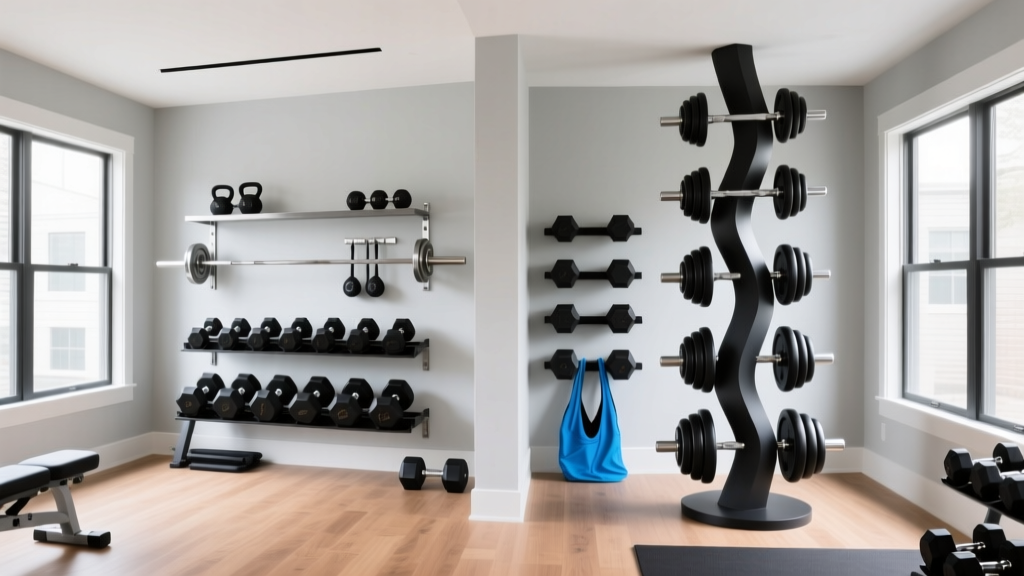
The home gym equipment market has undergone a massive aesthetic and functional shift as we move through 2026. No longer confined to unfinished garages, modern home gyms are increasingly integrated into finished living spaces, basements, and dedicated accessory dwelling units (ADUs). According to industry observers at Garage Gym Labs, the demand for space-optimizing, visually appealing storage solutions has outpaced the demand for raw iron. Two major trends are dominating the storage conversation this year: the ongoing debate of barbell storage rack horizontal vs vertical configurations, and the explosive grassroots popularity of the custom diy wood dumbbell rack.
This trend report breaks down the engineering, market data, and practical applications of these storage paradigms, providing a data-driven framework for optimizing your home gym footprint.
Horizontal vs. Vertical Barbell Storage: Engineering & Market Shift
Barbells are awkward, heavy, and prone to damaging floors and walls if stored improperly. The market is currently split between horizontal wall-mounted systems and vertical floor-standing towers. Understanding the physics and spatial economics of each is critical for 2026 gym builders.
Horizontal Wall-Mounted Racks (The Space-Saver)
Horizontal racks, such as the Rogue R-3 Wall Mount Barbell Rack (approx. $115) or the Titan Fitness Wall Mount Barbell Holder (approx. $89), utilize vertical wall space to keep floors clear for deadlifts and gymnastics movements. However, they introduce significant structural engineering challenges.
⚠️ Structural Failure Mode Alert: A standard 45lb Olympic barbell dropped from just one inch into a horizontal cradle generates an impact force exceeding 150 lbs. If mounted solely into drywall or metal studs using toggle bolts, the dynamic shear force will eventually rip the mounting plate from the wall. Horizontal racks must be lag-bolted directly into the center of 16-inch on-center (OC) wood studs or structural concrete using 3/8" x 3" lag screws.Market Trend: Horizontal racks are seeing a 22% year-over-year adoption increase in apartment gyms and small spare-room setups where every square foot of floor space is monetized.
Vertical Floor-Standing Racks (The Heavy-Duty Standard)
Vertical racks, like the Rogue Base Barbell Rack (approx. $165) or the REP Fitness Vertical Barbell Holder, store bars upright. This orientation protects the barbell knurling from resting against steel cradles and allows for high-density storage (up to 5-9 bars in a single footprint).
- Center of Gravity (CoG) Risks: A fully loaded vertical rack holding five 45lb bars can weigh over 275 lbs. If the base plate is under 12"x12", removing a bar from the top tier creates a tipping moment. Premium 2026 models now feature 3/16" steel base plates with pre-drilled anchor holes to bolt directly into concrete slabs.
- Knurling Preservation: Storing bars vertically prevents the knurling from being compressed against a horizontal cradle over months of disuse, a major selling point for competitive weightlifters.
Market Data Matrix: Horizontal vs. Vertical Barbell Racks
| Feature | Horizontal Wall-Mount | Vertical Floor-Standing |
|---|---|---|
| Floor Footprint | 0 sq ft (Wall-mounted) | 1.5 to 2.5 sq ft |
| Avg. Price Range (2026) | $75 - $130 | $99 - $195 |
| Installation | High (Stud-finding, lag bolting) | Low (Assembly, optional floor bolting) |
| Barbell Capacity | Typically 2 to 3 bars | Typically 5 to 9 bars |
| Best Environment | Small rooms, carpeted spaces | Garages, concrete slabs, large racks |
The Surge of the DIY Wood Dumbbell Rack Trend
While commercial steel storage solutions from brands like Rogue Fitness remain the gold standard for durability, 2026 has seen a massive consumer pivot toward the diy wood dumbbell rack. This trend is driven by three converging market factors:
- Lumber Price Stabilization: After the volatile spikes of the early 2020s, SPF (Spruce-Pine-Fir) dimensional lumber has stabilized. Building a heavy-duty, 3-tier rack now costs between $55 and $85 in raw materials, compared to $250+ for a commercial steel equivalent.
- The 'Boutique Garage' Aesthetic: Homeowners are staining pine or walnut-finished plywood to match existing basement trim and flooring, moving away from the industrial 'black steel' look.
- Ergonomic Customization: Commercial racks often force a flat or single-angle storage tier. DIY builders are implementing multi-angle tiers to reduce wrist strain when picking up heavy hex dumbbells.
"The shift toward custom woodworking in home gyms reflects a broader desire for personalized, multi-use spaces. A well-crafted diy wood dumbbell rack isn't just storage; it's a piece of functional furniture that bridges the gap between a living space and a training facility."
— 2026 Home Fitness Interior Design Report
Engineering a Safe DIY Wood Dumbbell Rack
If you are joining the diy wood dumbbell rack movement, structural integrity is paramount. A pair of 100lb dumbbells exerts immense downward and lateral shear force on wooden joints. Standard drywall screws or cheap deck screws will snap under dynamic loading. According to structural design guidelines referenced by the American Wood Council, proper fastener selection and wood grain orientation are critical for load-bearing furniture.
Material & Fastener Specifications
- Uprights: 2x6 SPF or Douglas Fir (provides a 5.5" wide base for stability).
- Shelving Tiers: 2x4 framing with 3/4" sanded plywood decking.
- Fasteners: 3-inch or 3.5-inch GRK RSS structural screws. These offer shear strength comparable to lag bolts but do not require pre-drilling, preventing wood splitting.
- Wood Glue: Titebond III Ultimate (waterproof, crucial for garages with fluctuating humidity).
The Ergonomic Tier Framework
To maximize wrist safety and ease of retrieval, implement a staggered-angle design for your diy wood dumbbell rack:
💡 Pro-Tier Angles:Bottom Tier (60-100+ lbs): 10° to 15° upward tilt. Keeps the heavy dumbbells resting securely against the back lip while allowing a neutral-grip lift.
Middle Tier (30-55 lbs): 20° upward tilt. Optimal for mid-range weights used in high-volume hypertrophy work.
Top Tier (5-25 lbs): Flat or 25° tilt. Lighter weights pose less tipping risk and are easier to grab from a steeper angle.
Expert Verdict & Space Optimization Framework
The 2026 storage landscape demands intentionality. If your primary constraint is floor space and you have standard wood-stud walls, a horizontal barbell rack paired with a wall-mounted diy wood dumbbell rack is the ultimate space-saving combination. Conversely, if you are outfitting a concrete-slab garage with a growing collection of specialty barbells (squat bars, trap bars, women's Olympic bars), a heavy-duty vertical floor rack is non-negotiable for safety and knurling preservation.
Ultimately, the rise of the diy wood dumbbell rack proves that modern lifters are no longer willing to compromise on aesthetics. By combining commercial-grade steel for heavy barbell storage with custom carpentry for dumbbell organization, you can build a 2026 home gym that is as structurally sound as it is visually stunning.
More gear to consider
All reviews
Precor Dumbbell Rack Value: Garage Gym Storage Budget Breakdown

Heat Common Mistakes: How Home Gym Owners Sabotage Performance, Safety, and Equipment Longevity

Black Widow Dumbbell Stand: 2026 Garage Gym Storage Review

Best Workout Equipment Organizer for Resistance Bands 2026
Wall Storage vs a Dumbbell Tree with Weights: Space Layout Guide
