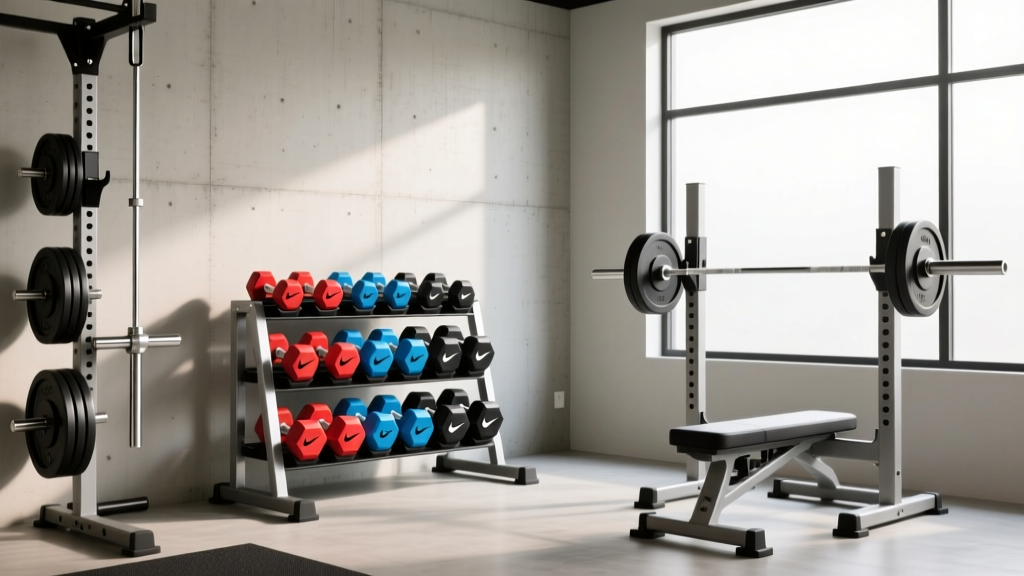
Nike Dumbbell Rack Sets vs Barbell Storage: Budget Breakdown
Compare the ROI of premium nike dumbbell rack sets against horizontal vs vertical barbell storage. Expert budget breakdown and buying guide.

The Home Gym Storage Dilemma: Aesthetic Hype vs. Heavy-Duty Utility
When outfitting a luxury home gym in 2026, budget allocation is the single most critical factor that separates a functional training space from an expensive cluttered garage. While some enthusiasts spend hours hunting for aesthetic, brand-matched lifestyle drops—often searching for elusive nike dumbbell rack sets or custom-branded premium trees—the reality of home gym budgeting requires a stricter focus on structural integrity and load-bearing physics. Dumbbell storage is largely about convenience and aesthetics, but barbell storage is a matter of safety, floor preservation, and equipment longevity.
Investing $800 to $1,500 in premium, brand-coordinated dumbbell racks might satisfy the visual aesthetic of an Instagram-ready gym, but it often diverts critical funds away from the structural backbone of your training: the barbell. A standard 20kg (45lb) Olympic barbell, when loaded with plates, can easily exceed 500 lbs. Storing this concentrated mass requires specialized steel, precise welding, and intelligent spatial planning. In this comprehensive budget breakdown, we will analyze the true ROI of horizontal versus vertical barbell storage racks, helping you decide where your hard-earned money should actually go.
Vertical Barbell Storage: Floor Stands and Rack Attachments
Vertical barbell storage involves storing the barbell upright, resting on its bottom sleeve. This method is highly popular for its minimal floor footprint and ease of loading/unloading. Vertical storage generally comes in two forms: freestanding floor trees and power rack attachments.
Freestanding Vertical Floor Stands
Freestanding units like the Titan Fitness Vertical Barbell Holder (typically priced around $89 to $119) or the Rogue Vertical Barbell Holder ($115) are constructed from heavy-duty 11-gauge or 7-gauge steel. They feature a wide, gusseted base plate to prevent tipping.
- Pros: Extremely small footprint (usually under 1.5 square feet); highly portable; allows for easy sleeve inspection and cleaning; no wall drilling required.
- Pros: Can hold multiple bars (typically 4 to 8) in a single centralized location.
- Cons: The center of gravity shifts dramatically when fully loaded. Bumping a fully loaded vertical stand can cause a catastrophic tip-over if the baseplate lacks sufficient weight or gusseting.
- Cons: Bars must be lifted vertically to clear the storage pegs, which can be strenuous for heavier specialty bars like safety squat bars.
Rack-Attached Vertical Holders
If you already own a power rack with 2-inch or 3-inch uprights, rack-attached vertical holders (such as the Rogue Monster Utility Tree or basic upright barbell holders) cost between $45 and $95. These bolt directly to your existing steel, transferring the load into the rack's massive footprint.
Horizontal Barbell Storage: Wall Mounts and Rack Shelves
Horizontal storage mimics the traditional gun-rack style, holding the barbell parallel to the floor. This is the preferred method for preserving barbell knurling and sleeve bearings, as it prevents lubricants from pooling at one end of the sleeve.
Horizontal Wall Mounts
Wall-mounted horizontal holders, like the Rogue Wall Mount Barbell Holder ($45 per pair) or generic Amazon alternatives ($25 to $35), are space-saving marvels. They keep the floor entirely clear for deadlifts and gymnastics movements.
- Pros: Zero floor space consumed; visually striking; keeps bars at waist height for easy lifting off the pegs.
- Cons: High failure risk if improperly installed. Drywall anchors will absolutely fail under the dynamic load of a 45lb barbell being slammed onto the peg. You must anchor these directly into 16-inch on-center wooden studs or pour concrete sleeves.
- Cons: Fixed location limits gym layout rearrangements.
Horizontal Rack Shelves
Many modern power racks feature horizontal barbell shelves or strap safeties. While convenient, storing a barbell horizontally on a rack shelf eats into your internal working space and can interfere with J-cup placement for squats.
Expert Warning: The UHMW Liner NecessityWhether you choose horizontal or vertical storage, bare steel-on-steel contact will destroy your barbell's finish and knurling over time. Always ensure your storage pegs are coated in UHMW (Ultra-High Molecular Weight) polyethylene. If your budget rack lacks this, spend $15 on a roll of UHMW tape or heat-shrink tubing to protect your $300+ barbell investment.
Budget Allocation Matrix: Where Should Your Money Go?
To understand the true value of your storage investments, we must compare the utilitarian cost of barbell storage against the premium aesthetic tier of dumbbell storage. The table below breaks down average 2026 market pricing, structural requirements, and ROI for different storage categories.
| Storage Category | Avg. Cost Range | Footprint / Space | Structural ROI |
|---|---|---|---|
| Vertical Floor Stand (6-Bar) | $90 - $180 | 1.5 sq ft | High (Freestanding utility) |
| Horizontal Wall Mount (Pair) | $35 - $75 | 0 sq ft (Wall) | Medium (Stud-dependent) |
| Rack-Attached Holders | $45 - $120 | 0 sq ft (Rack) | Very High (Leverages rack) |
| Premium Dumbbell Trees | $250 - $600 | 4 to 8 sq ft | High (Heavy load capacity) |
| Aesthetic/Hype Sets (e.g., Nike Dumbbell Rack Sets) | $800 - $1,500+ | Varies | Low (Paying for branding) |
As the matrix illustrates, the structural ROI of barbell storage is vastly superior to aesthetic dumbbell racks. A $50 horizontal wall mount provides 100% of the functional utility required to store an Olympic barbell safely, provided it is anchored into a wooden stud. Conversely, spending over $1,000 on hype-driven lifestyle storage yields zero additional performance benefits.
Hidden Costs and Failure Modes in Barbell Storage
When budgeting for horizontal versus vertical storage, novices often overlook the hidden costs associated with failure modes and spatial geometry.
1. The Sleeve Diameter Mismatch
Standard Olympic barbells feature 50mm (2-inch) sleeves. However, many budget vertical floor stands on the market are designed with 1.9-inch pegs to cut manufacturing costs. This 1mm difference might seem negligible, but it causes the barbell to sit unevenly, accelerating wear on the inner sleeve bushings. Always verify that vertical pegs are exactly 50mm or feature a tapered entry guide.
2. The Horizontal Clearance Problem
Horizontal wall mounts require significant lateral clearance. A standard men's Olympic barbell is 2,200mm (86.6 inches) long. If you mount horizontal pegs in a narrow alcove or near a doorway, you will physically not be able to slide the barbell onto the pegs. Vertical storage completely bypasses this lateral clearance issue, making it the undisputed king of narrow garages and basement gyms.
3. Bearing and Bushing Migration
According to equipment maintenance guidelines highlighted in the Garage Gym Reviews barbell holder guide, storing a barbell vertically for extended periods can cause the internal lubricants in needle bearings and bronze bushings to migrate downward due to gravity. Over several years, this can lead to sluggish sleeve rotation. Horizontal storage maintains an even distribution of lubricant, making it the superior choice for preserving expensive weightlifting bars with high-end needle bearings.
Final Verdict: Maximizing ROI on Your Gym Floor
When executing a strict budget breakdown for your home gym, the hierarchy of storage investments should always prioritize safety and equipment preservation over visual branding. While the secondary market and custom builders occasionally see searches for elusive aesthetic drops like nike dumbbell rack sets, the smartest financial move is to secure your heavy artillery first.
If you have a dedicated wall with exposed studs or concrete, horizontal wall mounts offer the best financial ROI at under $50, preserving both your floor space and your barbell's internal bearings. If your gym is in a rented space, features drywall without accessible studs, or suffers from limited lateral clearance, a gusseted vertical floor stand ($100-$150) is the safest, most versatile investment. By keeping your storage budget grounded in physics and utility rather than hype, you ensure your gym remains a safe, functional sanctuary for years to come. For further exploration of heavy-duty steel configurations, consult the Rogue Fitness storage catalog to compare exact gauge thicknesses and UHMW liner specifications.
More gear to consider
All reviews
Horizontal vs Vertical Barbell Storage Rack & Dumbbell Tree Rack Care

Plate Storage Tree Mistakes & Dumbbell Holder for Bench Press
Space Optimization: Resistance Bands & The Home Gym Storage Bench

Heat Common Mistakes: How Home Gym Owners Sabotage Performance, Safety, and Equipment Longevity
Wood Dumbbell Rack Setup: Complete Installation Walkthrough
