
Wall Mounted Storage vs FitRx Dumbbell Stand: Gym Layouts
Optimize your home gym layout by comparing wall mounted storage systems with the freestanding FitRx dumbbell stand for maximum space efficiency.

The Small Home Gym Dilemma: Floor Space vs. Wall Shear
When designing a home gym in a constrained space—such as a 10x10 spare bedroom, a single-car garage, or a basement corner—the instinct is to push everything against the walls. Wall mounted equipment storage for home gym setups has exploded in popularity, promising to free up valuable floor space for deadlifts, kettlebell swings, and agility work. However, as we navigate the fitness equipment landscape in 2026, a critical spatial conflict has emerged: the physics of heavy iron versus the structural limits of residential drywall.
While wall-mounted slatwalls and heavy-duty pegboards are exceptional for storing resistance bands, lifting belts, and lightweight accessories, mounting heavy dumbbells on vertical surfaces introduces severe sheer force and torque. This is where strategic layout design comes into play. By anchoring your heaviest free weights on the floor using dedicated freestanding units like the FitRx dumbbell stand, and utilizing vertical real estate for everything else, you can achieve a hybrid layout that maximizes square footage without compromising structural integrity or safety.
Layout Warning: Never mount dumbbell racks directly into drywall using standard toggle bolts. The dynamic load of lifting and replacing a 50 lb dumbbell creates a pull-out force that will eventually rip the anchor through the gypsum, causing catastrophic equipment failure and potential injury.The Physics of Gym Storage: Understanding Load Limits
Before mapping out your floor plan, it is vital to understand the difference between dead load (the static weight of the equipment) and dynamic sheer load (the force applied when you aggressively rack or unrack a weight). According to structural guidelines outlined by building experts at Family Handyman, standard 2x4 wooden wall studs spaced 16 inches on-center (OC) can support significant vertical weight, but they are highly vulnerable to lateral pull-out forces when leverage is applied.
When you mount a dumbbell rack 24 inches off the floor, a 40 lb dumbbell resting on a 6-inch rack lip generates substantial torque against the mounting screws. Over time, this repetitive stress fatigues the wood fibers in the stud. Conversely, a floor-based unit transfers this energy directly into the concrete slab or floor joists, bypassing the wall structure entirely.
Freestanding Anchor: The FitRx Dumbbell Stand Deep Dive
To solve the heavy dumbbell storage problem without sacrificing the center of the room, the FitRx 3-Tier Dumbbell Stand has emerged as a premier spatial anchor for compact gyms. Unlike massive commercial horizontal racks that span 4 feet and dominate the floor plan, the FitRx utilizes an A-frame vertical design that minimizes the footprint while maintaining a low center of gravity.
Specifications and Spatial Footprint
- Dimensions: 22.5 inches (L) x 15.5 inches (W) x 24 inches (H)
- Footprint: Just 2.4 square feet of floor space
- Weight Capacity: Rated for 300 lbs total (optimized for 5 lb to 25 lb hex dumbbell pairs)
- Current Pricing (2026): Typically retails between $75 and $89, depending on seasonal steel market fluctuations
- Material: 14-gauge steel with a rubberized foot pad to prevent scuffing on hardwood or epoxy floors
The genius of the FitRx dumbbell stand in a space-optimized layout is its 'tuck-and-pull' capability. Because it only requires 15.5 inches of depth, it can be positioned in the dead corner of a room or directly adjacent to a squat rack's uprights, utilizing 'ghost space' that is otherwise unusable for human movement.
Vertical Real Estate: Wall-Mounted Systems for Accessories
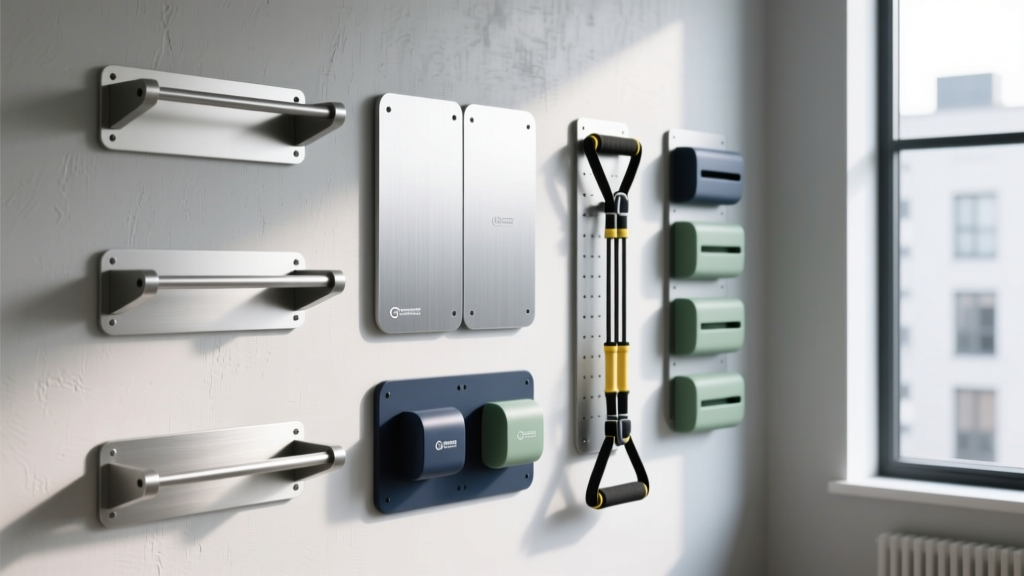
With the heavy dumbbells secured on the FitRx stand, your walls are now freed up to handle high-volume, low-weight storage. According to spatial design principles featured in Architectural Digest, treating your walls as a 'tool board' rather than a 'weight rack' drastically improves the visual flow and functional clearance of a home gym.
Top Wall-Mounted Contenders
- Proslat PVC Slatwall Panels: Excellent for hanging jump ropes, foam rollers, and massage guns. The interlocking PVC design resists moisture in garage environments and holds up to 75 lbs per linear foot when screwed directly into studs.
- Wall Control Metal Pegboards: Unlike traditional masonite pegboards that warp and tear, these steel panels accept specialized heavy-duty hooks. Perfect for organizing lifting chains, gymnastics rings, and resistance bands.
- Wall-Mounted Kettlebell Hangers: Specialized single-stud kettlebell hooks (like those from Rogue or Titan) are safe for lighter competition bells (8kg-16kg) because the weight sits flush against the wall, minimizing the lever arm and reducing sheer torque.
Layout Matrix: Integrating FitRx with Wall Systems
To visualize how these systems complement each other, review the spatial and functional comparison matrix below. This data helps you allocate your budget and square footage efficiently.
| Storage System | Floor Footprint | Max Safe Load | Ideal Equipment | Install Time |
|---|---|---|---|---|
| FitRx 3-Tier Stand | 2.4 sq ft | 300 lbs | Hex Dumbbells (5-25lb) | 5 mins (Assembly) |
| Proslat Slatwall (4x8) | 0 sq ft (Wall) | 75 lbs / lin. ft | Rollers, Bands, Belts | 2-3 hours |
| Steel Pegboard (32x48) | 0 sq ft (Wall) | 200 lbs total | Chains, Straps, Rings | 45 mins |
| Standard Plate Tree | 4.5 sq ft | 500+ lbs | Olympic Bumper Plates | 15 mins (Assembly) |
The 'Zoning' Strategy for Equipment Density
Space optimization is not just about the storage units themselves; it is about the clearance zones required to use them safely. When integrating the FitRx dumbbell stand into a wall-mounted dominant layout, apply the '36-Inch Rule'.
You must maintain a minimum 36-inch radial clearance around the front and sides of any dumbbell rack. This allows for a neutral spine hinge when picking up heavy weights from the bottom tier, preventing you from backing into a squat rack or tripping over a plyo box.
Step-by-Step Hybrid Layout Implementation
- Map the Primary Lift Zone: Identify the center of the room for your barbell path. Keep this entirely clear of all storage.
- Place the FitRx Anchor: Position the FitRx dumbbell stand in a corner or flush against the side of your power rack, ensuring the 36-inch clearance arc does not intersect with your main walking pathways.
- Install Wall Systems Above the Hinge Line: Mount your pegboards and slatwalls starting at 48 inches off the floor. This ensures that when you bend over to grab a kettlebell or dumbbell, your head and shoulders do not collide with wall-mounted hooks.
- Group by Frequency: Store daily-use items (lifting belts, chalk, wrist wraps) on the wall pegboard at eye level. Store weekly-use items (specialty bars, heavy bands) on higher slatwall shelves.
Real-World Failure Modes to Avoid
Even the best layout designs fail if edge cases are ignored. Here are the most common spatial and structural mistakes home gym owners make when balancing wall and floor storage:
- The 'Trip-Hazard' Cord Wrap: Mounting a fan or TV on the wall above your FitRx stand without routing the power cables through the wall. Dropping a 25 lb dumbbell onto an exposed power cord will sever the cable and create an electrical hazard.
- Over-Tightening A-Frame Bolts: The FitRx stand relies on tension and gravity. If you over-torque the hex bolts during assembly, you can warp the 14-gauge steel base, causing the unit to wobble on uneven garage concrete. Always use a rubber mallet to seat the joints before final tightening.
- Ignoring Humidity on Metal Walls: If you are using steel pegboards in an unclimate-controlled garage, the micro-abrasions from taking metal hooks on and off will scratch the powder coating. In high-humidity environments, this leads to rust streaks running down your wall within six months. Apply a clear coat spray to the pegboard before installation.
Final Layout Verdict
Optimizing a home gym is an exercise in compromise, but it does not require sacrificing safety for square footage. Wall mounted equipment storage for home gym environments is a phenomenal tool for organizing the high-volume, low-weight accessories that typically clutter the floor. However, when it comes to dense, heavy iron like dumbbells, gravity is best managed on the ground.
By deploying the FitRx dumbbell stand as a compact, high-capacity floor anchor, you protect your wall studs from destructive sheer forces while keeping your heaviest weights perfectly organized. Paired with a strategic slatwall and pegboard system mounted above the hinge line, this hybrid approach delivers a commercial-grade organizational flow, ensuring your 2026 home gym is as safe and efficient as it is visually impressive.
More gear to consider
All reviews
Weight Plate Trees & Vertical Dumbbell Storage: 2026 Guide

Titan Dumbbell Holder & 2026 Resistance Band Storage Trends
Wall Mounted Home Gym Equipment Storage: 2026 Market Trends

Best Science Trigger: Evidence-Based Design Principles for Home Gym Storage Solutions

DIY Wooden Dumbbell Rack & Band Storage: Budget Breakdown
