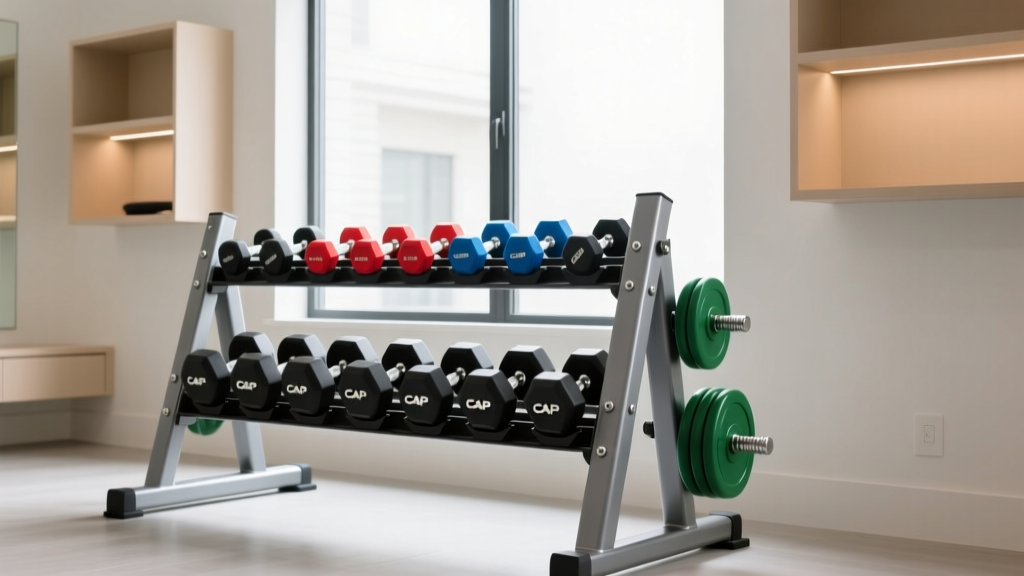
Cap Dumbbell Rack Troubleshooting: Fix Common Storage Mistakes
Fix common setup mistakes with your CAP dumbbell rack. Learn troubleshooting tips for stability, weight limits, and space planning in your home gym.

Why Your CAP Dumbbell Rack Might Be Failing You
CAP Barbell has long been a staple in the home gym community, offering accessible, budget-friendly storage solutions for iron and rubber. However, as home gym setups have evolved and equipment weights have increased, many lifters are running into frustrating issues with their storage gear. Whether you are using the popular CAP 3-Tier Rack (Model DR-3015) or the space-saving A-Frame (Model DR-1010), improper setup and mismatched equipment can lead to wobbling, overhang, and even dangerous tipping hazards.
As a senior equipment reviewer, I see the same mistakes repeated across garage gyms worldwide. This troubleshooting guide dives deep into the mechanical and spatial errors lifters make when organizing their dumbbell sets, providing actionable fixes to ensure your CAP dumbbell rack remains safe, stable, and functional in 2026 and beyond.
Mistake 1: Misjudging the Center of Gravity and Tier Limits
The most critical error lifters make with horizontal multi-tier racks is ignoring the physics of weight distribution. The CAP Barbell 3-Tier Dumbbell Rack (DR-3015) boasts a total weight capacity of roughly 600 pounds. However, that number assumes an even, bottom-heavy distribution.
The Top-Tier Tipping Hazard
When you load 50-pound hex dumbbells on the top tier, you raise the rack's center of mass significantly. The DR-3015 features a footprint of 34.25 inches long by 23.6 inches wide. If a 120-pound total load is placed on the top shelf (which sits over 50 inches off the ground), pulling a heavy dumbbell can create a forward kinetic pull, causing the entire rack to tip if the rear feet are not properly anchored or weighted.
⚠️ Expert Warning: Never exceed 200 pounds on the top tier of a standard 3-tier CAP rack. Always store your heaviest pairs (40 lbs and above) on the bottom tier, keeping the center of gravity low to the floor.Mistake 2: Ignoring Footprint and Tray Depth Incompatibilities
Not all dumbbells are created equal, and assuming any 5-to-50-pound set will fit perfectly on a standard CAP rack is a recipe for overhang and rolled ankles. The trays on CAP's budget-tier racks are typically designed with standard cast-iron hex dumbbells in mind. Modern rubber-encased hex dumbbells have significantly wider heads.
Dumbbell Profile vs. Tray Depth Matrix
Below is a compatibility breakdown based on standard CAP rack tray depths and common rubber hex dumbbell dimensions.
| Rack Model | Tray Depth | Max Ideal Hex Weight | Overhang Risk |
|---|---|---|---|
| DR-3015 (3-Tier) | 14.5 inches | 45 lbs (Rubber Hex) | High for 50lb+ pairs |
| DR-1010 (A-Frame) | 12.0 inches | 35 lbs (Rubber Hex) | Moderate to High |
| Commercial 3-Tier | 18.0+ inches | 100+ lbs | Low |
If your 50-pound rubber hex dumbbells are hanging off the edge of the tray by 2 or 3 inches, you are creating a leverage point that bends the steel tray lips over time. According to spatial planning guidelines highlighted in the Men's Health home gym setup guide, you must measure your largest dumbbell head width before purchasing a storage rack to ensure flush seating.
Mistake 3: Assembly Errors and the 'Wobble' Effect
A CAP dumbbell rack should feel like a solid piece of gym furniture. If your rack sways when you rack a heavy pair of 60s, the issue is almost always traced back to assembly errors and floor unevenness.
Troubleshooting Hardware and Tension
- The Power Drill Mistake: Many users use an impact driver to sink the M10 and M8 bolts provided in the CAP hardware kit. This high torque easily strips the nylon insert inside the lock nuts, rendering them useless. Fix: Hand-thread all bolts first, then use a standard ratchet to tighten until the nylon bites, stopping a quarter-turn past resistance.
- The Missing Lock Washer: CAP racks experience high-frequency vibrations when heavy iron is dropped onto the trays. If you skip the split lock washers, the nuts will back out within a month of heavy use.
- Uneven Garage Floors: Concrete garage floors are rarely perfectly level. A 3-tier rack with four points of contact will rock if the floor variance exceeds 3/16th of an inch. Fix: Use high-density rubber shims (cut from spare 3/8" horse stall mats) under the low feet, rather than relying on the rack's frame to flex into place.
Mistake 4: Mixing Round Urethane with Hex-Optimized Trays
As the fitness industry shifts toward premium urethane dumbbells in 2026 due to their lower odor and higher durability, many lifters are upgrading their iron sets but keeping their old CAP storage racks. This creates a severe compatibility issue.
The Profile Clash: CAP A-Frame racks and standard horizontal trays feature angled lips designed specifically to cradle the flat edges of hex dumbbells, preventing them from rolling. Round urethane dumbbells lack these flat edges. Placing round bells on a hex-optimized tray results in the dumbbells resting precariously on the tray's pivot point, leading to dangerous roll-offs when you grab an adjacent pair.
If you have transitioned to round urethane or round rubber dumbbells, you must either retrofit your CAP rack with flat aftermarket tray liners or upgrade to a rack with a flat, lip-less shelf design, as recommended in BarBend's comprehensive guide to dumbbell racks.
Environmental Factors: Rust and Rubber Degradation
Storage isn't just about geometry; it's about preservation. CAP racks utilize a standard powder-coated finish that is highly susceptible to humidity if stored in an uninsulated garage. Furthermore, resting cheap rubber hex dumbbells on bare steel trays accelerates the breakdown of the rubber casing due to friction and temperature fluctuations.
Proactive Maintenance Steps
- Apply a Clear Coat Protectant: Once a year, wipe down the steel trays with a silicone-based protectant (like 3-In-One Silicone Spray) to create a moisture barrier against ambient garage humidity.
- Use Tray Liners: Cut heavy-duty drawer liner or 1/4" rubber matting to fit the trays. This prevents the steel from scraping the rubber heads of your dumbbells, eliminating the infamous 'burning tire' smell that plagues home gyms.
- Check Bolt Tension Bi-Annually: Seasonal temperature changes cause steel frames to expand and contract microscopically, which can loosen M10 tension bolts over time. Set a calendar reminder to check your hardware every six months.
When to Abandon the CAP Rack: Knowing Your Limits
CAP Barbell racks are exceptional for 5-to-50-pound sets and budget-conscious lifters. However, if your strength progression has pushed your dumbbell set into the 60-to-100-pound range, troubleshooting a CAP rack is no longer viable—it is a safety hazard. At 80 pounds per dumbbell, the sheer kinetic force of racking the weight can bend the 12-gauge steel lips of budget trays.
If you are experiencing persistent tray bending, weld-stress fractures near the gussets, or severe overhang, it is time to retire the CAP rack. Reinvest in a commercial-grade 3-tier rack built with 7-gauge steel and 18-inch deep trays designed for heavy, modern urethane profiles. Proper storage is the backbone of a safe, efficient training environment, and respecting the mechanical limits of your equipment is the first step toward long-term home gym success.
More gear to consider
All reviewsHow To Repair Essentials: A Practical Homegym Storage & Interior Design Guide

Marcy 3 Tier Dumbbell Rack for Kettlebell Storage: Full Setup

How To Match Normatec With Recovery Balls: A Practical Guide for Home Gym Storage & Functionality

Installing a Dumbbell Rack 5 75 lb Set & Kettlebell Storage

Best Science Trigger: Evidence-Based Design Principles for Home Gym Storage Solutions
