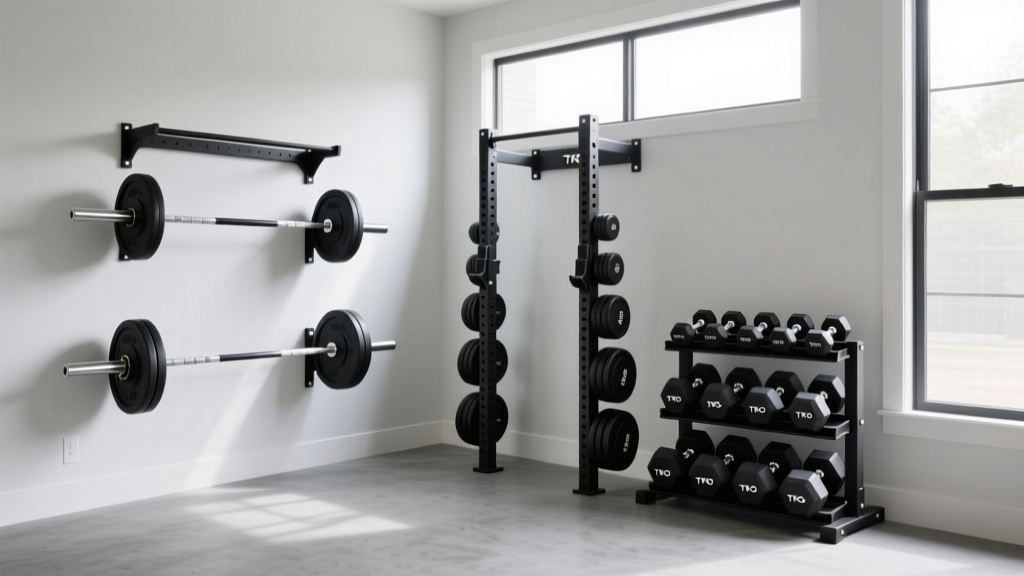
Barbell Rack Horizontal vs Vertical & TKO Dumbbell Rack Layout
Compare horizontal vs vertical barbell storage racks for space optimization. Plus, expert layout tips for integrating a TKO dumbbell rack in your home gym.

The Home Gym Spatial Dilemma: Barbells vs. Dumbbells
Designing a high-functioning home gym in 2026 requires more than just purchasing top-tier equipment; it demands a rigorous approach to spatial geometry and workflow optimization. When floor space is at a premium, the debate between a barbell storage rack horizontal vs vertical configuration becomes a critical decision point. Furthermore, integrating bulky free weight storage—such as a commercial-grade TKO dumbbell rack—into this same footprint introduces a complex layer of layout planning. If you misjudge the clearance zones, loading and unloading weights becomes a hazardous chore rather than a seamless part of your training session.
This guide breaks down the exact dimensions, installation requirements, and biomechanical workflows of horizontal and vertical barbell storage, while providing a concrete framework for integrating your TKO dumbbell rack to maximize every square inch of your training space.
Horizontal vs Vertical Barbell Storage: A Technical Breakdown
The choice between storing your Olympic bars vertically or horizontally dictates not only your floor plan but also the physical toll of racking and un-racking your equipment. Let us examine the technical specifications and spatial realities of both approaches.
Vertical Barbell Holders: The Footprint Minimizer
Vertical barbell holders are the undisputed champions of floor space conservation. A premier example is the Rogue Fitness Vertical Barbell Holder, which utilizes a compact 12.5-inch by 12.5-inch steel base plate. Rising from this base is a 6-inch diameter center post with welded pegs capable of holding up to 8 Olympic barbells.
- Spatial Footprint: Requires only 1.08 square feet of floor space.
- Vertical Clearance: Requires a minimum ceiling height of 78 inches to safely lift a standard 86-inch Olympic barbell over the center post and drop it into the outer pegs.
- Cost: Typically ranges between $115 and $135.
- The Edge Case: You cannot store loaded barbells on a vertical holder. The center of gravity shifts dangerously high, creating a severe tipping hazard. Furthermore, attempting to clean a 45-pound plate off a bar that is resting on a vertical peg puts unnecessary shear stress on the barbell's sleeve bearings.
Horizontal Wall-Mounted Racks: The Ergonomic Workhorse
Horizontal storage shifts the spatial burden from the floor to the walls. Units like the Titan Fitness 10-Bar Wall Mount (explore options via the Titan Fitness Weight Storage catalog) allow you to store bars parallel to the ground, mimicking the holsters of a power rack.
- Spatial Footprint: Zero floor space, but protrudes 18 inches from the wall and requires roughly 48 inches of horizontal wall width.
- Installation Reality: Must be lag-bolted directly into 16-inch on-center wood studs or solid masonry. Drywall anchors will fail under the dynamic load of racking a 45-pound barbell.
- Cost: Generally ranges from $150 to $200.
- The Edge Case: The top tier of a horizontal rack often sits at 60 to 65 inches high. Racking a heavy specialty bar (like a 65-pound safety squat bar) at this height forces the shoulder into extreme extension and external rotation, which can aggravate rotator cuff impingements over time.
Feature Comparison Matrix
To visualize the spatial and functional trade-offs, refer to the comparison matrix below. For further independent testing on gym storage solutions, the Garage Gym Labs Barbell Rack Guide offers excellent empirical data on steel thickness and weld durability.
| Feature | Vertical Holder (e.g., Rogue) | Horizontal Wall Rack (e.g., Titan) |
|---|---|---|
| Floor Space Used | ~1.1 sq. ft. | 0 sq. ft. (18" wall protrusion) |
| Max Barbell Capacity | 6 to 8 Bars | 10 to 12 Bars |
| Loaded Bar Storage | No (Tipping Hazard) | Yes (If weight capacity allows) |
| Installation | None (Freestanding base) | Heavy-duty lag bolts into studs |
| Best Layout Position | Corners or dead space behind rigs | Long, unbroken walls near lifting platforms |
Integrating the TKO Dumbbell Rack into Your Layout
While barbell storage demands vertical or wall-mounted solutions to save space, dumbbell storage requires a different approach due to the sheer volume and weight distribution of the implements. The TKO 3-Tier Dumbbell Rack is a commercial staple, engineered with heavy-duty steel and rubberized saddles to protect knurled handles and rubber hex heads.
A standard TKO 3-Tier rack measures approximately 47 inches long, 22 inches wide, and 38 inches high. When fully loaded with 5-pound to 50-pound dumbbell pairs, the unit can easily exceed 1,200 pounds. This introduces two critical layout constraints:
- Subfloor Load Bearing: If your home gym is on a concrete slab, the point-load of the TKO rack is irrelevant. However, if you are building a gym on an upper floor with wood joists, a 1,200-pound concentrated load requires reinforcement or placement directly over a load-bearing beam.
- The 30-Inch Loading Zone: You must maintain a strict 30-inch clearance in front of the TKO dumbbell rack. This allows the user to squat or hinge to pick up heavy bottom-tier dumbbells without their glutes striking a wall or bench behind them.
The Lifting Work Triangle Framework
Borrowing from ergonomic kitchen design, the most efficient home gyms utilize a 'Work Triangle' that connects the three primary zones of movement: Storage, Execution, and Transit.
1. The Storage Node (Barbells & Dumbbells)
Place your horizontal barbell rack and TKO dumbbell rack on the same continuous wall or in an L-shaped corner configuration. This consolidates your 'heavy loading' zone. Ensure the TKO rack is positioned on the side of your dominant hand relative to the barbell rack to minimize cross-body twisting when transitioning between implements.
2. The Execution Node (Rig & Platform)
Your squat rack or lifting platform should sit exactly 36 to 48 inches away from the storage node. This specific distance allows you to un-rack a barbell, take the standard two steps back to set up for a squat, and still have enough room for a spotter to maneuver.
3. The Transit Node (Open Floor)
The center of the room must remain entirely clear. By pushing the vertical barbell holders into the deepest corners and mounting horizontal racks high on the walls, you preserve a minimum 6x8 foot open transit zone for dynamic movements like kettlebell swings, lunges, and agility work.
Real-World Edge Cases and Installation Warnings
When executing your layout, be prepared to troubleshoot these common spatial conflicts:
- Garage Door Tracks: If your gym is in a standard garage, the ceiling-mounted tracks for the sectional door often drop down to 72 or 78 inches near the walls. This will physically block the removal of barbells from a vertical holder. Always map your ceiling obstructions before purchasing vertical storage.
- Plate Storage Interference: Horizontal barbell racks often sit directly above wall-mounted plate trees. Ensure the plate tree does not protrude further than the barbell holsters; otherwise, you will strike the plates with the barbell sleeve every time you attempt to rack the bar.
- TKO Rack Anchoring: While the TKO dumbbell rack is incredibly stable due to its wide 22-inch base, if you have toddlers or pets in the home, use the pre-drilled holes in the rear feet to anchor the rack to the wall stud using a simple L-bracket. A 1,200-pound tipping event is catastrophic.
Frequently Asked Questions
Can I store my barbells vertically if I have low ceilings?
If your ceiling is below 84 inches, vertical storage becomes highly impractical. Lifting a 7-foot Olympic barbell vertically requires significant overhead clearance and shoulder mobility. In low-ceiling environments, a horizontal wall-mounted rack is the only safe and ergonomic option.
Does the TKO dumbbell rack require assembly?
Yes, commercial racks like the TKO 3-Tier ship flat-packed and require assembly with standard hex bolts and Allen wrenches. Expect the assembly to take 45 to 60 minutes. It is highly recommended to assemble the rack in its final resting place, as a fully built TKO rack is exceedingly difficult to move through standard 30-inch residential doorways.
Which is better for a garage gym: horizontal or vertical barbell storage?
For a standard 2-car garage gym where wall space is abundant but floor space is needed for vehicles or open movement, horizontal wall racks are superior. They keep the floor completely clear for sweeping and allow you to store loaded bars safely, provided they are mounted securely into the wall studs.
More gear to consider
All reviews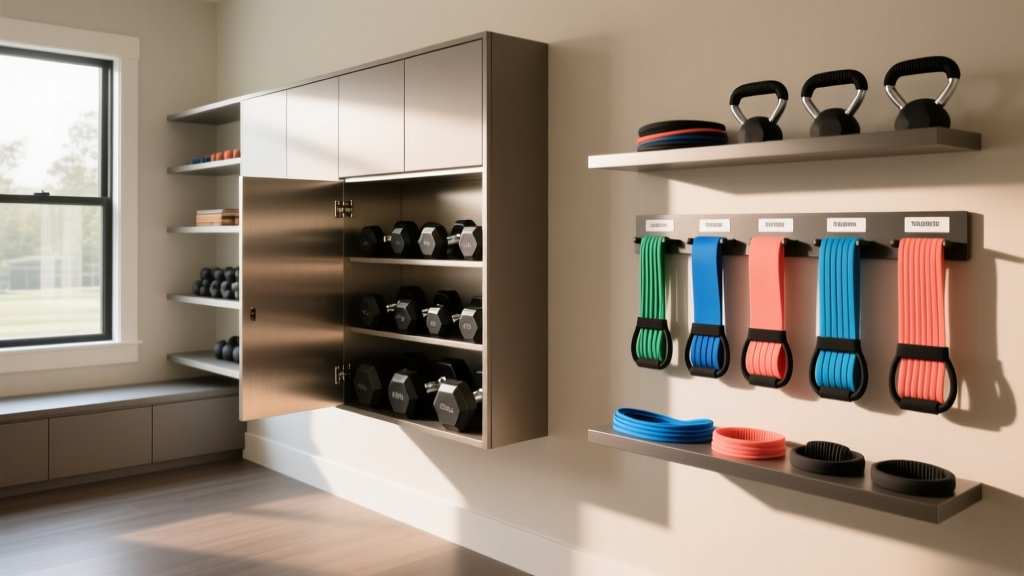
Beyond Hidden Dumbbell Storage: Resistance Band Organization

Horizontal vs Vertical Barbell Racks: Small Home Gym Storage Ideas

Home Dumbbell Rack Maintenance and Longevity Care Guide

DIY Storage: Homemade Dumbbell Rack & Resistance Band Care

Barbell Storage Rack Horizontal vs Vertical & Snode Dumbbell Rack
