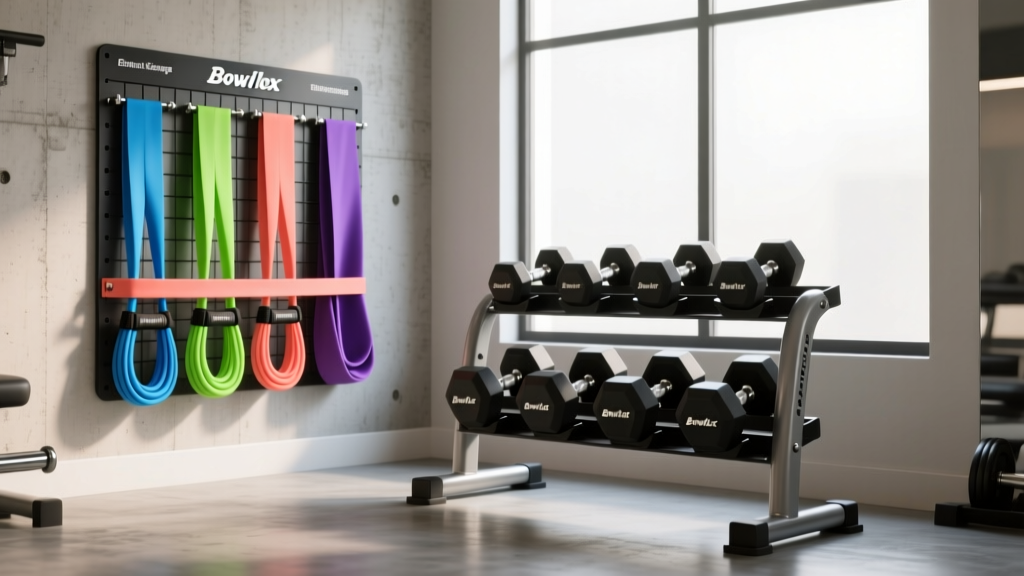
Resistance Band Storage and Bowflex Dumbbell Rack Care Guide
Learn expert maintenance tips for resistance band storage and Bowflex dumbbell rack care to maximize equipment longevity and prevent costly failures.

The Dual-Threat Home Gym: Managing Tension and Precision
Building a comprehensive home gym in 2026 requires balancing heavy, precision-engineered iron with high-tension elastic polymers. Two of the most notoriously difficult items to store and maintain are adjustable dumbbells and resistance bands. While they serve entirely different biomechanical purposes, their storage requirements often intersect in the modern garage or spare-room gym. Mismanaging either can lead to catastrophic equipment failure, turning a $600 investment into hazardous plastic and snapped rubber.
This guide bridges the gap between elastic material science and mechanical gear care. We will explore the optimal resistance band storage and organization protocols alongside critical maintenance routines for the bowflex dumbbell rack and its associated SelectTech weight systems. By understanding the specific failure modes of both equipment types, you can extend their lifespan by years and ensure a safer training environment.
Material Science of Resistance Band Storage
Resistance bands—whether continuous loop bands made of natural latex or tube bands encased in nylon sleeves—are highly susceptible to environmental degradation. According to polymer durability standards, natural latex undergoes a process called 'chain scission' when exposed to ultraviolet (UV) light and ozone. This breaks down the molecular bonds, leading to micro-tears that eventually cause the band to snap under load.
The Chemistry of Latex Degradation
Storing your bands in a plastic bin in a sunlit garage is a recipe for disaster. UV rays penetrate standard translucent plastics, accelerating the oxidation process. Furthermore, temperature fluctuations cause the latex to expand and contract, pushing natural oils to the surface where they evaporate, leaving the rubber brittle.
Expert Callout: The Cornstarch Maintenance Protocol
To prevent natural latex bands from adhering to themselves and tearing when peeled apart, fitness equipment manufacturers recommend a light dusting of 100% pure cornstarch or talc-free baby powder. Apply this every 90 days. Avoid petroleum-based powders or lotions, as petroleum distillates actively dissolve natural rubber polymers.
Optimal Hanging vs. Rolling Techniques
For continuous loop bands (like those from Serious Steel or Rogue Fitness), rolling them tightly creates permanent memory creases that weaken the structural integrity of the rubber. Instead, utilize a dedicated hanging system. The Rogue Fitness Band Hanger is an industry-standard wall-mounted solution featuring angled steel pegs that support the band's weight without creating sharp fold points. If you use tube bands with carabiners, always detach the metal clips before storage to prevent the D-rings from cutting into the nylon sleeve over time.
Precision Care for the Bowflex Dumbbell Rack
While bands suffer from environmental decay, adjustable dumbbells suffer from mechanical interference. The Bowflex SelectTech 552 dumbbells and their accompanying cradle (Model 100182) represent a marvel of space-saving engineering, utilizing a complex internal dial and pin mechanism to secure weight plates. However, this precision is exactly what makes proper storage and rack maintenance so critical.
Dust Ingress and the Dial Failure Mode
The most common failure mode for the SelectTech system is dust, chalk, and debris ingress. When you place the dumbbells back into the bowflex dumbbell rack after a sweaty, chalk-heavy workout, microscopic particles fall into the gap between the dial and the handle housing. Over time, this debris accumulates in the internal gear tracks, causing the selector pin to jam or fail to fully engage a weight plate—a massive safety hazard during overhead presses.
The Fix: Never use canned compressed air to clean the dials. Canned air often expels liquid propellant that can wash away factory lubricants and attract more dust. Instead, invest in an electric data duster (like a Datavac ED500) to blow out the dial crevices weekly, and use a soft-bristled brush to clean the base plate of the rack itself.
Rack Alignment and Base Plate Stress
The official bowflex dumbbell rack is engineered to hold the 552s at a specific angle that allows the internal locking pins to rest in their neutral position. If your rack is placed on an uneven floor, the slight torsional twist can cause the dumbbells to sit unevenly in the cradle. According to extensive durability testing noted in Wirecutter's adjustable dumbbell reviews, uneven resting pressure can warp the plastic end-caps over time. Always use a digital level on the rack's base plate and place rubber shims under the feet if your garage floor is sloped.
Lubrication Matrix: What to Use on Selector Pins
If your dials begin to squeak or feel gritty, you must lubricate the internal tracks. However, using the wrong lubricant will destroy the plastic gears. Below is a comparison of common household lubricants and their viability for Bowflex maintenance:
| Lubricant Type | Chemical Base | Effect on Bowflex Gears | Verdict |
|---|---|---|---|
| WD-40 Standard | Petroleum Distillate | Melts ABS plastic gears; attracts heavy dust. | NEVER USE |
| Silicone Spray | Silicone Oil | Safe for plastics but remains wet, trapping chalk dust. | AVOID |
| Dry PTFE (Teflon) | Fluoropolymer | Evaporates carrier solvent, leaves dry, non-stick film. | HIGHLY RECOMMENDED |
Spatial Synergy: Integrating Bands and the Dumbbell Rack
One of the most overlooked aspects of home gym organization is the spatial relationship between high-tension bands and fragile precision equipment. Storing your resistance bands directly above or adjacent to your bowflex dumbbell rack introduces a severe risk of cross-contamination and physical damage.
The Snap-Back Hazard
If a resistance band slips off its wall peg while under tension, or if a carabiner fails during a banded stretch, the resulting snap-back can easily strike the plastic dial housing of the SelectTech dumbbells resting in the rack. The ABS plastic used for the dials is durable against drops but highly vulnerable to concentrated, high-velocity impacts from heavy rubber or metal clips. A single snap can crack the dial casing, rendering the $400+ dumbbell useless and voiding the warranty.
Step-by-Step Layout Framework
To optimize your home gym footprint while protecting your investments, follow this spatial organization protocol:
- Establish the Iron Zone: Place the bowflex dumbbell rack against a solid, load-bearing wall, ensuring a 3-foot clearance on all sides for safe lifting and racking.
- Create a Tension Corridor: Install your resistance band hanger on an adjacent wall, at least 4 feet away from the dumbbell rack. This ensures that even the longest loop bands (typically 41 inches unstretched) cannot physically reach the dumbbell dials if they slip.
- Implement a Chalk Boundary: Keep your chalk bucket and lifting belts on a separate shelving unit away from both the bands (chalk dries out rubber) and the dumbbell rack (chalk destroys gears).
- Utilize Vertical Bins for Tubes: For smaller tube bands and mini-bands, use a clear, UV-blocking acrylic bin mounted on the wall in your 'Tension Corridor' to keep them organized by resistance level without exposing them to ambient sunlight.
Pro Insight: Never hang resistance bands on the pegs or handle-grips of the dumbbell rack itself. The constant friction of rubber against the rack's powder-coated steel will eventually wear through the finish, leading to rust, while the elastic tension can slowly bend lighter gauge rack components over time.
2026 Longevity Maintenance Checklist
Consistency is the key to equipment longevity. Print this checklist and keep it near your training space to ensure your storage and maintenance routines remain on track throughout the year.
- Weekly: Use an electric duster to blow chalk and debris out of the Bowflex selector dials and the base of the rack cradle.
- Monthly: Inspect all resistance bands for micro-tears, white stress marks, or sticky residues. Wipe down the bands with a damp cloth and mild soap (no harsh chemicals).
- Quarterly: Apply a light dusting of cornstarch to natural latex loop bands. Check the digital level on your dumbbell rack to ensure floor settling hasn't caused a torsional twist.
- Annually: Apply a micro-spray of Dry PTFE lubricant to the outer edges of the dumbbell dials, rotating the dial back and forth to distribute the dry film into the upper gear tracks.
By treating your resistance band storage and bowflex dumbbell rack care as an integrated system rather than an afterthought, you protect your finances and your physical safety. Proper organization isn't just about aesthetics; it is the first line of defense against material fatigue and mechanical failure in the modern home gym.
More gear to consider
All reviews
Space Optimization: Hampton Dumbbell Rack & Band Storage

Beyond Hidden Dumbbell Storage: Resistance Band Organization

White Dumbbell Rack Wall Storage: 2026 Budget Guide

Cold Therapy for Athletes: Science, Protocols, and Home Integration

Black Widow Dumbbell Stand: 2026 Garage Gym Storage Review
