
Beyond a Peloton Treadmill Rental: Maintaining Smart Resistance Tech
Discover why maintaining smart resistance and adaptive weight tech offers better longevity than a Peloton treadmill rental. Expert care tips inside.

In 2026, the connected fitness landscape has bifurcated into two distinct camps: perpetual cardio subscriptions and high-tech strength ownership. While a peloton treadmill rental might seem like a low-commitment way to access premium cardio hardware, many fitness enthusiasts are pivoting toward smart resistance and adaptive weight technology—such as Tonal, Vitruvian Trainer+, and Speediance—for their primary training stimulus. However, trading a motorized running belt for electromagnetic brakes and motorized cable spools introduces an entirely new paradigm of equipment maintenance.
Unlike traditional cast-iron weight stacks or simple cardio machines, adaptive weight tech relies on complex interplay between brushless DC motors, optical sensors, and high-tension synthetic cables. If you are transitioning away from cardio rentals to build a long-term smart strength ecosystem, understanding the nuanced maintenance requirements of adaptive resistance is critical to protecting your investment and ensuring a decade-long lifespan.
The Shift: Cardio Rentals vs. Smart Resistance Ownership
Before diving into the wrench-and-microfiber reality of smart gym maintenance, it is vital to understand the economic and mechanical differences between renting a cardio unit and owning adaptive strength tech. A rental model shifts the burden of hardware failure to the manufacturer, but it traps you in a cycle of perpetual payments with zero equity. Smart resistance machines require upfront capital and proactive upkeep, but they offer unparalleled long-term value.
| Feature | Cardio Rental (e.g., Tread) | Smart Resistance (e.g., Tonal/Vitruvian) |
|---|---|---|
| Primary Drive System | AC Motor & Rubber Belt | Eddy Current Brakes / Brushless DC Spools |
| Common Failure Point | Belt friction, deck warping, motor dust | Cable fraying, thermal throttling, sensor drift |
| Maintenance Burden | Low (Lubrication, belt tensioning) | Medium (Spool cleaning, load cell calibration) |
| 5-Year Equity | $0 (Equipment returned) | Full ownership of a $2,500+ asset |
The Engineering of Adaptive Weight: What Actually Breaks?
To maintain smart resistance gear, you must understand how it generates force. Traditional gyms use gravity and mass. Smart gyms use electromagnetism and software. According to hardware teardowns and engineering reviews by Wired, systems like Tonal utilize an electromagnetic braking system—essentially an eddy current brake similar to those found in high-speed trains—to generate up to 200 lbs of resistance without physical weight stacks. Conversely, platform-based systems like the Vitruvian Trainer+ use dual brushless DC motors winding and unwinding Dyneema cables to create resistance and eccentric overload.
Expert Insight: The absence of physical weight stacks eliminates the 'clank' and mechanical friction of traditional gyms, but it replaces mechanical wear with thermal and electronic stress. The enemy of adaptive weight tech is not gravity; it is heat, dust, and chassis torsion.
Because these machines rely on algorithms to adjust weight in milliseconds (e.g., spotting you when you struggle, or adding weight during the eccentric phase), any physical degradation in the cable pathway or thermal throttling in the motors will result in latency, 'ghost drops,' or jittery resistance.
Step-by-Step Maintenance Protocols for Smart Resistance
Proactive maintenance for adaptive weight technology should be divided into three core categories: cable integrity, thermal management, and software calibration.
1. Cable and Spool Integrity (The 150-Hour Rule)
Smart gyms use Ultra-High-Molecular-Weight Polyethylene (UHMWPE) cables, commonly known by the brand name Dyneema. These cables are rated for thousands of pounds of tension, but they are highly susceptible to abrasion at the carabiner attachment point and where they enter the machine's internal spool.
- Inspection: Every 150 hours of use (roughly every 3 months for a daily user), run a microfiber cloth along the entire length of the cable. If the cloth snags, you have micro-fraying that requires immediate manufacturer replacement.
- Cleaning: Wipe the cables down weekly with a 70% isopropyl alcohol solution. Sweat is highly corrosive and, when dragged into the internal spool housing, can degrade the polyurethane coating on the motorized drums.
- Carabiner Care: The metal carabiners will develop micro-grooves over time. Rotate your handles and attachments to ensure the carabiner wears evenly, preventing it from acting like a saw against the synthetic cable.
2. Thermal Management for Electromagnetic Brakes
Generating 200 lbs of resistance via electromagnetism creates immense heat. During heavy eccentric overload sets, the internal fins and motors can exceed 140°F (60°C). If the machine cannot dissipate this heat, it will engage thermal throttling, abruptly reducing your max resistance to protect the internal components.
- Clearance: Never flush-mount a smart resistance unit against a wall or in a tight alcove. Maintain a minimum of 6 to 8 inches of clearance on all sides, particularly near the exhaust vents.
- Dust Purging: Dust acts as a thermal insulator. Once a month, use compressed air (canned air or an electric duster) to blow out the intake and exhaust vents. Do this while the machine is powered off to prevent dust from being pulled deeper into the optical sensors.
3. Sensor Calibration and Firmware Hygiene
Adaptive weight machines use strain gauges and load cells to measure your force output in real-time. Over time, these sensors can experience 'drift,' meaning the machine's zero-point baseline shifts. For ongoing care and recalibration instructions, referencing official support channels like Tonal Support is crucial for firmware-specific calibration routines.
- Zero-Point Reset: Perform a full system recalibration via the settings menu once a month. Ensure no cables are under tension and no accessories are hanging on the arms during this process.
- Network Stability: Because adaptive algorithms rely on cloud-synced user profiles and real-time telemetry, a hardwired Ethernet connection (via a USB-C to Ethernet adapter, if supported) is vastly superior to Wi-Fi for preventing latency during complex adaptive sets.
Environmental Factors: Floor Loading and Chassis Torsion
One of the most overlooked maintenance factors in smart home gyms is the floor beneath them. A unit like the Vitruvian platform weighs roughly 70 lbs, but when you are pulling 440 lbs of combined resistance, the dynamic point-force exerted on the floor is massive. If your floor joists deflect or the machine sits on an uneven surface, the chassis will experience torsion (twisting).
Chassis torsion is fatal to internal cable spools. If the frame twists even a few millimeters under load, the cable will spool unevenly, leading to overlapping wraps, internal friction, and catastrophic cable failure. The Fix: Always place platform-based smart gyms on a high-density, 3/4-inch rubber horse stall mat. This distributes the dynamic load, dampens vibration, and ensures the chassis remains perfectly level regardless of subfloor imperfections.
Troubleshooting Edge Cases: Ghost Drops and Latency
Even with meticulous maintenance, smart resistance tech can exhibit software-hardware edge cases. Here is how to troubleshoot the most common anomalies:
- The 'Ghost Drop' (Premature Spotting): The machine assumes you have failed the rep and drops the weight before you actually stall. Cause: Dirty optical sensors on the cable spool are misreading the cable velocity. Fix: Clean the external sensor windows with a dry microfiber cloth and ensure ambient room lighting isn't causing glare on the infrared sensors.
- Eccentric Jitter (Stuttering on the Negative): The machine fails to smoothly add weight during the lowering phase, feeling 'choppy.' Cause: Thermal throttling or load cell drift. Fix: Check room temperature (keep it below 75°F), clear the vents, and run a manual load-cell recalibration.
- Asymmetric Resistance: The left arm feels heavier than the right arm during bilateral movements. Cause: Uneven cable stretch or a localized software glitch in the dual-motor sync. Fix: Perform a factory hardware reset (consult your specific model's manual) to force the dual motors to re-sync their zero-point baselines.
The 5-Year Longevity ROI
When evaluating the longevity of your fitness setup, the financial math heavily favors maintaining owned smart resistance tech over perpetual cardio rentals. Consider a 5-year (60-month) horizon. A premium treadmill rental or financed model can easily cost $89 per month in hardware fees, plus a $44 monthly app subscription, totaling nearly $8,000 over five years—with nothing to show for it at the end.
Conversely, purchasing a high-end smart resistance system for $2,500 to $3,500, alongside a $40 to $60 monthly digital subscription, yields a 5-year cost of roughly $5,000 to $7,000. More importantly, you retain a highly functional, meticulously maintained piece of hardware that retains resale value. Consumer advocacy groups like Consumer Reports consistently highlight that connected fitness gear requires a shift in consumer mindset: you are no longer just a user; you are the primary technician.
By treating your adaptive weight machine with the same respect you would give to a high-performance vehicle—monitoring thermal loads, protecting the synthetic cables, and ensuring structural leveling—you will easily push the hardware's lifespan well past the 5-year mark, making it the most cost-effective and physiologically rewarding investment in your home gym.
More gear to consider
All reviews
Mirror vs Traditional Equipment: Peloton Treadmill Moving Service

Is the Peloton Treadmill Worth It? Smart Alternatives & Setup Guide
NordicTrack vs Peloton Treadmill: App Integration Mistakes & Fixes
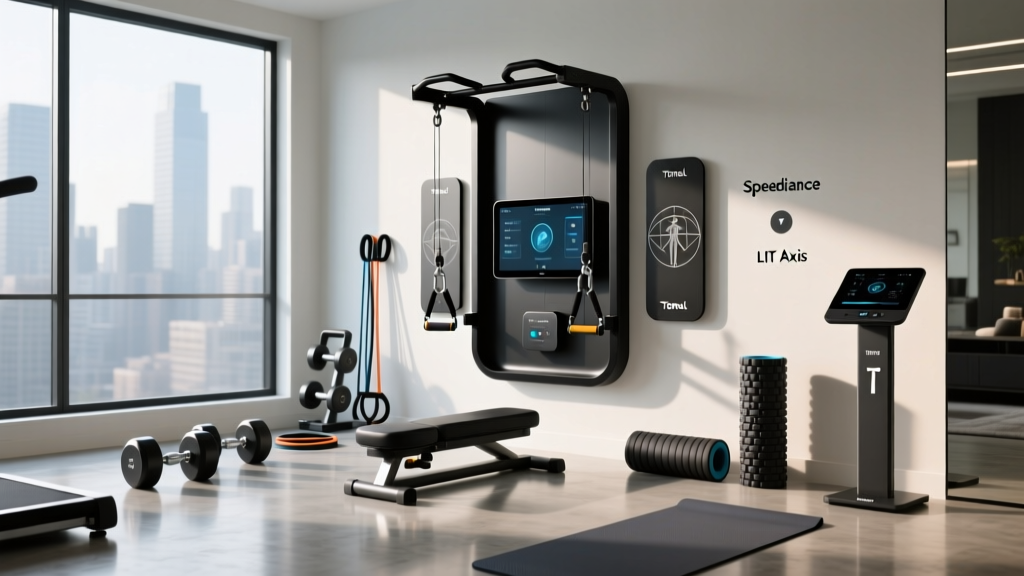
Tonal Home Gym Reviews vs. Rivals: 2026 Smart Fitness Comparison

Are Peloton Treadmills Worth It? Smart Alternatives Guide
