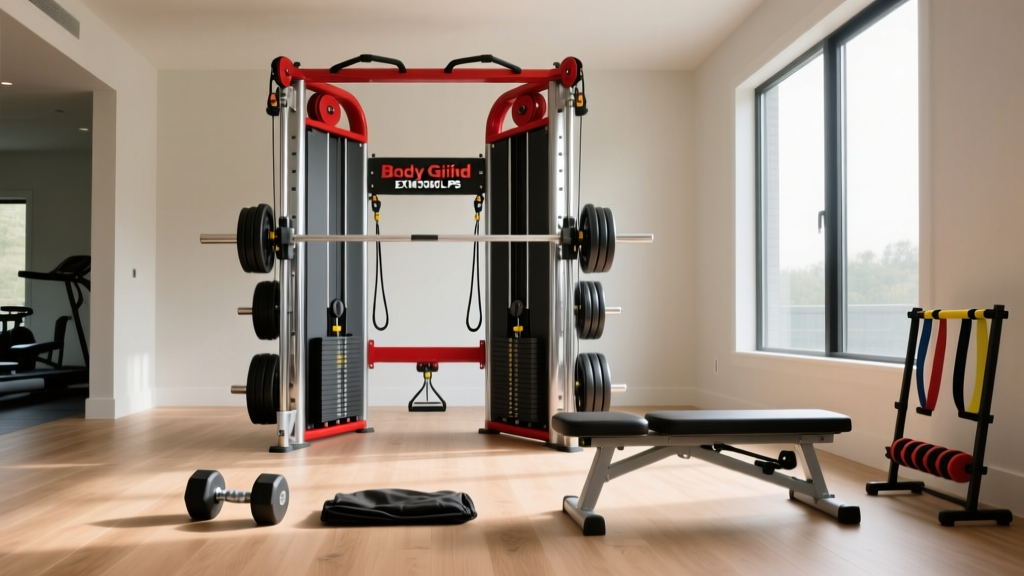
How to Build a Wider Home Gym Layout in Small Spaces
Discover how to build a wider home gym layout in small apartments. Step-by-step installation, space-saving gear, and acoustic flooring tips.

Designing a functional fitness space in an apartment or compact spare bedroom often feels like an exercise in extreme compromise. You want the expansive movement, uncluttered sightlines, and premium functionality of a commercial facility, but you are constrained by a 70-square-foot footprint. The secret to achieving a wider home gym experience in a small space is not about magically creating square footage; it is about manipulating visual depth, utilizing vertical planes, and executing a flawless, space-conscious installation.
This complete setup and installation walkthrough will guide you through transforming a cramped apartment corner into a highly functional, visually expansive training environment. We will cover structural limits, acoustic mitigation, exact equipment clearances, and the step-by-step installation of fold-away rigs.
The Small Space Paradox: Assessing Physical and Acoustic Limits
Before purchasing a single piece of equipment, you must understand the structural and environmental boundaries of your apartment. According to the National Safety Council (NSC), home injuries frequently occur due to improper equipment installation and overloading residential floors.
Floor Joist Weight Capacities
Standard residential apartment floors are typically rated for a live load of 40 to 50 pounds per square foot (psf). A fully loaded barbell, a 300-pound lifter, and dropped dumbbells can generate momentary impact forces exceeding 1,000 pounds. To prevent structural damage and neighbor disputes, you must distribute this weight.
⚠️ CRITICAL WARNING: Never place a heavy squat rack or deadlift platform directly over the center of a floor span. Always position heavy, static equipment against load-bearing exterior walls where the floor joists are supported by the foundation or primary beams.Acoustic Transfer and Vibration
In multi-family dwellings, low-frequency impact noise (like dropping a barbell) travels through the building's structural skeleton. Standard interlocking EVA foam tiles will not stop this. You need mass and decoupling.
Step-by-Step Installation Walkthrough (The 8x10 Footprint)
To create a wider home gym feel, the center of your 8x10 foot room must remain entirely clear when not in active use. Here is the exact installation sequence to maximize open floor space.
Phase 1: Acoustic Flooring Installation
- Subfloor Prep: Clean the existing hard surface. Do not install rubber directly over carpet, as it traps moisture and creates an unstable lifting base.
- The Decoupling Layer: Lay down a 5mm underlayment of cork or recycled rubber. This breaks the direct contact path between your equipment and the apartment subfloor.
- The Wear Layer: Install 3/4-inch thick, 4x6 foot vulcanized rubber horse stall mats. These cost approximately $55 to $75 each at agricultural supply stores. For an 8x10 space, you will need four mats, which you can trim using a straight-edge and a heavy-duty utility knife with roofing blades.
- Sealing: Use double-sided carpet tape on the seams to prevent the heavy mats from shifting and creating a tripping hazard during lateral movements.
Phase 2: Anchoring the Fold-Away Rig
A traditional 4x4 foot power cage consumes 16 square feet of permanent space. A fold-away wall-mounted rack reclaims that space, instantly making the room feel wider when you are doing floor work or yoga.
- Locate the Studs: Use a magnetic stud finder to locate the 16-inch on-center wood studs behind your drywall. Note: If your apartment uses metal studs, you cannot safely mount a heavy rig without reinforcing the wall with 3/4-inch plywood backed into the studs.
- Drill and Secure: Pre-drill holes using a 7/32-inch bit. Secure the mounting brackets using 3/8-inch x 3-inch structural lag screws. Do not use drywall anchors or toggle bolts for dynamic loading.
- Deploy and Test: Models like the Rogue RML-3W Fold Back Wall Mount Rack ($495) extend 21 inches when deployed and fold down to a mere 4-inch profile. Install the stringers at 7 feet high to allow for pull-ups without your head hitting an 8-foot ceiling.
Equipment Selection Matrix: Expanding Space Functionally
To maintain the illusion and utility of a wider home gym, every piece of equipment must serve multiple purposes or collapse when not in use. Below is a comparison of optimal small-space gear versus traditional setups.
| Equipment Category | Space-Saving Model (Recommended) | Footprint (Stored) | Est. Cost |
|---|---|---|---|
| Strength Rack | Rogue RML-3W Fold-Away | 4' x 4' (Wall-hugged) | $495 |
| Dumbbells | Nuobell 80 lb Adjustable | 16' x 8' per pair | $429 |
| Cardio | TRM Z1 Folding Treadmill | 2.5' x 2.5' (Folded) | $599 |
| Bench | Rep Fitness AB-3100 2.0 | Stores vertically | $299 |
The Visual Expansion: Mirrors, Lighting, and Sightlines
A wider home gym is as much a psychological achievement as a physical one. Commercial gyms use mirrors not just for form checking, but to double the perceived depth of the room. However, traditional 1/4-inch glass mirrors are heavy, expensive, and pose a severe laceration hazard in a small room where a dropped dumbbell could shatter them.
Acrylic Safety Mirror Installation
Opt for 1/4-inch thick acrylic safety mirrors. They are shatter-resistant, weigh 70% less than glass, and cost roughly $80 for a pack of four 12x12 inch tiles. Install them horizontally along the longest wall at eye level (starting 48 inches from the floor). This draws the eye laterally, artificially stretching the width of the room.
Lighting Temperature and Placement
Harsh, single-source overhead lighting creates deep shadows in the corners of small rooms, making them feel cavernous and cramped. Install LED strip lighting (5000K daylight temperature) behind your mirror array or along the baseboards. This ambient bounce light eliminates dark corners, pushing the visual boundaries of the walls outward.
Ventilation and Air Quality in Enclosed Spaces
Small apartment gyms suffer from rapid heat accumulation and CO2 buildup during intense interval training. The Environmental Protection Agency (EPA) notes that indoor pollutant levels can be two to five times higher than outdoor levels, exacerbated by poor airflow in small, enclosed rooms.
💡 PRO TIP: The Cross-Breeze ProtocolDo not rely solely on your apartment's central HVAC system, which is designed for ambient temperature maintenance, not active heat dissipation. Position a 20-inch high-velocity floor fan in the doorway, pointing into the room, and crack a window on the opposite side of the apartment to create a negative pressure exhaust system. This cycles the air in a 70-square-foot room roughly 4 times per minute.
Frequently Asked Questions (FAQ)
Can I drop weights in an upstairs apartment?
You should never drop raw iron or urethane dumbbells on an apartment floor, regardless of rubber matting. The low-frequency vibration will travel through the joists. If you must drop weights, use crash pads (high-density foam blocks) or invest in bumper plates, and only perform drops from the hip, not from overhead.
How do I store a barbell in a small space without a rack?
Utilize vertical wall-mounted barbell holders. A simple vertical hanger requires only a 4-inch footprint on the wall and keeps the 7-foot bar completely out of your walking path, preserving the wider home gym layout you have worked hard to create.
What is the best flooring for an apartment home gym?
According to guidelines from fitness facility experts and the American Council on Exercise (ACE), safety and joint protection are paramount. A dual-layer system consisting of a cork underlayment for sound decoupling topped with 3/4-inch vulcanized rubber provides the best balance of noise reduction, stability, and shock absorption for apartment dwellers.
By respecting structural limits, investing in fold-away architecture, and manipulating visual sightlines, you can successfully engineer a wider home gym experience that defies the physical limitations of your apartment's square footage.
More gear to consider
All reviews
Smart Home Gym Designs and Layout: Garage Flooring & Airflow Fixes
Weider Pro 9635 Home Gym Safety & Electrical Mistakes to Avoid

Fixing Electrical & Safety Mistakes in Home Gym Floor Plans
Joe Rogan Home Gym Vibe: Beginner Starter Kit & Layout
Best Sports Maintenance for Buying: A Practical Guide to Long-Term Equipment Longevity and Performance