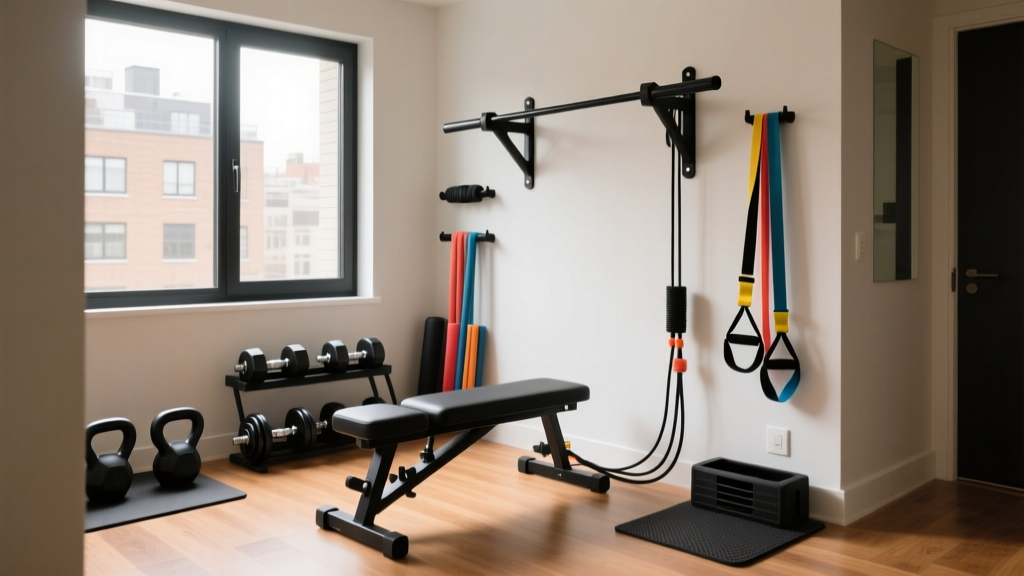
Small Space DIY Home Gym Ideas: Maintenance & Longevity Guide
Maximize your compact apartment workout space. Discover expert small space DIY home gym ideas focused on equipment maintenance, floor care, and longevity.

The Hidden Enemies of Compact Apartment Gyms
When browsing diy home gym ideas for small spaces, most online guides focus exclusively on space-saving hacks like foldable squat stands and wall-mounted rigs. However, compact environments introduce unique, accelerated wear-and-tear challenges that can destroy expensive fitness equipment in a fraction of the time it would take in a ventilated garage. In a 10x10 foot bedroom or a confined apartment alcove, a rigorous 45-minute HIIT or heavy lifting session can spike localized humidity past 65%. According to the Environmental Protection Agency (EPA), prolonged exposure to elevated indoor humidity not only degrades indoor air quality but creates a micro-climate that triggers flash rust on bare steel knurling and degrades polyurethane coatings.
To ensure your compact setup survives the long haul, you must shift your focus from merely fitting the gear into the room to actively managing the room's environment and the equipment's structural integrity. This guide provides a deep-dive maintenance framework specifically engineered for the unique constraints of apartment and small-room home gyms.
⚠️ Apartment Warning: Never use bleach-based wipes or alkaline degreasers on adjustable dumbbells or folding rack hinges. These chemicals strip factory-applied anti-corrosion oils and accelerate oxidation in poorly ventilated spaces.Floor Load and Subfloor Preservation
One of the most critical, yet frequently overlooked, aspects of small space gym maintenance is protecting the structural integrity of your apartment floor. Standard residential floor joists are typically engineered for a 40 pounds per square foot (PSF) live load, as noted by structural guidelines referenced by the National Apartment Association (NAA). If a 200-pound lifter drops a 225-pound barbell onto a 4-square-foot footprint, the dynamic impact force can momentarily exceed 150 PSF, risking subfloor cracking, drywall nail pops, and severe noise complaints.
The 'Load-Spreading' Sandwich Technique
To protect both your equipment and your security deposit, implement a load-spreading floor system. This is a foundational element of sustainable diy home gym ideas for renters:
- Base Layer (Vapor Barrier): Lay down a 6-mil polyethylene plastic sheeting to prevent concrete moisture (if on a ground floor) or trapped sweat from warping wood subfloors.
- Impact Dispersal Layer: Add a 1/2-inch thick sheet of CDX plywood. This bridges the gaps between floor joists and distributes dynamic point-loads across a wider surface area.
- Top Layer (Shock Absorption): Use 3/4-inch thick, 4x8-foot vulcanized horse stall mats (typically $55 to $75 each in 2026). Avoid cheap, low-density EVA foam puzzle mats; they compress permanently under heavy static loads like squat racks, causing the rack to become unlevel and stressing the welds.
Equipment-Specific Longevity Protocols
Small spaces force you to rely on multi-functional and adjustable gear. These complex mechanisms require strict maintenance schedules to prevent catastrophic failure.
Adjustable Dumbbells (e.g., Nuobell, Bowflex, PowerBlock)
Adjustable dumbbells are the holy grail of apartment gyms, but their internal selector mechanisms are highly susceptible to sweat and dust ingestion. For dial-based models like the Bowflex SelectTech 552, sweat dripping into the cradle can corrode the internal locking pins, leading to jammed dials and dangerous weight shifts mid-lift. Longevity Fix: Wipe the handles with a microfiber cloth dampened with a 50/50 water and white vinegar solution after every use. Once a month, use compressed air to blow dust out of the selector shaft and cradle tracks. Never store them in direct sunlight from a nearby window, as UV exposure degrades the ABS plastic housings and urethane coatings.
Foldable Squat Stands and Wall-Mounted Rigs
Wall-mounted folding racks (like the PR-1100 or similar space-saving models) place immense shear stress on their hinge points and wall anchors. In a small apartment, you are likely anchoring into metal studs or using heavy-duty toggle bolts in drywall. Longevity Fix: Every 90 days, use a torque wrench to check the hinge bolts. The repeated racking and unracking of heavy barbells causes micro-vibrations that slowly back out standard hex nuts. Replace standard nuts with nyloc (nylon insert) locknuts to guarantee they stay fastened. Lubricate the folding hinge pins with a dry PTFE (Teflon) spray; avoid wet WD-40, which attracts apartment dust and turns into a grinding paste.
The Ultimate Small-Space Maintenance Schedule
Consistency is the key to equipment survival. Print this matrix and keep it near your workout zone.
| Frequency | Task | Target Area & Tools |
|---|---|---|
| Daily | Wipe down knurling and dumbbell handles | Microfiber cloth + 50/50 water/vinegar mix |
| Weekly | Vacuum rubber mats and equipment crevices | Shop-Vac with brush attachment to remove dead skin/dust |
| Monthly | Inspect wall anchors and hinge bolts | Torque wrench, visual check for drywall cracking |
| Bi-Annual | Deep clean and re-condition rubber flooring | Simple Green Pro HD (1:10 dilution), stiff bristle brush |
| Annual | Lubricate linear bearings and folding hinges | Dry PTFE spray, 3-in-One silicone for cable pulleys |
Climate Control and Rust Prevention in Tight Quarters
Because small apartments often lack the cross-ventilation of a garage, managing ambient moisture is non-negotiable. If your gym space is a converted walk-in closet or a windowless alcove, you are in a high-risk zone for oxidation.
💡 Pro-Tip: The Silica Gel TrickIf you store extra weight plates, resistance bands, or collars in plastic under-bed storage bins to save space, throw in 4-6 large rechargeable silica gel desiccant packs (like Eva-Dry). This creates a localized micro-environment with less than 30% humidity, completely halting rust on cast iron and steel collars.
For the room itself, invest in a compact compressor-based dehumidifier. A 30-pint unit (such as the Yaufey or Kesnos models, retailing around $130-$160 in 2026) is perfectly sized for a 150 to 250-square-foot room. Run it continuously during your workout and for two hours post-workout to pull suspended sweat vapor out of the air before it can settle onto your barbell shafts.
Vibration Dampening and Neighbor Relations
Maintenance isn't just about the gear; it's about maintaining your lease. In multi-family dwellings, low-frequency vibrations from dropping weights travel through floor joists and manifest as loud, disruptive thuds in the apartment below. Over time, these vibrations can also loosen the hardware on your own equipment.
To solve this, integrate Sorbothane isolation pads (specifically the 50 durometer, 2-inch x 2-inch x 3/8-inch thickness) under the feet of your squat rack and bench. Sorbothane is a proprietary viscoelastic polymer that absorbs up to 94.7% of impact vibration. By decoupling your rig from the plywood subfloor, you eliminate structural noise transfer and reduce the vibrational stress that causes rack bolts to loosen over time. A pack of 8 pads costs roughly $35 and is the single highest-ROI upgrade for an apartment lifter.
DIY Cleaning Solutions vs. Commercial Wipes
Stop buying expensive, single-use gym wipes. They dry out quickly in small spaces and often contain quaternary ammonium compounds that break down the urethane on premium dumbbells and the rubber on your flooring. Instead, use targeted, cost-effective solutions based on the material:
- Bare Steel (Barbells, Knurling): Use a nylon brush to remove chalk and skin cells, then wipe with a light coat of 3-in-One oil or mineral oil to displace moisture. Wipe off the excess with a dry rag.
- Urethane & Rubber (Dumbbells, Bumpers, Mats): Mix a 1:10 solution of Simple Green Pro HD (the purple formula, which is less harsh than the standard green) with distilled water. Spray onto a cloth, not directly onto the equipment, to prevent liquid from seeping into adjustable dumbbell seams.
- Stainless Steel (Premium Bars, Rack Uprights): A simple 50/50 mix of water and isopropyl alcohol cuts through hand oils and evaporates instantly without leaving streaks or promoting rust.
Final Thoughts on Compact Gym Longevity
Executing smart diy home gym ideas for small spaces goes far beyond measuring wall clearance and buying foldable gear. By treating your apartment gym as a controlled micro-environment—managing the humidity, distributing dynamic floor loads, and executing material-specific cleaning protocols—you can easily extend the lifespan of your adjustable dumbbells, folding racks, and flooring by 5 to 10 years. Protect the space, protect the gear, and your compact home gym will remain a reliable sanctuary for your fitness journey.
More gear to consider
All reviews
Smart Home Gym Designs and Layout: Garage Flooring & Airflow Fixes

Budget Basement Home Gyms: Best Gear Under $500 (2026)

Home Gym Sheds vs Garage Gyms: 2026 Ventilation Trends

How to Set Up a Bowflex Classic Home Gym for Couples
Planet Fitness Switching Home Gym: Apartment Setup Mistakes
