
Longevity Tips for a Fit Calisthenics Home Gym in Small Spaces
Maximize the lifespan of your compact fit calisthenics home gym. Expert maintenance tips for wall-mounted rigs, doorway bars, and apartment flooring.

The Unique Wear-and-Tear of Apartment Calisthenics Setups
Building a fit calisthenics home gym in a compact apartment or small spare room requires ingenious space-saving solutions. From wall-mounted folding pull-up rigs and tension-based doorway bars to modular parallettes and suspension trainers, small-space athletes have more gear options in 2026 than ever before. However, high-density living environments introduce unique mechanical and environmental stressors that commercial gyms simply do not face.
In a 500-square-foot apartment, poor cross-ventilation traps localized humidity from sweat, accelerating metal oxidation. Dynamic movements like muscle-ups or kipping swings create harmonic vibrations that can slowly compromise drywall anchors and structural welds. Furthermore, fine gymnastics chalk dust infiltrates the rotating bearings of compact folding rigs. If you want your investment to last a decade, proactive maintenance is non-negotiable. Below is a comprehensive, expert-level guide to preserving the structural integrity, finish, and safety of your compact calisthenics setup.
Structural Hardware and Drywall Stress Management
The most critical failure point in any apartment calisthenics gym is the intersection between your gear and the building's structure. Unlike commercial gyms with poured concrete walls, apartments rely on drywall over wood or metal studs, which are highly susceptible to micro-movements.
Doorway Tension Bars: The Foam Compression Problem
Doorway pull-up bars (such as the popular Perfect Fitness Multi-Gym) rely on rotational torque and foam-pad friction against the doorframe. Over 6 to 8 months of regular use, the closed-cell EVA foam pads compress and develop a "memory," reducing their surface area and friction coefficient.
- Monthly Care: Remove the bar and wipe the foam pads with a 70% isopropyl alcohol solution. This removes doorframe grime and body oils that make the foam slick.
- Pre-Workout Check: Always perform a "test hang" with your feet inches from the floor before committing to a full set. Re-torque the bar if you hear any creaking from the doorframe trim.
Wall-Mounted Folding Rigs: Lag Bolt Torque Specs
Wall-mounted folding rigs (like the Ultimate Body Press Wall Mounted Pull Up Bar or compact fold-away squat/pull-up combos) are anchored via 3/8-inch or 1/2-inch lag bolts into wooden studs. Wood studs naturally expand and contract with the seasonal HVAC cycles of an apartment building, which can cause bolts to back out by 1-2 millimeters over a year.
Expert Tip: Do not use a standard socket wrench to tighten lag bolts, as overtightening can strip the wood fibers inside the stud. Use a calibrated torque wrench set to 35–45 ft-lbs (depending on the bolt manufacturer's spec) every 90 days to ensure a secure hold without crushing the wood grain.
Oxidation Control in Poorly Ventilated Spaces
Apartments are notoriously bad at dissipating the moisture generated during intense calisthenics circuits. Human sweat contains urea, lactic acid, and sodium chloride—a highly corrosive cocktail that will rapidly destroy the zinc plating on budget pull-up bars and the bare steel knurling of premium handles.
Knurling and Bare Steel Preservation
If your setup includes bare steel or lightly blued handles, you must neutralize the acidic sweat residue immediately after training.
- Brush: Use a stiff nylon-bristle brush (never brass or steel, which can embed foreign metals and cause galvanic corrosion) to scrub the knurling.
- Neutralize: Wipe down with a microfiber cloth dampened with a 50/50 mix of white vinegar and distilled water.
- Protect: Apply a micro-thin layer of 3-IN-ONE Multi-Purpose Oil or a dedicated barbell oil. Avoid WD-40; it is a solvent and water-displacer, not a long-term friction protectant, and it will leave your bars dangerously slick for grip-heavy calisthenics.
Wooden Gymnastic Rings
Birch wood rings (such as the Rogue Fitness Wood Gym Rings) offer superior grip but are porous. In humid apartments, they absorb sweat, turning black and eventually delaminating. Wipe them with a barely damp cloth post-workout, and once every six months, lightly sand them with 220-grit sandpaper and apply a coat of boiled linseed oil to seal the wood grain.
Flooring and Subfloor Preservation
Small spaces often utilize interlocking EVA foam tiles or thin 3/8-inch rubber mats over hardwood or laminate flooring to save space and reduce noise. However, this creates a hidden hazard: trapped condensation.
According to the Environmental Protection Agency (EPA), maintaining indoor relative humidity between 30% and 50% is critical for preventing mold growth. When you place a non-breathable rubber mat over laminate flooring, temperature differentials between the cold subfloor and the warm apartment air cause condensation to pool beneath the mat. Over a year, this will warp laminate planks and cultivate black mold.
- The Weekly Flip: Once a week, roll up or lift your folding mats and stand them vertically against a wall for 30 minutes to allow the subfloor to breathe and off-gas trapped moisture.
- Cleaning Protocol: Never soak rubber mats with liquid cleaners. Use a pH-neutral cleaner (like Simple Green diluted 1:10) sprayed onto a mop, never directly onto the floor seams.
Fabric, Webbing, and Bearing Care
Calisthenics relies heavily on suspension systems. The TRX HOME2 System and various nylon ring straps are subjected to immense tensile loads, often near apartment windows where UV exposure degrades synthetic fibers.
Webbing and Carabiner Inspection
The Consumer Product Safety Commission (CPSC) frequently highlights the dangers of degraded fitness equipment webbing. UV rays from nearby windows cause nylon to become brittle. Inspect your suspension straps for micro-fraying, especially where the webbing loops through the carabiner. Rotate your straps 180 degrees every few months so the friction points do not wear into the exact same millimeter of fabric. Keep your rig away from direct, prolonged sunlight.
Rotating Bar Bearings
If your compact rig features a rotating pull-up bar for kipping, chalk dust is the enemy. Chalk acts as an abrasive paste when mixed with sweat, grinding down internal bushings. Every two months, use compressed air to blow out the sleeve joints, followed by a short burst of PTFE (Teflon) dry lubricant. Dry lube is essential; wet lubricants will attract more chalk dust and create a grinding compound inside the sleeve.
The Apartment Calisthenics Maintenance Matrix
To keep your fit calisthenics home gym in peak condition without spending hours on chores, follow this structured maintenance schedule tailored for small-space environments.
| Frequency | Target Area | Action Required | Tools / Supplies |
|---|---|---|---|
| Daily | Wood Rings & Bare Steel | Wipe down sweat and chalk residue immediately post-workout. | Dry microfiber cloth |
| Weekly | Rubber/EVA Flooring | Lift mats to air out subfloor; damp mop surface. | pH-neutral cleaner, mop |
| Monthly | Doorway Bar Foam Pads | Clean foam pads to restore friction coefficient. | 70% Isopropyl alcohol |
| Quarterly | Wall-Mount Lag Bolts | Check and re-torque bolts to manufacturer specifications. | Calibrated torque wrench |
| Bi-Annually | Rotating Bar Sleeves | Purge chalk dust and apply dry lubricant. | Compressed air, PTFE spray |
| Annually | Suspension Webbing | Inspect for UV degradation, micro-tears, and carabiner gate tension. | Bright flashlight, magnifying glass |
Mitigating Harmonic Vibration for Gear and Building Longevity
One often overlooked aspect of apartment gym maintenance is managing harmonic vibration. When you perform dynamic calisthenics movements on a wall-mounted rig, the kinetic energy transfers through the steel brackets directly into the drywall. Over time, this vibration doesn't just loosen your lag bolts—it crushes the gypsum core of the drywall behind the bracket, creating a larger hole and compromising the structural hold.
As highlighted by fitness safety guidelines from the American Council on Exercise (ACE), ensuring the physical stability of home gym anchors is paramount for injury prevention. To solve this, install neoprene vibration-dampening washers between the steel mounting bracket and the drywall. The neoprene absorbs the high-frequency oscillations generated by muscle-ups or sudden drops, protecting both the drywall integrity and the welds on your compact folding rig.
Final Thoughts on Small-Space Longevity
Maintaining a calisthenics setup in an apartment isn't just about keeping the gear looking clean; it is about actively fighting the micro-climate and structural limitations of high-density housing. By managing localized humidity, strictly adhering to torque specifications, and mitigating drywall-crushing vibrations, your compact home gym will remain a safe, high-performance training sanctuary for years to come. Treat your space-saving gear with the same respect you would a commercial facility, and it will reliably support your fitness journey through every rep and routine.
More gear to consider
All reviews
Best Exercise Posters for Home Gyms: 2026 Remodel Guide

How Much Weight You Need: Space-Optimized Home Gym TV Layouts

Electrical Safety Mistakes in Your Home Gym Floor Plan Design
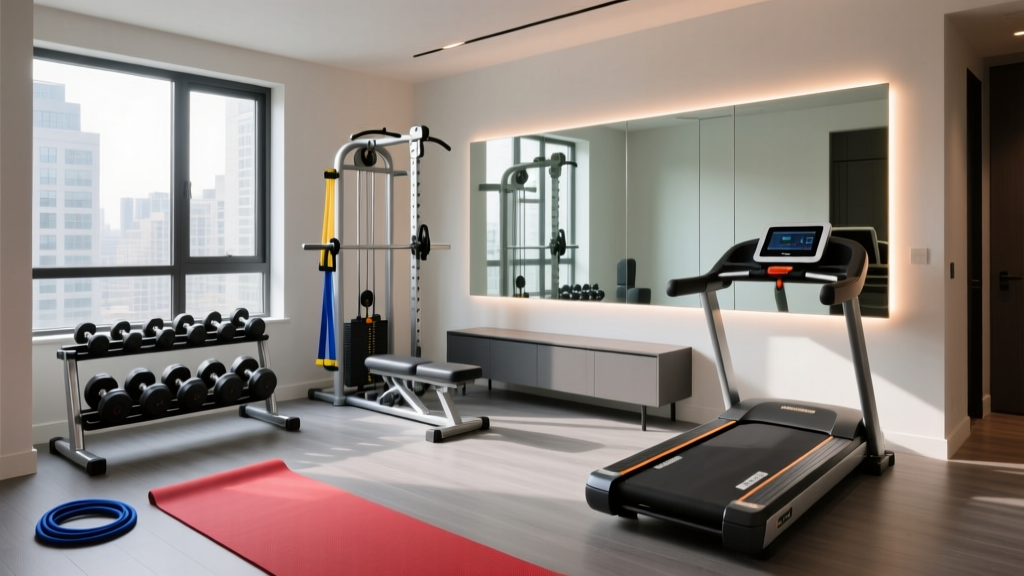
Luxury Home Gym Ideas for Small Spaces: Complete Setup Walkthrough

Vectra 1850 Home Gym: Weight Selection & Space Layout
