2026 Home Gym Renovation Costs: Are Home Gym Cabinets Worth It?
Discover the true cost of a 2026 home gym remodel. We break down renovation budgets, ROI, and whether custom home gym cabinets are worth the investment.

The Reality of Home Gym Remodeling in 2026
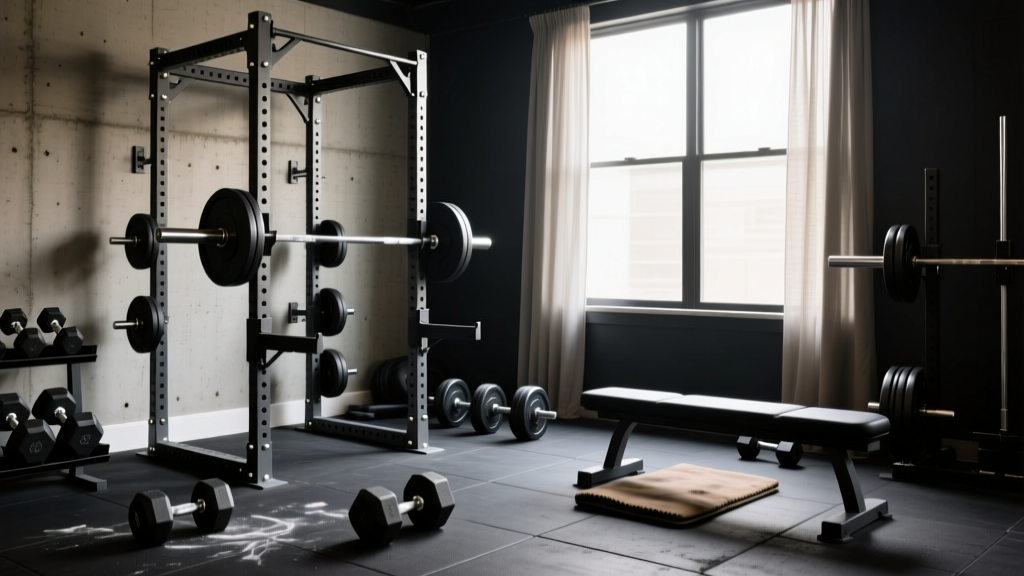
The era of simply dropping a power rack on bare concrete and calling it a day is over. As remote work and hybrid fitness routines have permanently shifted how we live, home gym remodeling has evolved into a sophisticated branch of residential renovation. In 2026, homeowners are no longer just buying equipment; they are engineering dedicated wellness spaces. This means addressing subfloor leveling, dedicated electrical circuits, climate control, and perhaps the most debated storage solution on the market: home gym cabinets.
But with material costs and contractor rates fluctuating, how do you allocate your budget without overcapitalizing on your property? According to data from Angi's home improvement cost guides, the average home gym conversion ranges from $3,500 for a basic garage clear-out to over $25,000 for a fully finished basement studio. The difference lies in the architectural finishes and built-in storage. Below, we break down the exact costs, hidden remodeling traps, and a rigorous value analysis of installing home gym cabinets.
The 2026 Home Gym Renovation Budget Matrix
Before evaluating specific storage solutions, you must understand the baseline costs of converting a 200-square-foot space (like a standard two-car garage bay or a large basement room) into a climate-controlled, impact-ready fitness environment.
| Renovation Element | Specification / Material | Average Cost (200 sq ft) | Value Impact |
|---|---|---|---|
| Impact Flooring | 3/8" Vulcanized Rubber Tiles | $500 - $800 | High (Protects subfloor, reduces noise) |
| Subfloor Prep | Self-Leveling Compound & Moisture Barrier | $300 - $650 | Critical (Prevents tile telegraphing) |
| Electrical Upgrades | Two Dedicated 20-Amp Circuits | $800 - $1,500 | Critical (Prevents breaker trips) |
| Climate Control | 12,000 BTU Ductless Mini-Split | $1,800 - $3,500 | High (Essential for basement/garage) |
| Home Gym Cabinets | Modular vs. Custom Built-In (10 linear ft) | $1,500 - $12,000 | Variable (Aesthetic vs. Functional ROI) |
| Mirrors & Lighting | 1/4" Tempered Glass + LED Task Lighting | $600 - $1,200 | High (Form correction, spatial expansion) |
Deep Dive: Home Gym Cabinets Cost vs. Value Analysis
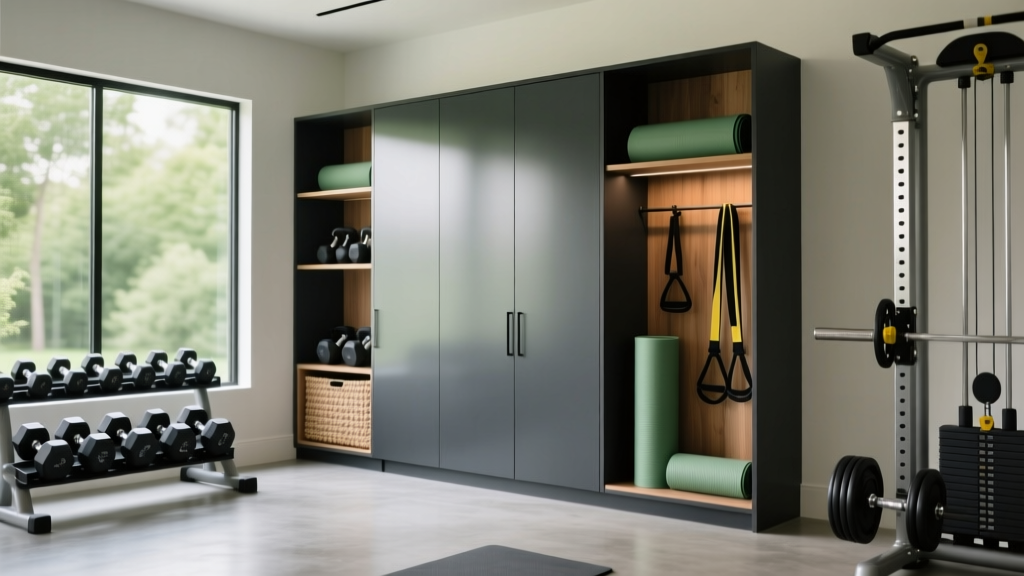
When planning a remodel, storage is often an afterthought, leading to cluttered corners filled with tangled resistance bands, chalk-dusted belts, and disorganized foam rollers. Integrating home gym cabinets into your floor plan solves this, but the material you choose drastically alters your budget and the room's longevity.
1. Custom Millwork & Built-Ins ($800 - $1,200+ per linear foot)
Custom cabinetry, designed by local millworkers or high-end brands, offers a seamless, luxury aesthetic. You can integrate hidden charging stations for smart fitness trackers, ventilated pull-out hampers for sweaty towels, and reinforced shelving capable of holding 50lb dumbbell sets.
- Pros: Maximizes every inch of awkward architectural nooks; matches the rest of your home's interior design; highest perceived luxury value.
- Cons: Exorbitant cost; permanent installation makes the room difficult to convert back into a standard bedroom or garage later.
2. Modular Semi-Custom Systems ($150 - $350 per linear foot)
Systems like IKEA Sektion or Besta are the undisputed champions of the mid-tier home gym remodel. By pairing standard cabinet boxes with premium third-party fronts and heavy-duty steel shelving interiors, you can create a high-end look for a fraction of custom millwork costs.
⚠️ The Humidity Warning for Modular Cabinets:If you are remodeling an unconditioned garage, do not use MDF (Medium-Density Fiberboard) cabinet boxes. Garage humidity frequently exceeds 65% in the summer, which will cause MDF to swell and delaminate within 18 months. If your space is not protected by a mini-split HVAC system with active dehumidification, you must seal the MDF with a polyurethane primer or opt for steel alternatives.
3. Heavy-Duty Steel & Garage Systems ($200 - $450 per linear foot)
Brands like Gladiator (GearTrack systems) and Husky offer welded steel cabinets and wall-mounted track systems. These are designed for environments where chalk, magnesium, sweat, and dropped metal are daily occurrences.
- Pros: Virtually indestructible; easy to hose down or wipe with hospital-grade disinfectants; highly modular (can be rearranged as your equipment collection grows).
- Cons: Industrial aesthetic may clash if your gym is located inside a finished guest bedroom or main living area.
Hidden Remodeling Costs That Derail Budgets
Even the most meticulously planned home gym cabinets won't save a remodel if the foundational infrastructure fails. Here are the hidden costs that catch DIYers and general contractors off guard.
The Electrical Load Trap
Modern fitness equipment is incredibly power-hungry. A high-end smart treadmill (like the NordicTrack X32i) can draw up to 15-20 amps during peak incline acceleration. If your treadmill shares a standard 15-amp bedroom circuit with your mini-split HVAC, smart TV, and air purifier, the breaker will trip mid-workout. According to electrical safety guidelines outlined by Family Handyman, installing a dedicated 20-amp circuit from your main panel to the gym space is non-negotiable for commercial-grade cardio machines. Budget an extra $800 to $1,500 for an electrician to run new 12-gauge Romex wire and install GFCI-protected outlets.
Subfloor Telegraphing and Leveling
Rubber flooring is unforgiving. If you lay 3/8" interlocking tiles over a cracked garage slab or an uneven basement floor, every single divot will 'telegraph' through the rubber, creating unstable deadlift platforms and tripping hazards. Remedying this requires a self-leveling underlayment (such as Henry 565 FloorPro). At roughly $35 per 50lb bag (covering about 40 square feet at a 1/4" depth), leveling a 200-square-foot space with moderate imperfections will add $250 to $450 in materials alone, plus the cost of a moisture vapor barrier if the slab is below-grade.
The 3-Zone Cabinet Organization Framework
To maximize the functional value of your home gym cabinets, interior designers and professional organizers recommend the '3-Zone Framework' tailored specifically for fitness gear:
Zone 1: The Active Zone (Eye-Level to Waist)
Reserve pull-out drawers and open shelving in this zone for daily-use items: lifting belts, wrist wraps, chalk, and resistance bands. Use drawer dividers to prevent elastic bands from tangling into a useless knot.Zone 2: The Heavy Zone (Below Waist)
Lower cabinets must feature reinforced, load-bearing shelves. This is where you store liquid supplements, massage guns, heavy kettlebells, and plyometric boxes. Never store heavy iron at eye level; the kinetic shock of dropping a 20kg plate into a cabinet can shatter standard particleboard shelves.Zone 3: The Archival Zone (Above Eye-Level)
Upper cabinets are for seasonal or low-frequency items: winter traction cleats, extra yoga mats, replacement treadmill belts, and bulk paper towel supplies for wiping down benches.
ROI and Home Value: Are Cabinets a Good Investment?
Does a high-end home gym remodel with custom cabinets actually increase your home's resale value? The answer requires nuance. The National Association of Realtors' Remodeling Impact Report consistently shows that while home buyers highly desire wellness spaces, highly personalized, permanent conversions (like bolting a power rack into the ceiling joists or building custom millwork that only fits one specific brand of weight machine) can actually deter buyers who view the space as a 'project' they must undo.
The Reversibility Rule: To protect your ROI, your home gym cabinets should be modular or semi-permanent. A high-quality steel track system or freestanding modular cabinets that can be sold with the house or moved to your next property offer the best financial protection. You get the luxury of an organized, premium gym space today, without permanently altering the room's legal classification or alienating future buyers who might want a standard bedroom or storage garage.
Final Verdict: Where Should Your Money Go?
If your total remodeling budget is under $10,000, skip the custom home gym cabinets. Allocate your capital toward the unglamorous but vital infrastructure: subfloor leveling, dedicated 20-amp electrical circuits, and a high-quality mini-split HVAC system. A climate-controlled room with bare walls is vastly superior to a sweltering garage with beautiful, warping MDF cabinets.
However, if your budget exceeds $15,000, integrating semi-custom or heavy-duty steel home gym cabinets is a massive quality-of-life upgrade. It transforms a chaotic workout space into a streamlined, focused environment, proving that in the modern home gym, how you store your gear is just as important as the iron you lift.
More gear to consider
All reviews
Best Compact & Foldable Home Workout Gym Equipment 2026

Building a Will Tennyson Home Gym: Compact Foldable Solutions

Odyssey 5 Home Gym vs. Force USA G12: Remodeling Tips

Life Fitness Home Gym Equipment: 2026 Garage Setup & Market Trends

No-Damage Home Gym Mirror Installation & Rental Setup Trends 2026