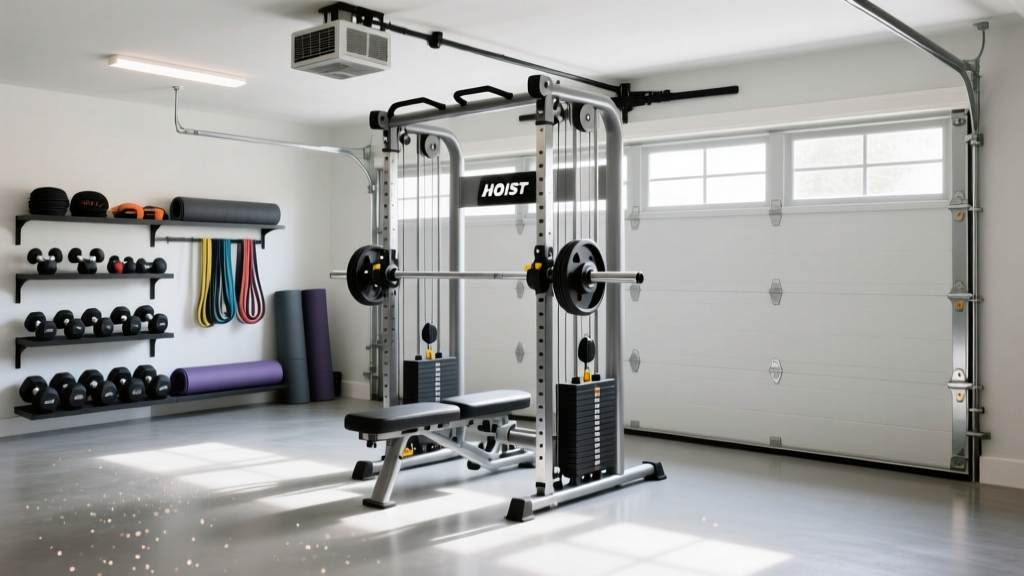
Hoist H210 Home Gym: Garage Flooring & Ventilation Mistakes
Avoid costly garage gym mistakes. Learn how to troubleshoot flooring and ventilation issues for your Hoist H210 home gym setup with our expert guide.

The Hostile Garage Environment: Why Your Hoist H210 Demands Precision
Installing a premium multi-station system like the Hoist H210 home gym in a garage is the ultimate goal for many strength athletes. With its dual weight stacks, functional trainer arms, and complex pulley routing, it offers commercial-grade versatility. However, the garage is arguably the most hostile environment for fitness equipment. Unsealed concrete sweats, temperatures fluctuate wildly, and the inherent slope of a garage floor can wreak havoc on precision machinery.
When setting up the Hoist H210 home gym, most lifters focus entirely on the assembly process, completely neglecting the foundational and atmospheric requirements of the space. The result? Binding linear bearings, frayed cables, flash rust on the weight stacks, and a compromised workout experience. In this troubleshooting guide, we will dissect the most common flooring and ventilation mistakes made during garage gym setups and provide exact, actionable solutions to protect your investment in 2026 and beyond.
Flooring Blunders That Destroy Cable Tracking
The Hoist H210 relies on perfectly aligned guide rods and aircraft-grade cables. If the machine's frame experiences even a slight torsional twist, the linear bearings will bind, causing uneven wear and catastrophic cable failure over time.
Mistake 1: Ignoring the Garage Floor Slope
Building codes require garage floors to slope toward the main door to allow water runoff, typically at a pitch of 1/8 inch per foot. Over the 4-to-5-foot footprint of a multi-station gym, this creates a 1/2-inch to 5/8-inch drop. If you simply place your Hoist H210 on the concrete and level it using only the manufacturer's adjustable feet, you may max out the threads or create uneven pressure points.
⚠️ Troubleshooting Fix: Before laying down any rubber mats, map the slope using a 48-inch digital level. Use high-density composite horseshoe shims (rated for 10,000+ lbs) under the machine's base plates to achieve true zero-level. Only after the frame is perfectly level and bolted together should you trim and fit your flooring around the base.Mistake 2: Ignoring Moisture Vapor Transmission (MVT)
Concrete is porous. Even if your garage looks dry, moisture vapor from the soil below constantly migrates upward. According to the EPA's Guide to Mold and Moisture, trapping this moisture under impermeable rubber mats creates a breeding ground for black mold and causes the concrete to spall over time.
The Fix: Perform a simple plastic sheet test. Tape a 2x2 foot square of 6-mil clear polyethylene to the concrete and leave it for 48 hours. If you see condensation underneath, you must lay down a dedicated vapor barrier (like a 6-mil polyethylene sheet or a specialized moisture-mitigating primer) before installing your rubber flooring.
Mistake 3: Using High-Deflection Foam Under Heavy Loads
Interlocking EVA foam tiles are cheap and easy to install, but they have a low compression deflection rating. When the 800+ lb Hoist H210 is loaded with plates and dynamic forces are applied during lat pulldowns or cable crossovers, foam compresses unevenly, shifting the machine's alignment.
| Flooring Material | Thickness | Shore A Hardness | Suitability for Hoist H210 |
|---|---|---|---|
| EVA Foam Tiles | 1/2 inch | 35-45 | Poor (Compresses under heavy static loads) |
| Standard Horse Stall Mats | 3/4 inch | 65-75 | Fair (Requires sealing, can have uneven thickness) |
| Vulcanized Rubber (e.g., Regupol) | 3/8 inch | 85-90 | Excellent (High density, minimal deflection) |
| Poured Polyurethane Base + Rubber Top | 1/2 inch | 90+ | Superior (Seamless, perfectly level, zero MVT) |
Ventilation & Climate Control: Preventing Flash Rust
Garages trap heat, exhaust fumes, and humidity. While the Hoist H210 features high-quality steel and protective coatings, the selector pins, guide rods, and weight stack carriages are highly susceptible to flash rust when relative humidity (RH) consistently exceeds 60%.
Mistake 4: Relying Solely on the Garage Door for Airflow
Opening the garage door during a summer workout seems logical, but it actually introduces heavy, humid outdoor air into the space. When that humid air hits the cooler steel of your weight stacks (especially if the garage was shaded and cooler earlier in the day), condensation forms instantly. The EPA's Indoor Air Quality guidelines emphasize that controlling the source of moisture and managing indoor humidity is critical for preventing material degradation and mold.
Mistake 5: Undersizing the Dehumidifier
A standard 35-pint residential dehumidifier from a big-box store will burn out in weeks when tasked with conditioning a 400-square-foot uninsulated garage. You need active air exchange and commercial-grade moisture extraction.
💡 Expert Setup Strategy: For a standard 2-car garage, invest in a commercial dehumidifier with a built-in condensate pump (e.g., the AlorAir Sentinel HD55 or a 70-pint equivalent). Route the drain hose directly into a utility sink or floor drain. Pair this with a proper whole-house or localized exhaust ventilation strategy to pull out stale air and VOCs from stored garage chemicals.Mistake 6: Neglecting Targeted Evaporation
General room ventilation isn't enough when you are actively sweating over the weight stack. Sweat contains salt, which accelerates oxidation on the Hoist H210's guide rods. Place a high-velocity air circulator (like a Vornado 660) positioned to blow directly across the machine's weight stacks and user platform. This creates a localized micro-climate that evaporates sweat immediately and keeps the steel components dry during high-intensity intervals.
Step-by-Step Troubleshooting Checklist for Existing Setups
If your Hoist H210 home gym is already installed and you are experiencing cable friction, sticky weight stacks, or a musty odor, run through this diagnostic checklist:
- Check the Level: Place a magnetic torpedo level on the main uprights and the cross-members. If the bubble is off-center, loosen the base bolts, insert composite shims under the low corners, and re-torque to the manufacturer's specifications.
- Inspect the Vapor Barrier: Lift a corner of your rubber flooring. If the concrete beneath is dark, damp, or smells like mildew, you have an MVT issue. You will need to remove the flooring, treat the concrete with a silane/siloxane penetrating sealer, and reinstall.
- Audit the Guide Rods: Run a clean, white microfiber cloth over the linear guide rods. If it comes away with orange or brown dust, flash rust has begun. Clean the rods with a specialized gym equipment cleaner (avoid harsh degreasers that strip factory lubricants), and reapply a dry PTFE or silicone-based lubricant.
- Calibrate the Humidity: Place a digital hygrometer at the base of the machine and another near the ceiling. If the differential is more than 5%, your garage lacks proper air circulation. Install a ceiling-mounted exhaust fan and a destratification fan to mix the air column.
Final Verdict: Protecting Your Investment
The Hoist H210 home gym is a masterpiece of biomechanical engineering, designed to last decades. However, its longevity in a garage environment is entirely dependent on how well you mitigate the structural and atmospheric flaws of the space. By addressing the garage floor slope with precision shimming, blocking moisture vapor transmission, and implementing a commercial-grade dehumidification and targeted airflow strategy, you transform a hostile concrete box into a climate-controlled, high-performance training facility. Don't let a $50 flooring mistake or a neglected humidity spike compromise a premium multi-station investment.
More gear to consider
All reviews
Space-Saving Foldable Home Gyms & Custom Home Gym Sign Ideas

The Gold Home Gym Trend: 2026 Garage Flooring & Ventilation Guide

Do It Yourself Home Gym Maintenance for Small Apartments
Body Solid G1S Home Gym Reviews: Weight Stacks & Space Layouts

Beginner Starter Kit: Space Layouts For Home Gym Leg Exercises
