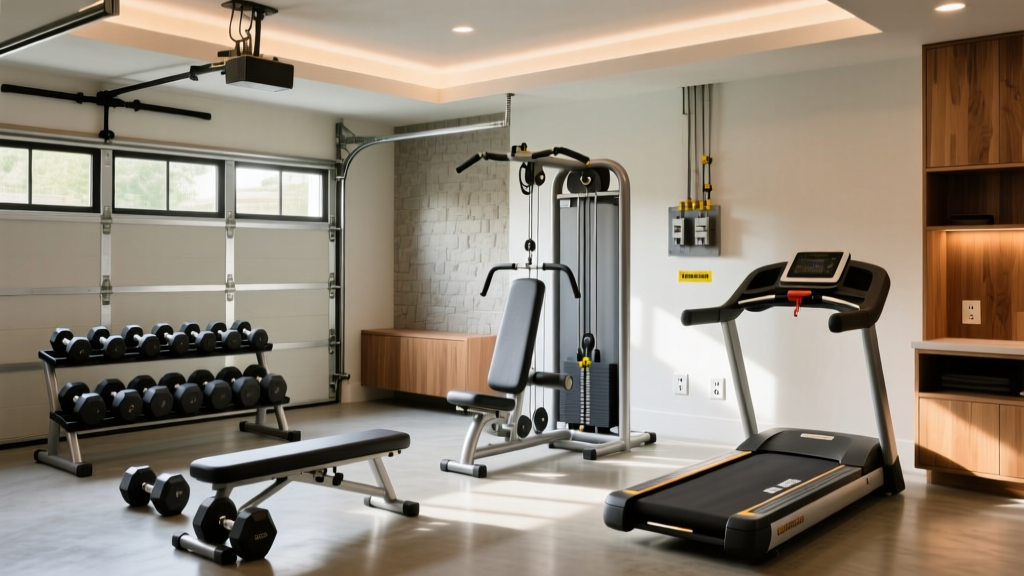
Electrical Mistakes to Avoid When You Convert Garage to Home Gym
Avoid costly and dangerous wiring errors. Learn the essential electrical and safety requirements when you convert garage to home gym in our expert guide.

When you decide to convert garage to home gym, the focus usually lands on rubber flooring, squat racks, and cardio machines. However, the most critical and frequently botched aspect of a garage gym build is the electrical infrastructure. Standard residential garages are typically wired to support a garage door opener, a few LED bulbs, and the occasional power drill—not the simultaneous draw of a 3.0 HP treadmill, a 12,000 BTU mini-split air conditioner, and a commercial-grade rowing machine.
Making electrical mistakes during your build doesn't just result in the annoyance of tripped breakers; it creates severe fire hazards and can permanently damage the sensitive logic boards in expensive fitness equipment. According to the National Fire Protection Association (NFPA), electrical failures and malfunctions are a leading cause of garage fires, which tend to spread faster and cause more damage than fires in other parts of the home.
Here is a comprehensive troubleshooting guide and breakdown of the most common electrical mistakes homeowners make when building a garage gym, and how to fix them.
The 20-Amp Shared Circuit Trap
The most pervasive mistake in garage gym setups is plugging heavy-draw cardio equipment into a shared 15-amp or 20-amp circuit. In many homes, the garage shares a circuit with an exterior outlet, a bathroom, or a bedroom.
High-end residential treadmills, such as the Sole F85 or NordicTrack Commercial 2450, require a dedicated 20-amp circuit. Under peak load (maximum incline with a heavy user), these machines can draw 15 to 18 amps continuously. If your garage lighting or a space heater is on the same circuit, the cumulative draw will exceed the breaker's threshold, causing it to trip. Worse, if the wiring is 14 AWG (rated for 15 amps) but the breaker was improperly swapped to 20 amps by a previous homeowner, the wires will overheat inside the walls before the breaker ever trips.
⚠️ Troubleshooting Warning: Never swap a 15-amp breaker for a 20-amp breaker without verifying that the wall wiring is 12 AWG copper. Upgrading the breaker without upgrading the wire is a severe fire code violation.GFCI Nuisance Tripping: Code vs. Equipment
The National Electrical Code (NEC) mandates Ground Fault Circuit Interrupter (GFCI) protection for all 125-volt, 15-amp and 20-amp receptacles in garages. This is a vital safety measure to prevent electrocution in damp environments. However, it creates a massive headache for gym owners.
Treadmills and ellipticals use large DC motors and variable frequency drives. When you start a treadmill, the motor experiences an "inrush current"—a momentary spike that can exceed 30 amps for a fraction of a second. This spike, combined with the harmonic distortion from the motor's electronics, frequently tricks standard GFCI receptacles into detecting a "ground fault," causing nuisance tripping mid-workout.
How to Troubleshoot GFCI Trips
- Do not remove the GFCI protection. This violates NEC Article 210.8(A)(2) and voids your home insurance in the event of a fire.
- Upgrade the GFCI type. Standard $15 GFCI wall receptacles are highly sensitive to motor noise. Have an electrician replace the standard breaker in your main panel with a high-quality GFCI circuit breaker (such as a Square D QO series or Eaton BR series GFCI breaker). Panel-level GFCI breakers handle motor inrush currents much better than point-of-use wall receptacles.
- Check for actual ground faults. If the new breaker still trips, inspect your equipment's power cord for micro-abrasions caused by dragging it across raw concrete or horse stall mats.
Load Calculator: What Your Garage Gym Actually Draws
To properly plan your electrical layout, you must understand the actual amperage requirements of your gear. The Electrical Safety Foundation International (ESFI) recommends mapping out all permanent and portable loads before adding new circuits. Below is a realistic breakdown of common garage gym equipment.
| Equipment Type | Peak Amperage (120V) | Circuit Requirement | Wire Gauge Needed |
|---|---|---|---|
| Heavy Duty Treadmill (e.g., Sole F85) | 15A - 18A | Dedicated 20A | 12 AWG |
| Smart Rower (e.g., Concept2 RowErg) | 2A - 4A | Shared 15A/20A | 14 AWG or 12 AWG |
| 12,000 BTU 110V Mini-Split HVAC | 10A - 12A | Dedicated 15A/20A | 12 AWG (Recommended) |
| 1500W Portable Space Heater | 12.5A | Dedicated 15A/20A | 14 AWG or 12 AWG |
| Commercial Multi-Gym (e.g., Life Fitness) | N/A (Often 240V) | Dedicated 240V 30A | 10 AWG |
Climate Control Wiring: Mini-Splits and Space Heaters
Garages are uninsulated concrete boxes that act like ovens in the summer and freezers in the winter. To make the space usable, most gym owners install climate control. The mistake here is underestimating the startup load of compressors.
If you install a 120V ductless mini-split (like the Mr. Cool DIY 12k BTU), it requires a dedicated 15-amp or 20-amp circuit. Many DIYers attempt to wire the mini-split's interior disconnect to the same circuit that powers their garage overhead lights. When the mini-split's compressor kicks on, the voltage drop causes the LED gym lights to flicker and can prematurely burn out the lighting drivers.
Expert Tip: Avoid using 1500W portable space heaters in a garage gym. They draw a continuous 12.5 amps, maxing out standard 15-amp circuits and creating a massive fire risk if placed too close to rubber flooring or foam rollers. Invest in a hardwired 240V garage heater or a dedicated mini-split instead.
Static Shock and Flooring Grounding Failures
A highly specific, non-obvious issue when you convert garage to home gym involves static electricity. Most garage gyms use 3/4-inch thick vulcanized rubber horse stall mats over raw concrete. In dry winter months, the friction between your shoes and the rubber mats generates a massive static charge.
When you reach out to grab the metal frame of your treadmill or squat rack, you receive a painful static shock. Worse, this static discharge can arc into the treadmill's console, frying the EEPROM chip or corrupting the touchscreen memory.
Troubleshooting Static Build-Up
- Anti-Static Spray: Treat your rubber flooring weekly with a commercial anti-static spray (like Static Guard or a DIY mixture of water and fabric softener).
- Equipment Grounding: Ensure your fitness equipment is plugged into a properly grounded 3-prong outlet. Use a cheap outlet tester ($10 at any hardware store) to verify the garage receptacle actually has a functional ground wire. Many older garages have 3-prong outlets that were never actually grounded.
- Humidity Control: Static thrives in air with less than 30% humidity. Running a small humidifier in the winter months will naturally dissipate static charges in the air.
Step-by-Step Troubleshooting for Tripped Breakers
If you are mid-workout and the power dies, follow this systematic troubleshooting protocol to identify the failure point without risking electrical shock:
- Unplug Everything: Disconnect all fitness equipment, space heaters, and fans from the affected circuit.
- Reset the Breaker: Go to your main electrical panel. Push the tripped breaker firmly to the OFF position, then flip it to ON. (If it immediately trips again with nothing plugged in, you have a short circuit in the wall wiring—call an electrician immediately).
- Check GFCI Receptacles: If the breaker holds but the outlets are dead, locate the GFCI receptacle in the garage and press the 'Reset' button.
- Isolate the Load: Plug your equipment back in one by one. Turn on the treadmill and raise it to maximum incline. If the breaker trips only when the space heater is turned on, you have confirmed an overloaded shared circuit.
When to Call a Licensed Electrician (and What It Costs)
If your garage only has one or two standard outlets on a shared 15-amp circuit, you must hire a licensed electrician to pull new lines. Attempting to fish wires through finished drywall or garage fire-blocks without proper conduit is dangerous and violates local building codes.
As of 2026, here is what you can expect to budget for common garage gym electrical upgrades:
- Running a new dedicated 20A, 120V circuit: $300 – $600 (depending on the distance from the main panel and whether walls are open or finished).
- Installing a 240V outlet (for commercial gear or heavy HVAC): $450 – $850.
- Upgrading a 100-Amp main panel to 200-Amps: $1,800 – $3,500. (Necessary if your home's total electrical load is maxed out and you are adding multiple dedicated lines and a mini-split).
Converting your garage into a premium training space is a massive investment in your health. Protect that investment by ensuring your electrical foundation is robust, code-compliant, and capable of handling the serious amperage that modern home gym equipment demands.
More gear to consider
All reviews
Marcy Club Home Gym: Strength Setup & Longevity Tips

Bowflex PR1000 Home Gym: The Ultimate Beginner Starter Kit Guide

Designing the Dream Home Gym: Floor Plans & Expert Gear Picks

Gym Electrical Safety: Beyond the Body Solid G2B Home Gym Manual
