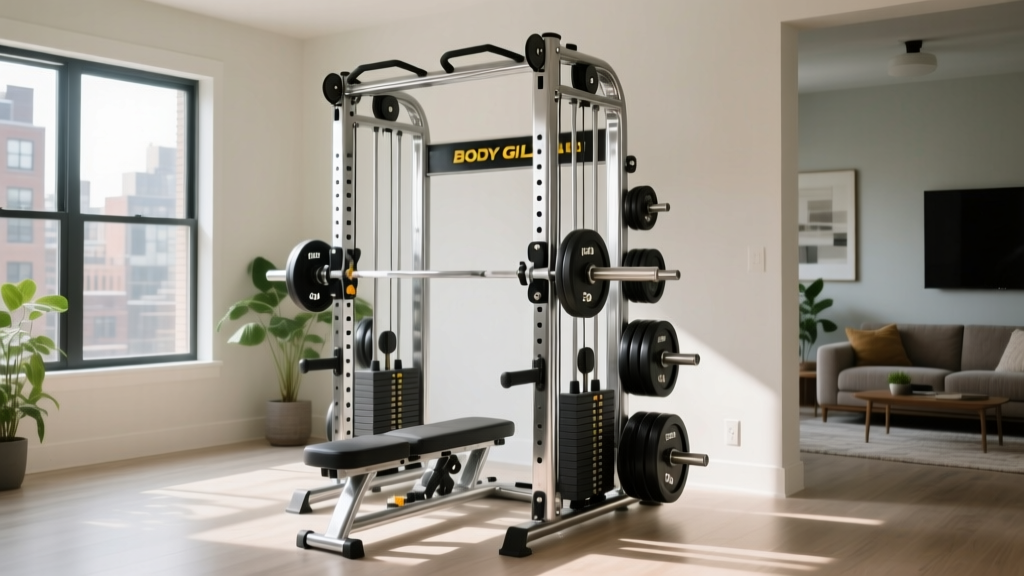
Smart Home Gym Interior Design: Compact Foldable Solutions
Master your home gym interior design with compact, foldable equipment. Explore layout strategies, clearance matrices, and space-saving gear for 2026.

Redefining Home Gym Interior Design for Compact Spaces
The era of relegating fitness equipment to a cluttered, unfinished basement is over. In 2026, modern home gym interior design focuses on seamless integration, multi-functional living spaces, and architectural harmony. For apartment dwellers, condo owners, and those with limited square footage, the challenge is balancing heavy-duty functionality with aesthetic minimalism. The solution lies in compact, foldable, and wall-mounted fitness solutions that disappear when not in use.
According to trend reports from Architectural Digest, multi-use rooms are now a standard expectation in residential design. A guest bedroom or home office must effortlessly transition into a high-performance training zone without looking like a commercial fitness center. This requires a strategic approach to spatial zoning, equipment selection, and structural mounting.
The Engineering of Foldable Power Racks
The centerpiece of any strength training setup is the power rack. Traditional 4-post cages consume 16 to 24 square feet of permanent floor space. Foldable wall-mounted racks eliminate this footprint, but not all hinges are created equal. When planning your layout, you must understand the mechanical differences between the two industry leaders.
PRx Performance Profile ONE vs. Rogue RML-3W
The PRx Performance Profile ONE folding squat rack utilizes a proprietary hinge system that allows the uprights to fold completely flat against the wall, protruding a mere 4 inches. Priced around $695, it requires direct mounting into 16-inch or 24-inch on-center wooden studs using 3/8-inch lag bolts. Its 1,000 lb capacity is sufficient for 90% of home lifters, and its minimal folded profile allows you to mount it behind a door swing or in a narrow hallway alcove.
Conversely, the Rogue RML-3W Fold Back Wall Mount Rack (approximately $725) folds to a depth of 21.5 inches. While bulkier when stored, it utilizes a heavy-duty pin-and-pipe system and requires Rogue’s proprietary wooden or steel stringer mounting system for optimal weight distribution. As detailed in the engineering specs from Rogue Fitness, the stringers distribute the dynamic load of kipping pull-ups and heavy squats across a wider surface area, reducing the shear stress on individual drywall anchors.
⚠️ Structural Warning: Never mount folding racks or digital cable machines directly to drywall or metal studs without specialized toggle bolts and backing boards. The dynamic force of a failed lift or a kipping pull-up can generate over 500 lbs of shear force, ripping standard anchors out of the wall. Always locate solid wood studs or install a 3/4-inch plywood backing board secured into the studs before mounting your equipment.Digital and Cable Solutions: Hiding in Plain Sight
If your home gym interior design leans toward ultra-modern or minimalist aesthetics, digital resistance systems offer unparalleled space optimization. These machines replace hundreds of pounds of iron plates with electromagnetic resistance.
- Tonal 2: A wall-mounted digital system that folds its arms inward. It requires a strict 16" or 24" stud spacing and a dedicated 15-amp circuit. When powered down, it resembles a high-end full-length mirror or sleek appliance, measuring just 21.5 inches wide.
- Speediance Smart Home Gym: A freestanding, all-in-one cable machine that folds down into a footprint of roughly 2 square feet. Because it doesn't require wall mounting, it is the ultimate solution for renters who cannot drill into studs but still want up to 220 lbs of digital cable resistance.
Clearance & Footprint Comparison Matrix
Proper spatial planning requires understanding both the "stored" footprint and the "operational" clearance. The American Council on Exercise (ACE) recommends specific safety buffers to prevent injury and equipment damage. Below is a planning matrix for standard compact equipment:
| Equipment Type | Stored Footprint | Operational Clearance Needed | Min. Ceiling Height | Avg. Cost (2026) |
|---|---|---|---|---|
| Folding Rack (PRx) | 4" D x 48" W | 96" W x 48" D | 84" (96" ideal) | $695 |
| Folding Rack (Rogue) | 21.5" D x 49" W | 96" W x 60" D | 84" (96" ideal) | $725+ |
| Wall-Mount Digital (Tonal) | 5" D x 21.5" W | 72" W x 48" D | 84" | $3,995 |
| Folding FID Bench | 12" D x 18" W | 48" L x 24" W | N/A | $250 - $400 |
Layout Strategies: The Triangle of Movement
When designing a compact gym, avoid pushing all equipment against the walls. Instead, utilize the Triangle of Movement framework. This interior design principle divides your room into three distinct zones to maintain flow and safety:
- The Heavy Zone (Anchor Point): This is where your folding rack and barbell reside. It must be centered on the strongest structural wall, with a minimum of 96 inches of lateral width to accommodate a standard 7-foot Olympic barbell plus 6 inches of clearance on each side for loading plates.
- The Accessory Zone (Flex Space): Located adjacent to the Heavy Zone, this area houses your adjustable dumbbells (e.g., Nuobell or PowerBlock) and kettlebells. Use a low-profile, wall-mounted shelving unit no higher than 36 inches to keep the sightlines open and the room feeling spacious.
- The Mobility Zone (Open Floor): A dedicated 4x6 foot clear space for yoga mats, stretching, and floor work. This zone should be positioned near a window or a wall-mounted mirror to enhance natural light and create the illusion of a larger room.
Aesthetic Integration: Flooring and Acoustics
The fastest way to ruin a room's interior design is by laying down thick, pungent, interlocking foam tiles. For a premium, multi-use space, opt for 8mm (5/16-inch) vulcanized rubber tiles. They provide ample shock absorption for dropped dumbbells, protect hardwood subfloors, and feature a tight, non-porous seam that mimics high-end commercial flooring. Furthermore, 8mm thickness ensures that your folding rack's base hinges won't be obstructed by the flooring material—a common installation error.
To manage acoustics in a multi-use room, install PET (polyethylene terephthalate) acoustic panels on the walls opposite the rack. These panels come in wood-slat finishes that elevate the room's aesthetic while dampening the sharp frequencies of clanking iron and heavy breathing.
Common Layout Failure Modes to Avoid
Even with the best foldable equipment, poor spatial planning can render a gym unusable. Watch out for these specific edge cases:
- The Door Swing Collision: Measure the exact arc of your room's door. If the door swings inward, ensure your folded rack or stored bench does not intersect the 36-inch door swing path. Install a heavy-duty wall stopper to prevent the doorknob from punching a hole in your drywall or mirror.
- Ceiling Fan Decapitation: Standard residential ceilings are 8 feet (96 inches). If you install a pull-up bar on a folding rack that sits 84 inches high, you only have 12 inches of head clearance. Remove ceiling fans directly above the rack and replace them with flush-mount LED lighting to prevent catastrophic collisions during muscle-ups or jump rope sessions.
- Collar Clearance Oversight: Many users measure the 84-inch barbell but forget the spring collars or clamp locks, which add 2 to 4 inches per side. Always plan for a 96-inch lateral operational width minimum.
Frequently Asked Questions
Can I mount a folding rack to a brick or concrete wall?
Yes, but it requires specialized masonry hardware. You must use wedge anchors or Tapcon screws (minimum 3/8" diameter, 3" embedment depth) and a hammer drill with a carbide-tipped masonry bit. Concrete provides superior shear strength compared to wood studs, making it ideal for heavy kipping movements, provided the wall is not a brittle cinder block.
How do I hide my barbell and plates when the gym is not in use?
Utilize vertical wall storage. Wall-mounted plate trees and vertical barbell holders can be tucked into the corner or mounted on the side of the folding rack's stringers. For a high-end interior design look, some custom woodworkers build shallow, louvered cabinets that enclose the plates while allowing ventilation to prevent rust.
Is a folding rack safe for heavy powerlifting?
Folding racks from reputable brands like PRx and Rogue are rated for 1,000 to 1,500 lbs of static weight. However, the limiting factor is your wall's structural integrity, not the steel. As long as you are mounting into solid 2x4 or 2x6 wooden studs (or reinforced concrete) using the manufacturer's specified lag bolts, a folding rack is perfectly safe for heavy squats and bench presses.
More gear to consider
All reviews
Marcy Diamond Elite Home Gym Outdoor Weather Care

How Much Weight Is a Leg Press Machine? Layout & Floor Guide

Floor Plan Guide & Marcy Home Gym Workout Routine for Beginners

Bowflex PR1000 Home Gym: The Ultimate Beginner Starter Kit Guide
Home Gym with Sauna Setup: How Much Weight You Really Need