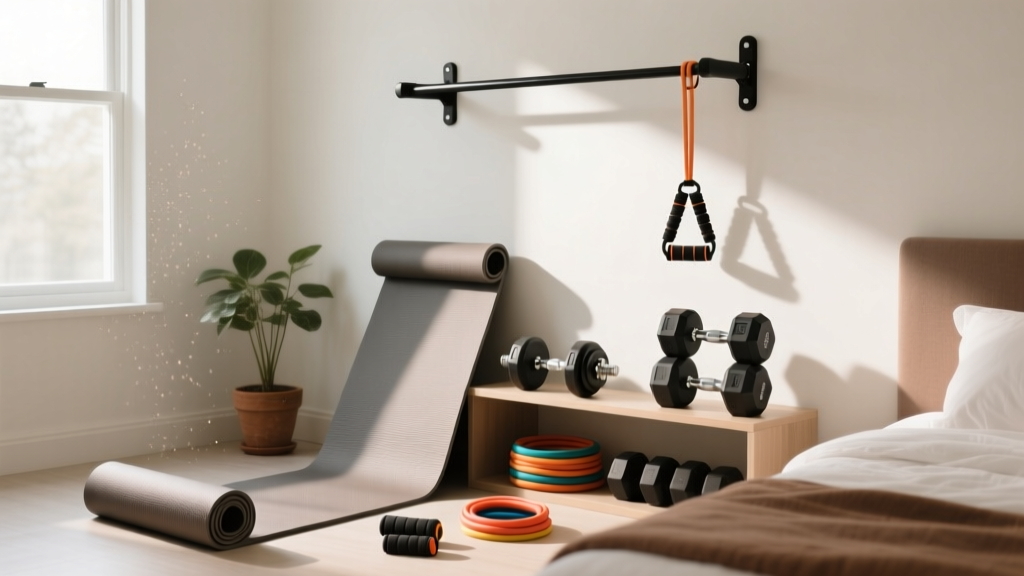
Maintaining Your Bedroom Home Gym: Longevity Tips for Small Spaces
Learn how to maintain your bedroom home gym equipment. Discover longevity tips for foldable gear, dust prevention, and floor protection in small spaces.

The Unique Wear-and-Tear of Compact Fitness Gear
Designing a bedroom home gym is a triumph of spatial engineering, allowing you to maintain your fitness regimen without sacrificing square footage. However, compact, foldable, and multi-functional equipment faces a highly specific set of environmental stressors that standard garage or basement gym gear simply does not encounter. When you mix the micro-climate of a bedroom with the mechanical complexity of folding hinges and compact motors, the risk of premature equipment failure increases exponentially.
Unlike a garage gym where the primary enemies are extreme temperature fluctuations and rust, a bedroom home gym battles a silent, pervasive threat: textile dust, ambient humidity from adjacent bathrooms, and mechanical fatigue from constant folding and unfolding. According to the Environmental Protection Agency (EPA), indoor environments with high textile presence (like bedrooms with carpets, bedding, and curtains) harbor significantly higher levels of airborne particulates and lint. When this lint mixes with sweat and lubricants, it creates a corrosive sludge that seizes moving parts and chokes compact motors.
This comprehensive maintenance guide provides actionable, expert-level protocols to maximize the lifespan of your compact fitness equipment, ensuring your investment survives well into 2026 and beyond.
Expert Insight: Never use standard wet silicone sprays on bedroom gym equipment. Wet silicones act as a magnet for cotton lint and carpet fibers, accelerating the degradation of folding mechanisms and treadmill belts. Always opt for PTFE-based dry lubricants.Dust and Climate Control: The Silent Equipment Killers
Bedrooms are inherently dusty environments. Every time you fold a comforter or walk across a carpeted room, microscopic fibers become airborne. For equipment like the Echelon EX-3 compact bike or the Bowflex SelectTech 552 adjustable dumbbells, this dust is a primary failure point.
Protecting Magnetic Resistance Flywheels
Most compact indoor cycles utilize magnetic resistance. The gap between the neodymium magnets and the aluminum flywheel is incredibly narrow—often less than 3 millimeters. When bedroom lint settles into this gap, it mixes with ambient humidity to form a dense felt-like pad. This causes the resistance knob to feel gritty, and over time, it can warp the flywheel alignment.
- Weekly Protocol: Use a can of compressed air (held upright to prevent liquid propellant discharge) to blow out the flywheel housing. Do this near an open window or with a HEPA vacuum nozzle positioned directly opposite the airflow to catch the dislodged fibers.
- Monthly Protocol: Wipe down the exterior casing with a microfiber cloth lightly dampened with a 70% isopropyl alcohol solution. Avoid concentrations higher than 70%, as 90%+ alcohol will rapidly dry out and crack the rubberized seals protecting the internal electronics.
Managing Humidity and MDF Warping
Many budget-friendly foldable weight benches (such as the popular Flybird FLYBIRD Weight Bench) utilize Medium-Density Fiberboard (MDF) or plywood beneath the vinyl padding to keep the unit lightweight. If your bedroom is adjacent to a bathroom, or if you sleep with a humidifier running, ambient humidity levels can easily exceed 60%. Prolonged exposure causes MDF to swell and warp, tearing the vinyl stitching from the inside out.
The Fix: Keep a few reusable silica gel desiccant packets (indicating orange-to-green moisture absorption) tucked beneath the bench seat or inside the hollow steel tubing of your equipment frames. Replace or recharge them in the oven every 90 days.
Lubricating Folding Mechanisms and Hinges
The defining feature of a bedroom home gym is foldability. Whether it is a wall-mounted squat rack or a foldable walking pad like the UREVO URtm025, the hinges bear immense torsional stress. Metal-on-metal friction in these joints leads to micro-fractures and squeaking, which is particularly disruptive in a bedroom environment.
The PTFE Dry Lube Protocol
To maintain folding joints without attracting bedroom dust, you must use a Polytetrafluoroethylene (PTFE) dry lubricant, such as the WD-40 Specialist Dirt & Dust Resistant Dry Lube (typically retailing around $8-$10). PTFE dries in seconds, leaving a micro-thin, non-stick film that reduces friction without providing a tacky surface for lint to adhere to.
- Deploy the Equipment: Fully unfold the bench or walking pad to expose the primary tension hinges.
- Clean the Joint: Use a stiff nylon brush and a vacuum to remove existing black oxide dust (the result of metal friction) and old, clumped grease.
- Apply PTFE: Spray the PTFE dry lube directly into the hinge barrel from a distance of 4 inches. Use the attached precision straw to avoid overspray on your bedroom flooring.
- Cycle the Joint: Fold and unfold the equipment 5 to 10 times to work the lubricant deep into the pivot pin.
- Wipe Excess: Even though it is a dry lube, wipe the exterior of the hinge with a dry rag to ensure a completely clean finish.
Compact Cardio: Preventing Lint Ingestion in Walking Pads
Under-desk treadmills and foldable walking pads are staples of the bedroom home gym. However, their low-to-the-ground profile makes them literal vacuum cleaners for bedroom floors. The most common catastrophic failure mode for compact walking pads is not motor burnout from user weight, but rather lint ingestion.
As the belt cycles, static electricity builds up, pulling carpet fibers, pet hair, and cotton dust under the deck and directly into the motor housing ventilation grilles. This insulates the motor's internal windings, causing it to overheat and trip the thermal safety shutoff, eventually frying the PCB (Printed Circuit Board).
Failure Edge Case: If your walking pad suddenly stops mid-stride and emits a faint ozone smell, the motor has overheated due to blocked vents. Unplug it immediately, remove the front motor shroud (usually 4 Phillips-head screws), and use a soft-bristle brush and HEPA vacuum to clear the copper windings. Never use compressed air here, as it can force conductive dust deeper into the electronics.
Floor Protection and Vibration Dampening Matrix
In an apartment or second-story bedroom, impact noise and vibration transfer are critical concerns. Dropping a pair of adjustable dumbbells or the rhythmic thud of a walking pad can damage your subfloor and anger neighbors. Choosing the right flooring is a balance of sound dampening, sweat resistance, and thickness constraints (bedroom doors often have less than 1/2 inch of clearance).
| Material Type | Thickness | Sound Dampening | Sweat/Moisture Resistance | Est. Cost (per sq ft) |
|---|---|---|---|---|
| 3/8" Vulcanized Rubber | 9.5mm | Excellent (Absorbs high-impact drops) | Superior (Non-porous, won't harbor bacteria) | $2.50 - $3.50 |
| High-Density EVA Foam | 14mm | Fair (Good for yoga, poor for heavy drops) | Poor (Absorbs sweat, degrades over time) | $0.80 - $1.20 |
| PVC Chair Mat (Rigid) | 3mm | Poor (Transfers vibration to subfloor) | Excellent (Easy to wipe clean) | $1.50 - $2.00 |
The Expert Recommendation: For a bedroom home gym featuring adjustable dumbbells or kettlebells, invest in interlocking 3/8" vulcanized rubber tiles. If door clearance is an issue, use a low-profile PVC mat strictly under walking pads to allow the machine to slide easily under the bed, while using rubber tiles in your free-weight zone.
Caring for Smart Screens and Mirrors
If your bedroom setup includes smart equipment like the Echelon Reflect 40 or a wall-mounted Peloton Guide, UV exposure and sweat micro-splatter are your main adversaries. Bedrooms often feature large windows to let in natural light, but direct UV rays will rapidly degrade the anti-glare coatings on fitness displays, causing permanent yellowing and touch-screen dead zones.
- UV Mitigation: Apply a static-cling UV-blocking window film (such as Gila UV Block) to bedroom windows facing your equipment. This blocks up to 99% of UV rays without requiring adhesives that damage window frames in rental apartments.
- Screen Cleaning: Never use glass cleaners containing ammonia (like Windex) on smart mirrors or touchscreens. Ammonia strips the oleophobic (fingerprint-resistant) coating. Instead, use a dedicated screen wipe or a microfiber cloth lightly misted with distilled water and a single drop of mild dish soap.
The 90-Day Bedroom Gym Longevity Checklist
To ensure your compact equipment remains reliable and safe, integrate this checklist into your seasonal home maintenance routine. Proper upkeep not only extends the life of your gear but also ensures a safe training environment, aligning with the safety standards recommended by organizations like the American Heart Association for home exercise spaces.
- Inspect Poly-V Belts: Check the drive belts on compact bikes and rowers. If you see fraying or black dust accumulating beneath the belt, it is slipping and requires tension adjustment or replacement.
- Tighten Hardware: The vibration from small spaces amplifies over time. Use a torque wrench to check all structural bolts on foldable racks and benches. Over-tightening can strip the threads on lightweight aluminum frames; adhere strictly to the manufacturer's Newton-meter (Nm) specifications.
- Deep Clean Vinyl Upholstery: Use an enzyme-based cleaner on bench pads to break down sweat proteins that cause vinyl to crack and peel. Follow up with a water-based vinyl protectant to restore UV and moisture resistance.
- Test Safety Clips: Inspect the spring-loaded safety pins on compact squat stands. Ensure the internal springs are not rusted and that the pins snap back into the locked position instantly.
By treating your bedroom home gym as a precision environment rather than a casual storage corner, you protect your financial investment and ensure that your compact gear remains as reliable on day 1,000 as it was on day one.
More gear to consider
All reviews
Best Marcy Multifunction Home Gym Layouts & Setup Guide (2026)
Complete Home Gym Floor Plan Guide & Top Home Gym Door Reviews

Marcy Diamond Elite Home Gym Outdoor Weather Care

Pacific Fitness Malibu Home Gym vs Foldable Alternatives (2026)

Renter-Friendly Home Gym Painting: Mistakes & Fixes
