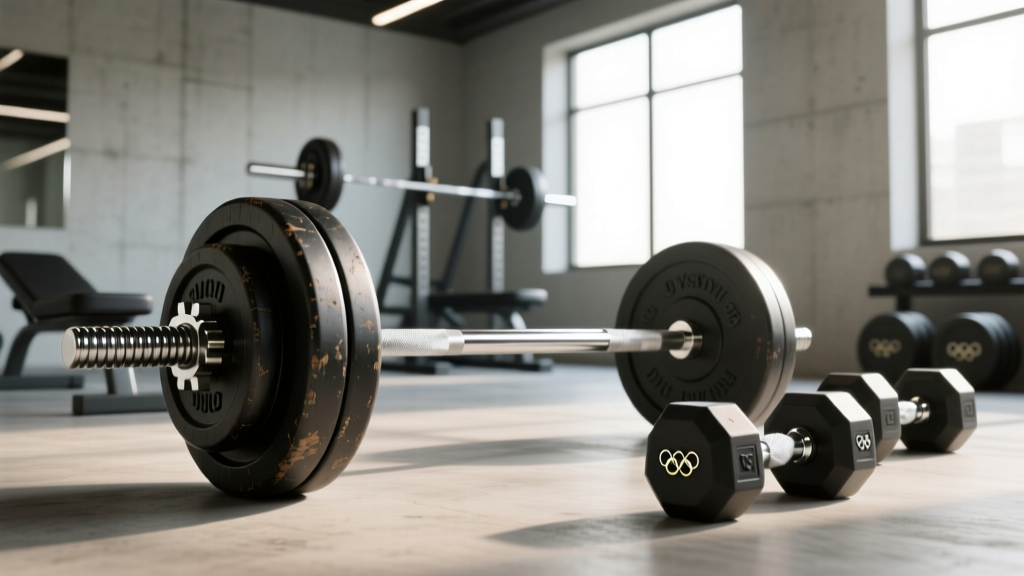
Beyond Weight Training Using Dumbbells: Barbell Knurling Guide
Transitioning from weight training using dumbbells? Master Olympic barbell weight tolerances, tensile strength, and knurling patterns with our expert guide.

The Leap from Weight Training Using Dumbbells to Olympic Barbells
For years, weight training using dumbbells has been your foundation. Dumbbells are unparalleled for unilateral development, joint stabilization, and correcting muscular imbalances. However, as your strength progresses, the absolute load you can move with dumbbells hits a hard ceiling—both due to grip fatigue and the sheer logistics of hoisting 120-pound dumbbells into position for a bench press or squat. Transitioning to an Olympic barbell is the natural next step for maximizing central nervous system (CNS) adaptation and absolute strength.
But walking into the barbell market in 2026 can be overwhelming. Unlike the relatively simple rubber or urethane coatings on dumbbells, Olympic barbells are precision-engineered tools defined by tensile strength, whip, and, most importantly, knurling. When you are pulling a 405-pound deadlift, the knurling is the only physical connection between your body and the load. This in-depth buying guide decodes barbell weight tolerances, steel psychology, and knurling geometries to ensure your first barbell purchase matches your advanced lifting capabilities.
Decoding Knurling: The Biomechanics of Grip
Knurling is the diamond-patterned machining cut into the steel shaft of the barbell. The depth, angle, and shape of these cuts dictate how the bar interacts with the epidermis of your hands. According to biomechanical analyses of grip strength published by resources like BarBend, the aggressiveness of the knurl directly correlates to force output and bar security during heavy compound lifts.
⚠️ The Center Knurl Dilemma: Powerlifting bars feature a center knurl to grip the shirt during low-bar back squats. Olympic weightlifting bars and general fitness bars omit it to prevent tearing the chest and neck during cleans and front squats. Choose based on your primary modality.1. Volcano Knurling (The Gold Standard)
Volcano knurling is the hallmark of premium power and hybrid bars. The lathe cuts deep grooves, but instead of leaving a sharp point, the very tip of the peak is blunted, creating a microscopic "rim" or crater. This rim bites aggressively into the ridges of your fingerprints without piercing the skin. Best for: Heavy deadlifts, low-rep strength work, and lifters who use chalk.
2. Mountain Knurling (The Hand-Tearers)
Mountain knurling leaves the peaks completely sharp and pointed. It feels like a cheese grater. While it provides immense grip security for maximal singles, it will shred your calluses during high-volume dumbbell-style accessory work or high-rep WODs. Best for: Equipped powerlifters and specialized deadlift bars.
3. Hill Knurling (The High-Rep Specialist)
Hill knurling features shallow cuts with rounded, smooth peaks. It is passive and forgiving. If you are doing high-rep overhead presses or transitioning from high-rep dumbbell circuits, a hill knurl will save your hands. Best for: CrossFit, high-volume hypertrophy, and beginner lifters.
Barbell Weight, Whip, and Tensile Strength
When upgrading from weight training using dumbbells, you must understand that not all 20kg (44lb) bars are created equal. The defining metric of a barbell's structural integrity is Tensile Strength, measured in Pounds per Square Inch (PSI). This dictates how much load the bar can take before it permanently bends (yields) and how much "whip" (elastic deformation) it exhibits during dynamic movements.
- Under 165,000 PSI: Avoid entirely. These bars will permanently bend if dropped with heavy bumper plates.
- 190,000 PSI: The sweet spot for Olympic weightlifting and general fitness. Provides excellent "whip" to help bounce the bar out of the hole in a clean or snatch.
- 215,000+ PSI: Elite powerlifting territory. Extremely stiff, ensuring the bar doesn't wobble or bounce on your back during a 500lb squat.
2026 Market Comparison: Top Olympic Barbells
Below is a comparison matrix of three industry-leading barbells that cater to different needs, reflecting current 2026 pricing and specifications. For verified specs, you can always cross-reference manufacturers like Rogue Fitness.
| Model | Tensile Strength | Knurl Type | Finish | Price (Approx.) |
|---|---|---|---|---|
| Rogue Ohio Power Bar | 205,000 PSI | Volcano (Aggressive) | Stainless Steel / Cerakote | $295 - $395 |
| Kabuki New Generation Power Bar | 250,000 PSI | Volcano (Deep) | Electroless Nickel | $330 - $450 |
| Eleiko Olympic WL Bar | 215,000 PSI | Hill (Moderate) | Hard Chrome | $1,100+ |
Weight Tolerances and IWF/IPF Calibration
A standard Olympic barbell weighs exactly 20 kilograms (44.09 pounds). However, manufacturing variances mean cheaper bars can weigh anywhere from 18.5kg to 21.5kg. When you are tracking progressive overload, a 3-pound discrepancy in the bar itself ruins your data.
Certified competition bars adhere to strict tolerances set by the International Weightlifting Federation (IWF) and International Powerlifting Federation (IPF). These organizations mandate a weight tolerance of +/- 5 grams. While you may not need an IWF-certified bar for your home gym, purchasing from reputable brands ensures the bar weighs within +/- 10 to 20 grams of the 20kg mark, maintaining the integrity of your programmed percentages.
"The transition from dumbbells to barbells requires a recalibration of your grip. Dumbbells rely on wrap-around friction; barbells rely on the mechanical interlocking of the knurl with your skin's dermal ridges. Treat your knurl maintenance as seriously as your programming." — Garage Gym Reviews Equipment Analysis
Finish Types: How Coatings Alter Grip Feel
The coating applied to the barbell shaft drastically changes how the knurling feels and how well it resists oxidation (rust) in a home gym environment.
- Bare Steel: Offers the ultimate, unfiltered grip feel. The knurl bites exactly as machined. Drawback: Requires weekly oiling and brushing to prevent rust.
- Stainless Steel: The premium choice for 2026. It provides near-bare steel grip feel while being entirely impervious to rust. Highly recommended for humid garages.
- Hard Chrome: Durable and rust-resistant, but the chrome plating fills in the knurling valleys slightly, resulting in a less aggressive grip.
- Cerakote: A ceramic polymer coating available in various colors. Excellent rust resistance, but adds a microscopic layer of thickness that can slightly dull sharp volcano knurling.
Frequently Asked Questions
Can I use an Olympic barbell for the same exercises I did with dumbbells?
Yes, but the stimulus changes. Dumbbell bench presses require heavy stabilizer recruitment and allow for a deeper range of motion. Barbell bench presses allow for greater absolute load and tricep overload but lock your scapulae into a fixed path. You should retain dumbbells for accessory work while using the barbell for primary strength movements.
Is a 29mm or 28.5mm shaft diameter better for my hands?
If you are coming from standard dumbbell handles, a 28.5mm shaft (standard for Olympic weightlifting bars) will feel familiar and is better for smaller hands or hook-grip training. A 29mm or 29.5mm shaft (standard for power bars) is stiffer and better for heavy pressing and deadlifting, but may feel thick if you are used to narrower dumbbell grips.
Do I need a center knurl if I only front squat?
No. Center knurls are designed to grip the fabric of a t-shirt during low-bar back squats. For front squats, cleans, or high-bar squats, a center knurl will aggressively scrape your neck and collarbone. Opt for a bar without a center knurl or one with a very passive, smooth center marking.
More gear to consider
All reviews
Power Rack vs Squat Rack vs Stand: Best Dumbbell Exercise Book Rigs

Best Shoulder Press Dumbbell for Home: Neoprene Matchup 2026
Bumper Plate vs Iron Plate Comparison & Incline Dumbbell Press Angle
Power Rack vs Squat Rack vs Squat Stand: Best for Power Dumbbells
Barbell Collar & Clamp Types Comparison: Mid Back Dumbbell Exercises
