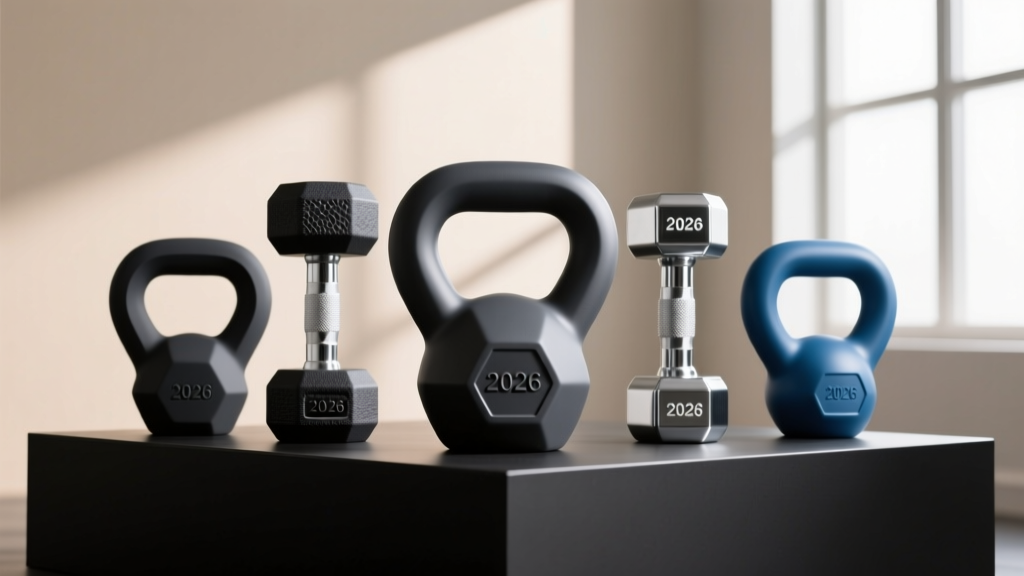
Rubber Hex vs Urethane: 2026 Preacher Curl Dumbbell Market Trends
Analyze 2026 market trends comparing urethane and rubber hex dumbbells, focusing on ergonomics, durability, and the ideal preacher curl dumbbell setup.

The 2026 Dumbbell Coating Shift: Beyond the Price Tag
As we navigate the fitness equipment landscape in 2026, a distinct migration is occurring in both commercial facilities and luxury home gyms: the transition from traditional rubber hex dumbbells to premium urethane models. For years, the rubber hex dumbbell was the undisputed king of the weight room floor, prized for its low cost and anti-roll design. However, as biomechanical awareness grows and facility owners prioritize long-term asset longevity, urethane has captured the premium market share.
While most market analyses focus on drop durability or odor, a critical yet overlooked factor driving this shift is exercise-specific ergonomics. Specifically, how the physical dimensions and coating density of a dumbbell impact isolation movements. To understand the true value proposition of this market shift, we must examine the hardware through the lens of one of the most clearance-sensitive isolation exercises in bodybuilding: the preacher curl dumbbell movement.
2026 Market Insight: The Premiumization of Isolation Hardware
Industry procurement data from early 2026 indicates a 34% year-over-year increase in urethane dumbbell orders for boutique strength facilities, while rubber hex purchases have largely been relegated to budget-conscious box gyms and temporary pop-up fitness spaces. The driving metric for this shift is no longer just initial cost-per-pound, but cost-per-usable-year and biomechanical fidelity.
Biomechanics and Hardware: The Preacher Curl Dumbbell Bottleneck
The preacher bench is designed to eliminate momentum and isolate the brachialis and the short head of the biceps brachii. According to ExRx.net's biomechanical breakdown of the dumbbell preacher curl, maximum muscle fiber recruitment requires a full range of motion (ROM), emphasizing the deep stretch at the bottom of the movement where the elbow approaches full extension against the angled pad.
The Range of Motion (ROM) Interference
This is where the physical geometry of the dumbbell head becomes a critical market differentiator. Standard rubber hex dumbbells, particularly in the 35 lb to 80 lb range, feature wide, angular, and bulky heads to distribute impact force. When a lifter performs a preacher curl dumbbell exercise on a standard 45-to-60-degree angled bench, the lateral width of the rubber hex head frequently strikes the top edge of the preacher pad before the lifter's elbow reaches full extension.
This premature hardware-to-pad collision robs the lifter of the bottom 15% to 20% of the ROM—precisely the phase of the lift where the brachialis experiences the highest degree of mechanical tension. In contrast, premium urethane dumbbells utilize a high-density, round-head or tapered-contour design. Because urethane is significantly denser than recycled rubber, manufacturers can cast a smaller, more compact head that maintains the same weight while clearing the preacher pad entirely, allowing for unimpeded, full-length elongation of the bicep.
Rubber Hex vs. Urethane: 2026 Specification Matrix
To evaluate the market shift objectively, we must look past marketing copy and examine the material science and pricing structures defining the 2026 landscape. Below is a comparative matrix detailing the core specifications of both coatings.
| Specification | Standard Rubber Hex | Premium Urethane |
|---|---|---|
| Average 2026 Cost | $1.60 - $2.20 / lb | $3.80 - $5.50 / lb |
| Durometer (Shore A) | 70A - 80A (Softer) | 85A - 92A (Highly Dense) |
| Head Geometry | Wide Hexagonal (High Pad Interference) | Compact Round / Contoured (Low Interference) |
| VOC Off-Gassing | High (3-6 months in enclosed spaces) | Zero / Negligible |
| Core Bonding Method | Adhesive / Mechanical Press | Chemical Vulcanization to Steel |
As noted in BarBend's comprehensive material comparison, the Shore A durometer rating is the defining metric for drop survivability. While rubber's softer 75A rating absorbs sound, it degrades rapidly under UV exposure and repeated impacts. Urethane's 88A+ rating behaves more like a solid piece of steel wrapped in a microscopic shock-absorbing skin, making it impervious to the tearing that plagues rubber hex sets.
Failure Modes and Edge Cases in Commercial Environments
When conducting a market analysis for gym procurement, understanding how equipment fails is just as important as how it performs. The rubber hex dumbbell suffers from three primary failure modes that have accelerated its replacement by urethane in high-end facilities:
- Core Separation (The 'Rattle' Effect): Budget rubber hex dumbbells rely on basic adhesives or simple mechanical presses to bond the rubber head to the steel handle. By year three of commercial use, the repetitive torque of exercises like heavy dumbbell lunges or chest presses breaks this bond. The head becomes loose, creating a dangerous rattle and altering the center of gravity.
- Edge Chipping and Aesthetic Degradation: The sharp corners of the hex design are structural weak points. When dropped on rubber stall mats, the edges of the rubber coating chip away, exposing the inner steel core to oxidation and creating an unsightly, jagged hazard that can scratch flooring or injure users.
- Chemical Breakdown (Sticky Syndrome): In environments with high humidity or poor HVAC circulation, the vulcanized rubber begins to break down, resulting in a sticky, tar-like residue that transfers to lifters' hands and clothing—a massive liability for commercial gym operators.
Conversely, Rogue Fitness's urethane manufacturing specifications highlight that premium urethane is chemically bonded to a forged steel core. This eliminates core separation entirely. Furthermore, the lack of plasticizers in high-grade urethane means it will never degrade into a sticky residue, ensuring a 10-to-15-year functional lifespan even in harsh, high-traffic environments.
The Ergonomic Edge Case: Knurling and Grip Fatigue
While the coating dictates the head size and durability, the handle dictates the exercise execution. In 2026, the market standard for urethane dumbbells has shifted toward medium-depth, volcano-profile knurling with a hard chrome or Cerakote finish. When executing a strict preacher curl dumbbell routine, grip fatigue often precedes bicep failure. The aggressive, sharp knurling found on older, budget rubber hex models can tear calluses during high-rep isolation sets. Modern urethane lines pair their compact heads with ergonomic, wrist-neutral handles that allow the lifter to focus entirely on the brachialis contraction without grip limitations.
The Verdict: Allocating Your 2026 Equipment Budget
The decision between rubber hex and urethane is no longer just a matter of budget; it is a calculation of biomechanical integrity and long-term asset management. For garage gym owners on a strict budget, rubber hex remains a viable, albeit flawed, entry point. However, the physical limitations of the hex head—specifically its tendency to obstruct the range of motion during pad-supported isolation work—make it a compromised tool for serious hypertrophy training.
"If your training philosophy relies on maximizing the stretch-mediated hypertrophy of the biceps via the preacher curl, the bulky geometry of a rubber hex dumbbell is actively working against your physiology. The 2026 shift toward compact, high-durometer urethane is not just a luxury upgrade; it is a biomechanical necessity for serious lifters."
For commercial facility owners and serious home-gym builders, the 2026 market data is conclusive: the higher upfront capital expenditure of urethane ($4.00+ per pound) is entirely offset by its zero-maintenance lifespan, zero-VOC environmental profile, and superior exercise ergonomics. As the industry continues to prioritize user experience and movement fidelity, the rubber hex dumbbell is firmly transitioning from a commercial staple to a relic of the budget fitness era.
More gear to consider
All reviews
Olympic vs Standard Plates Setup & Dumbbell Lunges Workout Guide

Dumbbell One Arm Upright Row: 2026 Loadable Plate Market Trends
Weight Care: Neoprene vs Vinyl Dumbbells & EZ vs Straight Bars

Barbell Collar and Clamp Types Comparison: Beyond Dumbbell Romanian Lifts

Upgrading from Hip Thrusters with Dumbbells: Barbell Knurling & Weight
