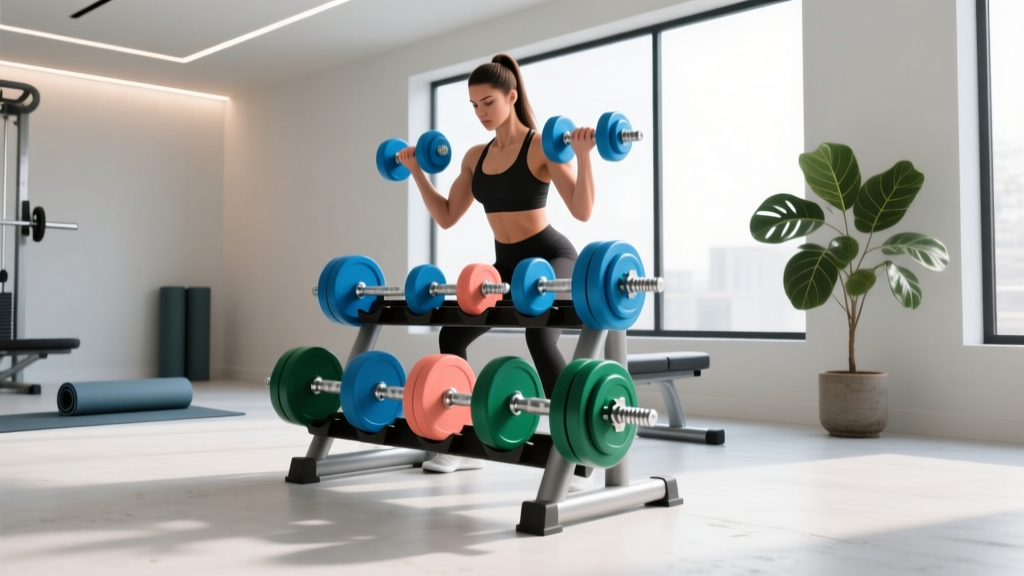
Loadable Dumbbell Care for Your Female Arm Workout With Dumbbells
Discover expert maintenance tips for loadable dumbbells to ensure longevity, smooth plate swaps, and peak performance for your high-volume arm workouts.

When building a home gym, loadable dumbbells with interchangeable plates—such as the Ironmaster Quick-Lock, Titan Fitness adjustable sets, or traditional spinlock handles—offer unmatched versatility. However, the specific demands of isolation training can accelerate wear and tear on this equipment. If you are consistently running a high-volume female arm workout with dumbbells, your gear is subjected to a unique stress profile: frequent micro-loading, high sweat exposure, and repetitive collar manipulation.
Unlike heavy, low-rep compound movements where the weight remains static for the duration of a working set, arm routines demand constant load adjustments. This guide dives deep into the biomechanics of gear degradation and provides a 2026-tested maintenance protocol to maximize the lifespan of your loadable dumbbells.
⚠️ The Sweat Corrosion Factor: Human sweat has a pH ranging from 4.5 to 7.0. When high-rep arm training causes sweat to drip directly onto unprotected cast iron or degraded zinc coatings, it accelerates oxidation by up to 40% within the first year. Regular decontamination is non-negotiable.The Biomechanics of Arm Training and Gear Wear
Why do loadable dumbbells degrade faster during arm days? The answer lies in training volume and load manipulation. According to a comprehensive dose-response study published in the National Library of Medicine, maximizing muscle hypertrophy often requires higher weekly training volumes, which translates to more sets and more frequent weight adjustments.
For a targeted female arm workout with dumbbells—focusing on bicep curls, tricep extensions, and lateral raises—lifters typically operate in the 12 to 20 rep range. This hypertrophy and endurance focus necessitates micro-loading. Swapping out 2.5 lb plates for 1.25 lb fractional plates multiple times per session places immense mechanical friction on the threading of spinlock collars and the friction pads of lever-lock systems.
Common Failure Modes in High-Rep Environments
- Cross-Threading: Rushing plate changes between supersets often leads to misaligned collar threads, permanently stripping the handle.
- Hub Degradation: The inner holes of cast iron plates can widen or develop burrs from repeated sliding, causing the plates to rattle during tricep kickbacks.
- Knurling Clogging: Chalk and dead skin accumulate in the handle's knurling, reducing grip security during heavy hammer curls.
Material Matrix: Choosing and Caring for Your Plates
Not all interchangeable plates require the same maintenance. As of 2026, the market offers three primary materials for loadable dumbbell plates. Understanding their specific care requirements is crucial for longevity.
| Material | Avg. Cost per Lb | Maintenance Requirement | Best For |
|---|---|---|---|
| Bare Cast Iron | $1.50 - $2.00 | High (Requires oiling/waxing) | Budget lifters, garage gyms |
| Zinc-Plated Steel | $2.50 - $3.50 | Medium (Wipe down post-use) | High-volume arm routines |
| Virgin Urethane | $4.00 - $6.00 | Low (Soap and water only) | Premium home gyms, drop-heavy |
The 4-Step Loadable Dumbbell Maintenance Protocol
To keep your gear performing flawlessly through thousands of reps of concentration curls and overhead extensions, implement this bi-weekly maintenance routine. For deeper insights on general home gym equipment care, Garage Gym Reviews highly recommends establishing a strict seasonal cleaning schedule to prevent irreversible environmental damage.
Step 1: Thread and Collar Lubrication
Never use standard WD-40 on dumbbell threads; it is a solvent that attracts dust and creates an abrasive paste. Instead, apply a micro-drop of white lithium grease or 3-in-One silicone spray to the handle threads and the inside of the spinlock collars. Wipe away excess with a microfiber cloth. This reduces the torque required to secure the plates, preventing wrist strain during rapid weight changes.
Step 2: Plate Decontamination
For bare iron or zinc plates, mix a 50/50 solution of white vinegar and distilled water in a spray bottle. Mist the plates, let it sit for 60 seconds to break down acidic sweat residue, and wipe dry. Follow up with a light coat of mineral oil to displace ambient moisture. Never use vinegar on urethane or rubber plates, as the acid will degrade the polymers; use mild dish soap and warm water instead.
Step 3: Knurling Restoration
Arm workouts require a vice-like grip, especially during fatigued tricep sets. Use a stiff nylon-bristle brush (never wire, which damages the zinc coating) to scrub the knurling in a circular motion. This removes embedded dead skin, chalk, and sebum that make the handle dangerously slick.
Step 4: Hub and Bore Inspection
Check the center bore of your interchangeable plates. If you feel sharp metal burrs inside the hole, they will scrape the chrome sleeve of your dumbbell handle every time you load them. Use a fine-grit sanding sponge or a metal file to gently smooth the inner rim of the plate.
Troubleshooting Edge Cases and Failures
Even with meticulous care, mechanical failures happen. Here is how to address the most common issues specific to loadable dumbbells:
- Stripped Spinlock Threads: If the collar won't tighten and spins freely, the handle threads are likely cross-threaded. Fix: Purchase an M12 or M16 thread restorer die (approx. $25) and carefully re-cut the damaged threads on the handle.
- Slipping Lever-Lock Collars: Systems like the Ironmaster Quick-Lock rely on a internal friction pad. Over time, this pad compresses. Fix: Order a replacement screw and pad kit directly from the manufacturer (usually $15-$35) and swap it out using a standard hex key.
- Rattling Plates: If your dumbbell clanks loudly during lateral raises, the plates have mismatched tolerances. Fix: Insert a thin rubber washer (available at any hardware store for pennies) between the plates to absorb the kinetic vibration.
Frequently Asked Questions
How often should I clean my loadable dumbbells if I train arms 3x a week?
For high-frequency arm training, perform a quick microfiber wipe-down after every session to remove sweat. Execute the full 4-step deep maintenance protocol (including lubrication and knurling scrubbing) every 14 days.
Are fractional plates worth the investment for arm workouts?
Absolutely. Arm muscles (biceps, triceps, lateral deltoids) are smaller and fatigue faster than leg or back muscles. Jumping from 15 lbs to 20 lbs is a 33% increase in load, which often breaks form. Investing in a set of 0.5 lb and 1 lb micro-plates (approx. $40-$60) allows for true progressive overload without compromising joint health.
Can I store my loadable dumbbells on a concrete garage floor?
No. Concrete is highly porous and wicks moisture from the ground, especially in unclimate-controlled spaces. This will rapidly rust the bottom plates of your loadable sets. Always store them on a rubber mat or a dedicated wooden/metal dumbbell rack elevated at least 4 inches off the ground.
More gear to consider
All reviews
EZ Curl Bar vs Straight Bar: Space Layouts for Dumbbell Muscle Gain

Cast Iron vs Competition Kettlebells: Upgrading Dumbbell Renegade Rows
Adjustable Dumbbell Review & Dumbbell Spotter Guide (2026)

Power Rack vs Squat Rack vs Stand: Setup & Dumbbell Workout Plan PDF

Power Rack vs Squat Stand: Upgrading From Squatting With A Dumbbell
