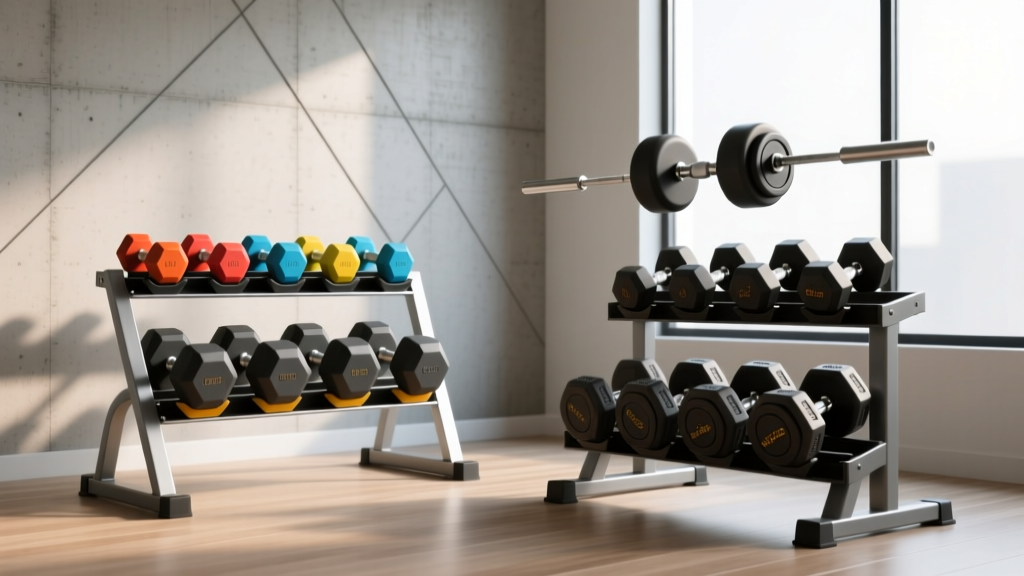
Gym Space: Urethane vs Hex for the Dumbbell Clean and Press Exercise
Discover how urethane and rubber hex dumbbells impact home gym space layouts, rack footprints, and safety during the dumbbell clean and press exercise.

The Spatial Dilemma: Dynamic Lifts in Compact Home Gyms
Designing a high-performance home gym in a compact spare bedroom or garage requires ruthless spatial efficiency. When your programming includes explosive, full-body movements, the margin for error in your equipment layout shrinks dramatically. The dumbbell clean and press exercise is a cornerstone of athletic conditioning, demanding triple extension from the lower body, a rapid shoulder rack position, and overhead lockout. However, executing this movement safely in a tight footprint introduces unique challenges regarding equipment geometry, drop zones, and rack dimensions.
For the space-conscious lifter, the choice between rubber hex dumbbells and urethane dumbbells extends far beyond mere aesthetics or budget. The material density, head geometry, and structural resilience of these two options directly dictate your rack footprint, aisle clearance, and floor protection strategy. In 2026, with urban micro-gyms and garage conversions at an all-time high, understanding the spatial physics of your free weights is essential for optimizing your layout.
Material Density and Rack Footprint: The Numbers
The most immediate impact of your dumbbell choice on gym layout is the physical footprint of your storage rack. Urethane is significantly denser and boasts a higher durometer rating (typically 85A to 90A) compared to standard recycled rubber (60A to 70A). This density translates to a smaller physical head size for the exact same weight, allowing for tighter tiering on storage racks.
| Metric | Rubber Hex (e.g., Rep Fitness) | Urethane (e.g., Rogue Fitness) |
|---|---|---|
| 50lb Dumbbell Head Width | ~6.75 inches | ~5.50 inches |
| 5-50lb Set Rack Width (3-Tier) | 48 to 52 inches | 36 to 40 inches |
| Required Shelf Depth | 22 to 24 inches | 16 to 18 inches |
| Average 2026 Cost (per lb) | $1.40 - $1.80 | $3.20 - $4.50 |
| Drop Resilience (Corner Impact) | Low (Rubber tears/chunks) | Moderate (Scuffs but holds) |
As illustrated above, outfitting a 5-50lb set requires a 3-tier rack that is up to 16 inches wider and 6 inches deeper if you opt for rubber hex dumbbells. In a 10x10 room, reclaiming those 4 to 6 square feet of floor space can be the difference between fitting a functional power rack or being forced to use fold-away squat stands.
Rubber Hex: The Bulky Budget Option
Rubber hex dumbbells, such as the widely popular models from Rep Fitness, remain the default choice for budget-conscious lifters. However, their bulky geometry forces wider rack shelves. Furthermore, the protruding hexagonal corners create a 'snag hazard' in tight aisles. If your dumbbell rack is positioned less than 30 inches from your lifting platform, reaching down to grab a 50lb hex dumbbell for a heavy set often results in the corners clipping the rack uprights or adjacent walls.
Urethane: The High-Density Space Saver
Urethane dumbbells, like the premium offerings from Rogue Fitness, feature a streamlined, often rounded or beveled profile. This allows manufacturers to design ultra-compact, vertical-storage towers or narrow 3-tier racks. For a garage gym where the lifting platform must be pushed flush against a storage wall to accommodate a parked vehicle, urethane's compact profile is a non-negotiable spatial advantage.
Floor Clearance and the Dumbbell Clean and Press Exercise
The dumbbell clean and press exercise is highly dynamic. The 'clean' phase requires pulling the weights from the floor to the shoulders in one fluid motion, while the 'press' demands overhead extension. Performing this in a space-optimized layout requires strict attention to lateral and vertical clearance.
Layout Warning: The Lateral Snag HazardDuring the upward pull of the clean, the dumbbells travel close to the body. If you are using rubber hex dumbbells in a narrow aisle (less than 36 inches wide), the sharp hex corners can easily catch on clothing, nearby rack uprights, or the edge of a lifting platform. This mid-lift snag can cause severe wrist torque or force you to bail on the lift prematurely. Urethane's smoother, rounded edges mitigate this spatial risk.
Vertical Clearance and the Overhead Press
When optimizing your layout, ceiling height is just as critical as floor space. A lifter standing 70 inches tall with an arm length of 30 inches requires a minimum of 100 inches (8 feet, 4 inches) of vertical clearance to lock out a dumbbell press safely. If your gym is in a basement with exposed joists or HVAC ducting, you must map out a dedicated 'press zone' free of overhead obstructions. Because urethane dumbbells are often shorter in overall handle-to-head length, they offer a micro-advantage in rooms with exactly 8-foot ceilings, reducing the risk of the dumbbell heads striking the drywall or joists at the top of the press.
Floor Protection and Drop Zones
Fatigue is inevitable during high-volume sets of the dumbbell clean and press exercise. When form breaks down, lifters often drop the dumbbells from the shoulder or overhead position. This is where material failure modes directly impact your gym's spatial layout and maintenance.
- Rubber Hex Failure Mode: When dropped from shoulder height, rubber hex dumbbells almost always land on their protruding corners. The recycled rubber will chunk, tear, or peel away from the cast iron core. Once the iron is exposed, it will pit and destroy standard 3/4-inch rubber floor mats, forcing you to replace flooring sections and expanding your maintenance footprint.
- Urethane Resilience: Urethane is highly resistant to chunking. While dropping any dumbbell from overhead is discouraged, a urethane dumbbell dropped from the shoulder during a failed clean will typically bounce and scuff rather than shatter. This durability allows you to place your dumbbell rack closer to the lifting platform without fearing that a stray dropped weight will destroy the flooring in the transition zone.
Environmental Factors: Off-Gassing in Small Spaces
Space optimization isn't just about physical dimensions; it's about air volume and ventilation. In a compact, poorly ventilated room (such as a 10x12 spare bedroom with a standard HVAC vent), the environmental impact of your equipment matters.
Cheap rubber hex dumbbells are notorious for off-gassing Volatile Organic Compounds (VOCs). In a small room, a full 5-50lb set of new rubber hex dumbbells can make the air quality unbearable for the first 3 to 6 months, effectively rendering the space unusable for intense cardiovascular or heavy breathing workouts. Urethane, by contrast, is virtually odorless and inert. If your space-optimized gym lacks industrial ventilation or large opening windows, urethane is the only viable choice to maintain a breathable environment.
Decision Matrix: Choosing Your Layout
Use the following framework from the National Strength and Conditioning Association (NSCA) facility design principles, adapted for micro-gyms, to finalize your equipment choice:
- Measure the Rack Footprint: If your allocated storage wall is less than 45 inches wide, you must choose urethane to safely house a 5-50lb set on a 3-tier rack.
- Assess the Aisle Width: If the walking path between your rack and your lifting platform is under 30 inches, abandon rubber hex dumbbells. The corner snag risk during the clean phase is too high.
- Evaluate the Drop Zone: If you cannot dedicate a minimum 4x6 foot drop zone of 3/4-inch vulcanized horse stall mats, avoid dropping rubber hex dumbbells entirely, as the corner impacts will compromise subflooring.
- Calculate the Space ROI: If you live in an urban area where real estate costs exceed $300 per square foot, the $800 to $1,200 premium for a urethane set is instantly offset by the 4 to 6 square feet of floor space you reclaim by using a narrower, shallower storage rack.
Summary
Optimizing a home gym for the dumbbell clean and press exercise requires balancing biomechanics, material physics, and spatial geometry. While rubber hex dumbbells offer an accessible entry point for larger, dedicated garage gyms, their bulky heads, wide rack requirements, and corner-drop vulnerabilities make them a liability in tight spaces. Urethane dumbbells demand a higher upfront investment, but their superior density, compact storage footprint, and drop resilience make them the undisputed champion of space-optimized home gym layouts in 2026.
More gear to consider
All reviews
Power Rack vs Squat Rack vs Stand: Standing Dumbbell Crunch Guide

Olympic vs Standard Plates: Best for Dumbbell Shoulder Front Raises?

EZ Bar vs Straight Bar Maintenance for Circus Dumbbell Press Lifters
Power Rack vs Squat Rack vs Stand for Upper Body Dumbbell Workouts

Maintaining Loadable Dumbbells for Barbell or Dumbbell Shrugs
