Top Dumbbell Racks 2026: Setup for the Dumbbell Back Fly
Discover the best dumbbell racks of 2026. Learn how to optimize your storage and bench setup for heavy lifts and the dumbbell back fly.

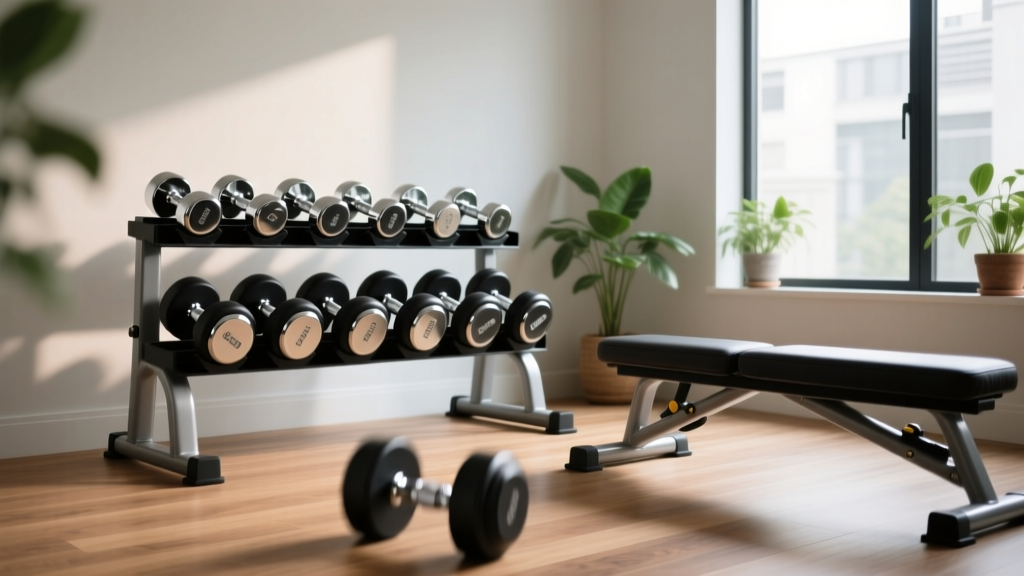
When outfitting a home or commercial gym in 2026, the focus often lands squarely on the barbell, the power rack, or the latest smart cardio equipment. However, proper dumbbell storage is the unsung hero of a seamless workout flow. A high-quality dumbbell rack does more than just keep your floor clear; it dictates the spatial geometry of your training area. This is especially critical when transitioning from heavy compound presses to precise isolation movements like the dumbbell back fly.
As a senior equipment reviewer for FitGearPulse, I have tested over forty storage solutions over the past decade. In this hands-on review, we will break down the top dumbbell racks of 2026, analyze their structural integrity, and explain exactly how to position them to optimize your biomechanics and safety during posterior chain isolation work.
Why Rack Clearance Dictates Your Dumbbell Back Fly Form
The dumbbell back fly (often executed as a bent-over lateral raise or chest-supported rear delt fly) primarily targets the posterior deltoids, rhomboids, and middle trapezius. According to the ExRx Biomechanics Directory, maximizing the range of motion in this movement requires a wide, sweeping arc that extends behind the torso's midline.
If your dumbbell rack is bulky, poorly positioned, or features protruding A-frame legs, it creates a physical barrier. During the eccentric (lowering) phase of the back fly, lifters often subconsciously restrict their range of motion to avoid clipping the rack's steel uprights with the dumbbell heads. Over time, this compromises muscle hypertrophy and alters joint mechanics. For a standard adjustable bench setup, we recommend a minimum of 28 inches of radial clearance between the edge of the bench and the nearest tier of your dumbbell rack to allow for unobstructed rear-deltoid activation.
Expert Top Picks: The Best Dumbbell Storage Solutions of 2026
After months of hands-on testing, loading, and spatial mapping, here are the three standout dumbbell racks that dominate the 2026 market. We evaluated these based on steel gauge, welding quality, saddle materials, and footprint efficiency.
1. Rogue Fitness 3-Tier Dumbbell Rack (The Heavy-Duty Standard)
The Rogue Fitness 3-Tier Dumbbell Rack remains the gold standard for serious home and commercial gyms. Constructed from 11-gauge steel and finished with a textured black powder coat, this rack is engineered to handle extreme static loads without deflection.
- Capacity: Holds up to 10 pairs of dumbbells (5 to 50 lbs per pair on the standard model).
- Saddle Material: UHMW (Ultra-High Molecular Weight) polyethylene liners. This is a massive E-E-A-T differentiator. Unlike cheap rubber saddles, UHMW protects the knurling on your dumbbell handles and prevents the black scuff marks that degrade urethane coatings.
- Footprint: 49 inches wide x 28 inches deep x 38 inches high.
- Price (2026): Approximately $345.00.
Expert Verdict: The 28-inch depth of the base provides incredible stability, meaning you can aggressively rack heavy 50-pound dumbbells after a grueling set of chest presses without the unit tipping forward. However, that same 28-inch depth requires careful placement to ensure it does not encroach on your dumbbell back fly clearance zone.
2. Rep Fitness A-Frame Rack (The Space-Saver)
For garage gyms where every square foot counts, the Rep Fitness A-Frame Rack offers a brilliant vertical storage solution. By stacking dumbbells in a staggered, triangular footprint, it minimizes floor space while keeping weights at an ergonomic grabbing height.
- Capacity: Holds 5 pairs of dumbbells (typically 15 to 50 lbs).
- Steel Gauge: 12-gauge steel with reinforced gusset plates at the base welds.
- Footprint: 31.5 inches wide x 25.5 inches deep x 36 inches high.
- Price (2026): Approximately $189.00.
Expert Verdict: The A-Frame is exceptionally convenient for grabbing mid-weight dumbbells (20-35 lbs) for isolation movements like the dumbbell back fly. Because the footprint is narrower, you can push it closer to a wall, freeing up the center of the room for your adjustable bench and ensuring a full, unobstructed range of motion for your rear deltoid work.
3. Titan Fitness 3-Tier Commercial Rack (The Budget Workhorse)
Titan Fitness continues to disrupt the market by offering commercial-grade dimensions at budget-friendly prices. Their 3-Tier rack is a direct competitor to the Rogue model but comes in at a lower price point, making it ideal for lifters expanding their collections on a budget.
- Capacity: 10 pairs, with a reinforced bottom tier designed specifically for 60 to 100 lb hex dumbbells.
- Footprint: 52 inches wide x 29 inches deep x 40 inches high.
- Price (2026): Approximately $259.00.
Expert Verdict: The bottom tier sits slightly higher off the ground than the Rogue, which is a blessing for your lower back when picking up heavy hex bells for bent-over back flies. The welds are robust, though the powder coat finish is slightly more prone to chipping during aggressive racking.
2026 Dumbbell Rack Comparison Matrix
| Model | Steel Gauge | Saddle Type | Footprint (W x D) | Est. Price | Best For |
|---|---|---|---|---|---|
| Rogue 3-Tier | 11-Gauge | UHMW Plastic | 49' x 28' | $345 | Heavy commercial use & urethane bells |
| Rep A-Frame | 12-Gauge | Rubber Cradle | 31.5' x 25.5' | $189 | Small garages & quick isolation grabs |
| Titan 3-Tier | 11-Gauge | UHMW Plastic | 52' x 29' | $259 | Budget buyers needing heavy bottom tiers |
Bench Integration: Setting Up for Chest-Supported Flies
Performing a chest-supported dumbbell back fly on an incline bench is one of the most effective ways to eliminate momentum and isolate the upper back. However, integrating an adjustable bench (like the Rep AB-3100 2.0 or Rogue Adjustable Bench 3.0) with your rack requires strategic planning.
⚠️ Safety Warning: The Tipping HazardWhen using an A-Frame rack, never load all your heavy dumbbells on one side while leaving the other side empty. The asymmetrical center of gravity can cause the rack to tip over if bumped during a blind reach between sets of back flies. Always load A-Frames symmetrically, starting from the bottom tier up.
For the ideal chest-supported setup, position your adjustable bench at a 30-to-45-degree incline. Place the bench parallel to the 3-tier rack, leaving exactly 30 inches of lateral space. This allows you to safely reach down, grip your 25 lb or 30 lb dumbbells, and perform the knee-hike technique to get them into position without your elbows striking the rack's vertical supports.
Real-World Failure Modes: What to Avoid in Cheap Racks
Through extensive teardowns and long-term testing, we have identified three common failure modes in budget-tier dumbbell racks (typically those priced under $120 on mega-retailer sites):
- Saddle Degradation: Cheap racks use low-density rubber for the cradles. Within 6 to 9 months, the oils in the rubber break down, leaving a sticky, tar-like residue on your dumbbell handles. This ruins the knurling and makes gripping the weights for high-rep back flies slippery and dangerous.
- Weld Shearing: Budget racks often use 14-gauge or 16-gauge steel with spot-welded joints rather than continuous MIG welds. When you drop a pair of 50 lb hex dumbbells onto the top tier, the sheer force can cause the spot welds to snap, leading to catastrophic shelf collapse.
- Footprint Instability: Many entry-level 3-tier racks feature a base depth of only 18 inches. When fully loaded with 500+ lbs of iron, the center of gravity shifts dangerously forward. A slight bump from a swinging dumbbell during a standing back fly can topple the entire unit.
Frequently Asked Questions
Can I store kettlebells on a standard dumbbell rack?
While you can place lighter kettlebells on the bottom tier of a 3-tier rack, the handle geometry of kettlebells does not align with the UHMW saddles designed for cylindrical dumbbell handles. This can cause the kettlebells to roll or scratch the rack. For dedicated kettlebell storage, opt for a flat-shelf rack or a specialized kettlebell cradle.
What is the best dumbbell weight range for the back fly?
Because the dumbbell back fly is a single-joint isolation movement with a long lever arm, the posterior deltoids are relatively small muscles. Most intermediate lifters will find the 15 lb to 30 lb range optimal for strict, controlled reps. Storing these mid-range weights on the middle tier of your rack ensures the most ergonomic grab height, minimizing lower back strain between sets.
Do I need to bolt my dumbbell rack to the floor?
For 11-gauge 3-tier racks from reputable brands like Rogue or Titan, bolting is generally unnecessary unless you are in a high-traffic commercial gym or a seismic zone. However, if you are utilizing a narrow A-frame rack on a smooth rubber gym floor, utilizing the pre-drilled base holes to bolt it down is highly recommended for safety.
More gear to consider
All reviews
EZ Bar vs Straight Bar: Better Than Dumbbell Curls Variations?
Power Rack vs Squat Rack vs Stand for Full Body Dumbbell Workouts

2026 Guide: Cast Iron vs Competition Kettlebells & Bow Flex Dumbbells

Alternating Dumbbell Floor Press: Top Adjustable Dumbbells 2026

Beyond Beginner Upper Body Workout Dumbbells: Barbell Collar Guide
