
Space Layouts: Kettlebells & the Bent Over Single Arm Dumbbell Row
Master space optimization with our cast iron vs competition kettlebell guide and layout tips for the bent over single arm dumbbell row.

The Spatial Reality of Modern Home Gyms
Designing a high-performance home gym in a constrained footprint requires a ruthless approach to spatial efficiency. As urban living spaces shrink and home fitness equipment evolves, the modern strength athlete must balance equipment versatility with physical storage dimensions. Two critical elements dominate the compact free-weight zone: selecting the right kettlebell profile and ensuring adequate operational clearance for foundational unilateral movements, most notably the bent over single arm dumbbell row. This guide dissects the spatial and biomechanical realities of outfitting a sub-100-square-foot training space in 2026, providing exact measurements, equipment synergies, and layout blueprints for the serious lifter.
Cast Iron vs. Competition Kettlebells: A Volumetric Analysis
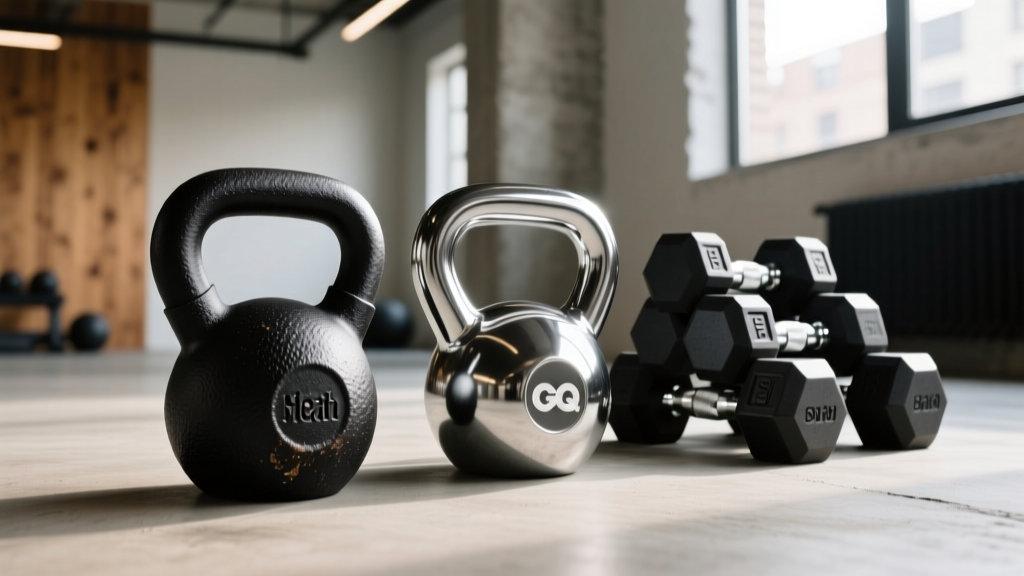
When outfitting a compact gym, the physical geometry of your weights dictates your storage infrastructure. The debate between cast iron and competition kettlebells is often framed around performance and grip, but from a space optimization perspective, it is entirely about volumetric consistency. Cast iron kettlebells scale in volume as weight increases. A 16kg cast iron bell is significantly smaller than a 32kg bell. While this seems intuitive, it creates a spatial nightmare for storage. Standard horizontal tree racks or vertical wall cradles cannot accommodate a full set of cast iron bells without wasting valuable cubic footage or requiring custom, staggered shelving units.
Conversely, competition kettlebells—such as those from Kettlebell Kings or Rogue Fitness—maintain uniform external dimensions regardless of internal weight. A standard competition bell measures exactly 280mm in height and 210mm in width, whether it is 8kg or 32kg. This uniform geometry allows for high-density, flush-mounted wall storage systems. You can stack or rack a complete set of competition bells in a perfectly rectangular footprint, maximizing vertical wall space and keeping the floor entirely clear for dynamic movements.
| Feature | Cast Iron Kettlebells | Competition Kettlebells |
|---|---|---|
| Dimensions (24kg) | Variable (approx. 220x200mm) | Uniform (280x210mm) |
| 2026 Avg. Cost | $1.50 - $2.20 / lb | $3.50 - $4.80 / lb |
| Storage Efficiency | Low (requires staggered racks) | High (flush, modular racking) |
| Handle Geometry | Variable thickness, wider arch | 33mm diameter, flat arch |
| Best For Compact Gyms | Single-bell or 2-bell setups | Full-set wall-mounted storage |
Biomechanics and Clearance: The Bent Over Single Arm Dumbbell Row
Beyond storage, the operational footprint of your exercises defines your layout. The bent over single arm dumbbell row is a staple for developing the latissimus dorsi, rhomboids, and posterior deltoids. According to the EXRX exercise directory, this movement requires a deep hip hinge and a stabilized torso to prevent rotational shear on the lumbar spine. In a commercial gym, you would simply grab a flat utility bench (typically 48 inches long by 18 inches wide). In a space-optimized home gym, dedicating 6 square feet of permanent floor space to a bench is a luxury many cannot afford.
Space-Saving Tripod Stance: To execute the bent over single arm dumbbell row without a bench, utilize a wall, a securely bolted squat rack upright, or a heavy 24kg+ cast-iron kettlebell as your support base. You must maintain a minimum 4-foot radial clearance behind and to the side of your working arm to accommodate the dumbbell arc and torso hinge without striking walls or furniture.The American Council on Exercise (ACE) emphasizes that maintaining a neutral spine during unilateral rows is paramount; thus, your makeshift support must be exactly hip-height to prevent unwanted spinal flexion. If using a kettlebell as a support, ensure it is chalked and placed on a high-friction surface to prevent sliding during heavy loading.
Layout Blueprint for the Compact Free Weight Zone
To integrate both heavy kettlebell work and dumbbell rows into a tight layout, adopt a 'zoned corridor' approach. This minimizes dead space and allows for seamless transitions between exercises.
- Zone 1: The Vertical Storage Wall. Dedicate a 4-foot wide section of wall space for flush-mounted competition kettlebell racks. By keeping the bells off the floor, you reclaim the area for dynamic movements like swings and snatches.
- Zone 2: The Hinge & Row Corridor. Leave a 4x6 foot rectangular footprint directly in front of the storage wall. This is your primary operational zone. Outfit this area with a single 3/4-inch vulcanized rubber horse stall mat (typically 4x6 feet, costing around $60 in 2026) to protect your subfloor and provide grip for the tripod stance during your bent over single arm dumbbell row.
- Zone 3: The Modular Rack. If space permits, a folding wall-mounted squat rack (such as the Rogue RML-3W Fold Back) provides a stable anchor point for both racking dumbbells and serving as a hip-height support for unilateral rows when folded out.
Equipment Failure Modes in Tight Spaces
When optimizing for space, athletes often purchase adjustable dumbbells or multi-grip bars. A common failure mode occurs when lifters attempt the bent over single arm dumbbell row using blocky, dial-adjustable dumbbells (like certain 552 models). The oversized housing of these dumbbells frequently collides with the user's torso or the floor at the bottom of the range of motion, truncating the lat stretch. For compact gyms, loadable dumbbell handles (like the Rogue Loadable Dumbbell Handle) or hex-head rubber dumbbells are vastly superior for unilateral rowing in tight corridors, as their compact profiles allow for a full, unobstructed range of motion.
Similarly, using competition kettlebells for high-rep rows can lead to grip failure if the user is unaccustomed to the 33mm handle diameter and slick powder-coat finish. While competition bells are unparalleled for spatial storage efficiency, keep a block of gymnastics chalk nearby to maintain grip security during heavy, sweat-inducing rowing sets.
Expert Verdict on Space Optimization
According to strength and conditioning principles outlined by the National Strength and Conditioning Association (NSCA), the environment must facilitate, not hinder, the biomechanical requirements of the lift. By investing in uniform competition kettlebells for high-density wall storage, you free up the critical floor space required to safely and effectively perform the bent over single arm dumbbell row. Ditch the bulky utility bench, master the tripod stance, and treat your gym's vertical space as your most valuable asset.
Frequently Asked Questions
Can I use a competition kettlebell instead of a dumbbell for single-arm rows?
Yes, but the handle geometry differs. Competition kettlebells have a 33mm handle and a flat arch, which shifts the center of mass differently than a neutral-grip dumbbell. It is an excellent variation for grip strength, but ensure you have the ceiling clearance to hoist the bell into position without scraping drywall.
What is the minimum ceiling height required for this layout?
For a compact gym that includes kettlebell snatches and overhead movements alongside floor-based rows, a minimum ceiling height of 8 feet (96 inches) is required. If your space is 7 feet or lower, you must restrict your programming to ground-based hinges and rows, making the bent over single arm dumbbell row an even more critical exercise for your posterior chain development.
More gear to consider
All reviews
EZ vs Straight Bar: Upgrading Upper Arm Workouts With Dumbbells

Cast Iron vs Competition Kettlebells & Great Chest Workouts with Dumbbells
Kettlebell Care: Cast Iron vs Competition & Chest with Dumbbells Gear
Dumbbell Set Stand Setup & Olympic Barbell Knurling Guide

Barbell Collar and Clamp Types Comparison: Securing Free Weights for Squats and Chest-Supported Dumbbell Rows
