Rubber Hex vs Urethane vs CAP Neoprene Dumbbells: Value Guide
Compare rubber hex vs urethane dumbbells and CAP neoprene dumbbells. We break down cost-per-pound, failure modes, and 5-year value for your home gym.

The Home Gym Budget Trap: Choosing the Right Dumbbell Coating
When outfitting a garage gym or commercial facility, the dumbbell rack is often the most expensive single line item on your equipment manifest. Buyers are immediately confronted with a dizzying array of materials: cast iron, rubber hex, polyurethane, and vinyl or neoprene coatings. While the untrained eye might just see 'heavy metal,' the material science dictating the outer shell of your dumbbells dramatically impacts both the upfront cost and the long-term total cost of ownership (TCO).
In this comprehensive value analysis, we are breaking down the mid-tier workhorse (rubber hex) against the premium commercial standard (urethane). Furthermore, we will establish the ultra-budget baseline by examining where lighter options like CAP neoprene dumbbells fit into a strategic purchasing plan. By looking past the initial price tag and analyzing failure modes, depreciation, and cost-per-pound metrics, you can make a mathematically sound decision for your fitness space.
Quick Cost-Per-Pound Snapshot (2026 Market Averages)
- CAP Neoprene Dumbbells: $1.10 – $1.60 / lb (Typically capped at 20-50 lb pairs)
- Rubber Hex Dumbbells: $1.50 – $2.25 / lb (Wide availability up to 120+ lbs)
- Urethane Dumbbells: $3.50 – $5.50 / lb (Commercial grade, virtually unlimited weight)
The Baseline: Where CAP Neoprene Dumbbells Fit in the Budget
Before diving into heavy iron, we must address the entry-level market. CAP neoprene dumbbells are a staple in big-box sporting goods stores and physical therapy clinics. Neoprene (polychloroprene) is a soft, porous synthetic rubber that provides a comfortable, slip-resistant grip for high-repetition, low-weight movements.
From a strict budget perspective, CAP neoprene dumbbells offer an incredibly low barrier to entry. A 10-pound pair can often be sourced for under $25. However, their value proposition completely collapses when applied to progressive overload or heavy strength training. The soft coating is highly susceptible to tearing if dropped on concrete or rubber mats. Furthermore, the porous nature of neoprene acts as a sponge for sweat, dead skin, and bacteria, making them a hygiene liability in shared spaces over time.
The Verdict: CAP neoprene dumbbells hold immense value strictly for rehabilitation zones, warm-up areas, or light group-fitness classes. They should not be factored into a primary strength-training rack budget, as their lifespan under heavy use is measured in months, not years.
Rubber Hex Dumbbells: The Mid-Tier Workhorse (and Its Hidden Costs)
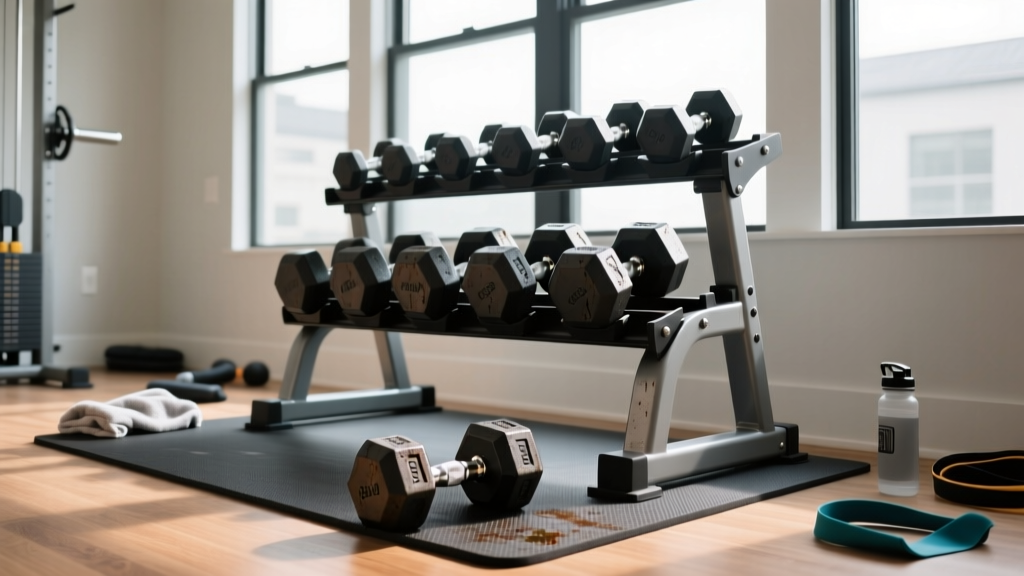
The rubber-coated hex dumbbell—most notably the ubiquitous models produced by CAP Barbell and Titan Fitness—is the undisputed king of the home gym. The design is straightforward: a solid cast iron or steel core encased in a thick layer of recycled or virgin rubber compound. The hexagonal head prevents rolling, and the rubber coating protects flooring and dampens sound.
Real-World Failure Modes: Edge Chipping and Off-Gassing
While rubber hex dumbbells offer a massive upfront discount compared to urethane, they come with specific failure modes that impact their long-term value. According to facility maintenance standards outlined by the National Strength and Conditioning Association (NSCA), equipment degradation in high-traffic zones often stems from improper dropping techniques.
Rubber hex dumbbells have a relatively low durometer (hardness) rating, but the edges of the hex design create structural weak points. When dropped from shoulder height onto 3/8-inch rubber mats, the kinetic energy transfers directly to the sharp corners of the hex head. Over 2 to 3 years, this repeated impact causes the rubber to split, chip, and eventually expose the cast iron core, leading to rust and floor damage.
Additionally, budget-friendly rubber hex dumbbells are notorious for off-gassing volatile organic compounds (VOCs). If purchased in bulk and placed in an unventilated garage gym, the 'tire smell' can linger for months, a byproduct of the sulfur and chemical accelerators used in the vulcanization process of cheaper recycled rubbers.
Urethane Dumbbells: The Premium Investment
Urethane (polyurethane) is a synthetic polymer that is injection-molded directly onto a precision-machined steel core. Brands like Rogue Fitness and Rep Fitness champion urethane for commercial facilities because it solves almost every inherent flaw of traditional rubber.
Urethane is completely odorless, UV-resistant, and boasts a much higher durometer rating than rubber. This means it is incredibly hard and dense. When a urethane dumbbell is dropped, the material does not split or chip at the edges; it absorbs and disperses the shock without deforming. Furthermore, urethane does not degrade under extreme temperature fluctuations, making it ideal for outdoor fitness rigs or uninsulated warehouses.
Head-to-Head Comparison Matrix
| Feature | Rubber Hex | Urethane | Neoprene (Baseline) |
|---|---|---|---|
| Cost Per Pound | $1.50 - $2.25 | $3.50 - $5.50 | $1.10 - $1.60 |
| Odor / Off-Gassing | High (initially) | None | None |
| Drop Tolerance | Moderate (Edges chip) | Extremely High | Very Low (Tears) |
| UV & Temp Resistance | Low (Degrades outdoors) | Excellent | Poor |
| Resale Value (5-Yr) | ~20% of original | ~60% of original | Near $0 |
The 5-Year Total Cost of Ownership (TCO) Breakdown
To truly understand the value proposition, we must calculate the 5-year TCO for a standard home gym setup: a 5 lb to 50 lb dumbbell set in 5 lb increments (10 pairs, totaling 550 lbs).
Scenario A: The Rubber Hex Route
- Initial Purchase (550 lbs @ $1.80/lb): $990.00
- 5-Year Maintenance/Replacement: Assuming 15% of the set (the 30lb, 35lb, and 40lb pairs) suffers edge-chipping and requires replacement due to heavy use: +$191.25
- 5-Year Resale Value: -$236.00 (Used rubber hex sells poorly due to hygiene and wear concerns).
- Net 5-Year Cost: $945.25
Scenario B: The Urethane Route
- Initial Purchase (550 lbs @ $4.20/lb): $2,310.00
- 5-Year Maintenance/Replacement: $0.00 (Urethane does not chip or degrade under normal gym use).
- 5-Year Resale Value: -$1,386.00 (Commercial urethane holds massive value on the secondary market; gyms closing down routinely flip these for 60% of retail).
- Net 5-Year Cost: $924.00
The Information Gain: While urethane costs over $1,300 more upfront, its 5-year net cost is virtually identical to rubber hex when factoring in replacement rates and resale value. If you plan to keep your equipment for 10+ years, or if you live in an area with extreme temperature swings, urethane is mathematically the superior financial asset.
The FitGearPulse Decision Framework: Which Should You Buy?
Budget analysis is useless without context. Use this framework to finalize your purchasing decision based on your specific environmental and usage variables.
1. Buy Rubber Hex If:
- You are outfitting a climate-controlled indoor home gym.
- You practice controlled eccentrics and rarely drop dumbbells from above the waist.
- Your upfront capital is strictly capped, and you do not care about reselling the equipment later.
- You are willing to let the dumbbells off-gas in a garage for two weeks before bringing them inside.
2. Buy Urethane If:
- You are opening a commercial facility, CrossFit box, or shared apartment gym (the zero-odor and high-drop tolerance are mandatory for liability and member retention).
- Your gym is located in an uninsulated garage, shed, or outdoor patio where UV rays and humidity will destroy traditional rubber.
- You view your fitness equipment as a long-term asset and plan to recoup capital via resale if you ever move or upgrade.
3. Buy CAP Neoprene Dumbbells If:
- You are building a dedicated physical therapy or mobility corner.
- You need lightweight, color-coded options for group fitness classes (e.g., Les Mills BodyPump style routines).
- You are strictly performing high-rep lateral raises, tricep kickbacks, or rehabilitation exercises where the weight will never exceed 20-30 lbs.
Frequently Asked Questions (FAQ)
Can I mix rubber hex and urethane dumbbells on the same rack?
Yes, but be aware of the aesthetic and dimensional differences. Urethane dumbbells are generally more compact and dense than rubber hex dumbbells of the same weight. Furthermore, if your rubber hex dumbbells off-gas, the VOCs can sometimes leave a residue on adjacent equipment over time. We recommend keeping them segregated by weight tier if you must mix them.
Why do my rubber hex dumbbells feel greasy?
This is a common issue with lower-tier imported rubber hex dumbbells. The 'grease' is actually plasticizers and unreacted oils migrating to the surface of the rubber compound, a process known as 'blooming.' You can mitigate this by wiping the dumbbell heads down with a mild dish soap and warm water solution, followed by a light application of a silicone-based protectant. Never use harsh chemical degreasers, as they will dry out the rubber and accelerate edge-cracking.
Is there a middle-ground between rubber and urethane?
Yes. 'Virgin Rubber' or 'Premium Rubber' dumbbells (often sold by brands like Rep Fitness or Again Faster) use high-quality, non-recycled rubber that is heavily compressed. They eliminate 90% of the off-gassing smell associated with cheap rubber hex dumbbells and feature a higher durometer rating to resist edge chipping, usually landing right around the $2.50 to $3.00 per pound mark. This is often the sweet spot for serious home gym owners who want near-urethane quality without the commercial price tag.
More gear to consider
All reviews
Rubber Hex vs Urethane: Value & Single Arm Dumbbell Row GIF
Power Rack vs Squat Rack vs Stand: Beyond 1 Dumbbell Exercises

Olympic vs Standard Plates and Exercises with 10lb Dumbbells

Rubber Hex vs Urethane Dumbbells: Layout and Dumbbell Recall Risks

Neoprene Dumbbells & T-2 Series Dumbbell Weight Bar Holders